
MartyGrass
-
Posts
2634 -
Joined
-
Last visited
-
Days Won
162






MartyGrass's Achievements






-

Binding repair with excellent outcome- H-575 Custom
MartyGrass replied to MartyGrass's topic in Heritage Guitars
Heritage began with an arrangement with Schaller for pickups and hardware. I assume they got some discount for bulk purchases. But there were some complaints about the pickups, not the engineering but the tones. Decades later, I believe that they are pretty decent and have more options for adjusting the heights. I think that many had a prejudice against them or simply wanted to personalize their guitar with the pickups of their choice, often expensive ones. Nowadays I don't hear as many complaints. Of course everyone can have an opinion. Here's a comparison with Seths v. Schallers. https://www.youtube.com/watch?v=9mURVofPTnY -
Binding repair with excellent outcome- H-575 Custom
MartyGrass replied to MartyGrass's topic in Heritage Guitars
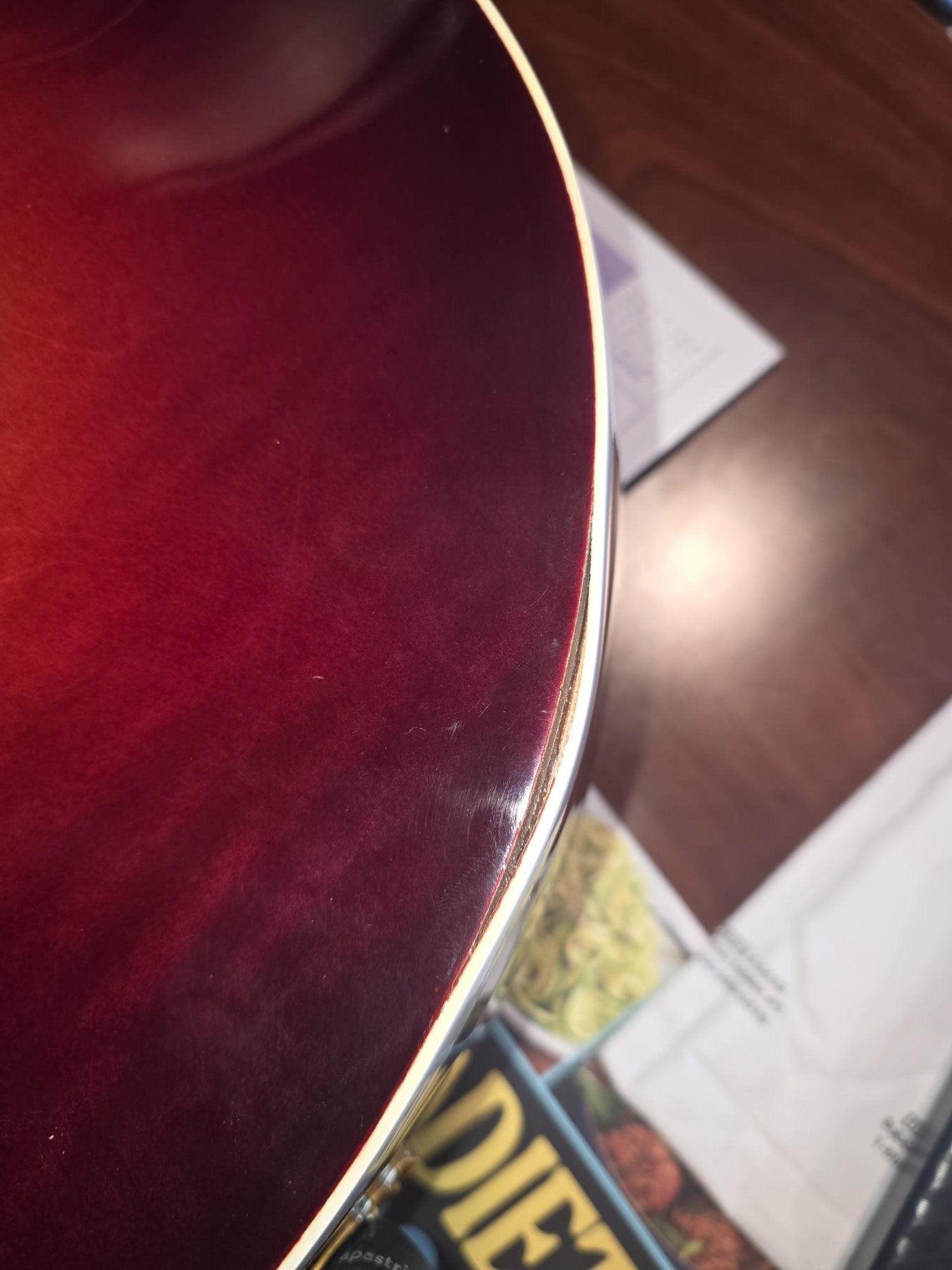
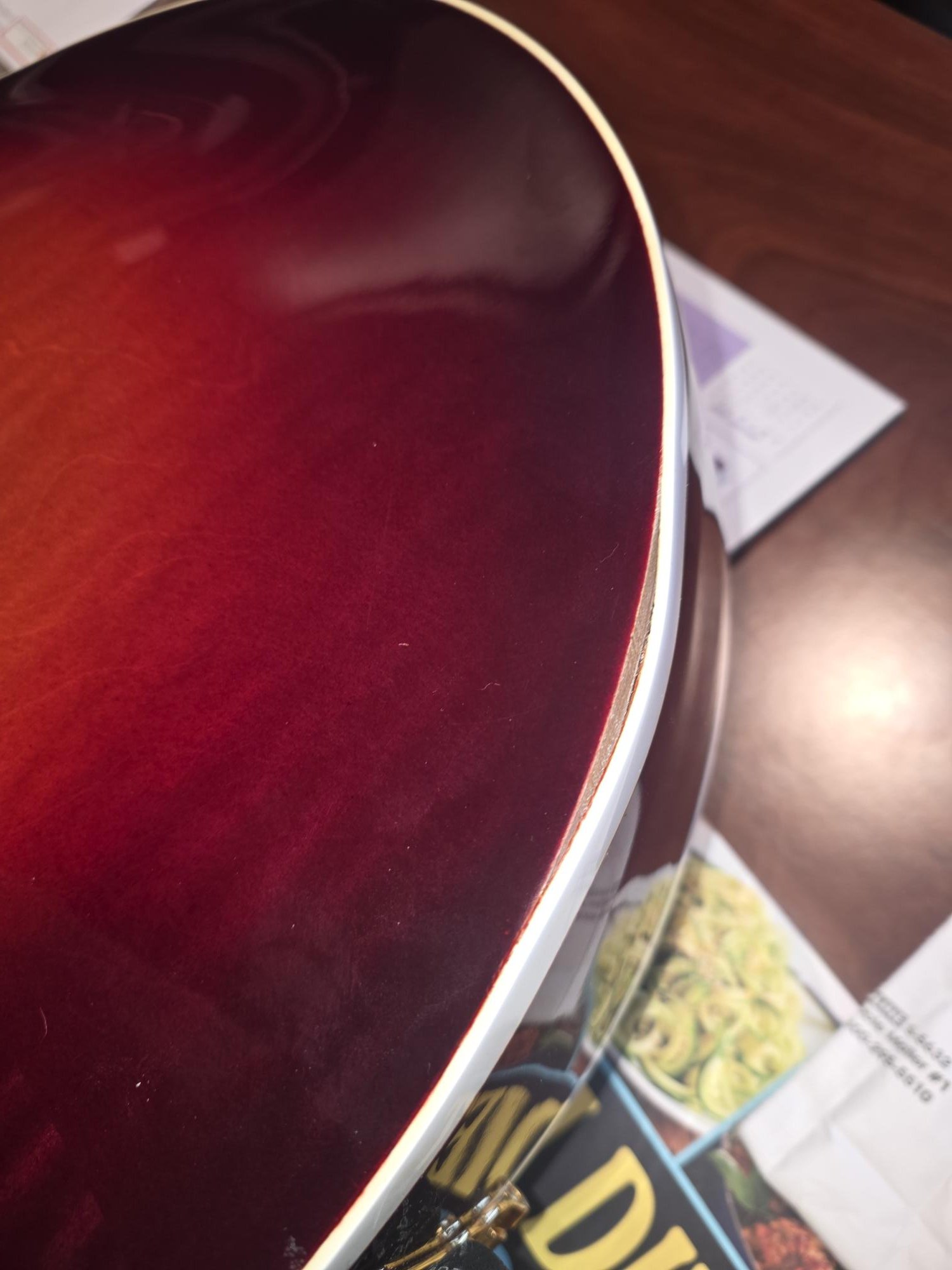
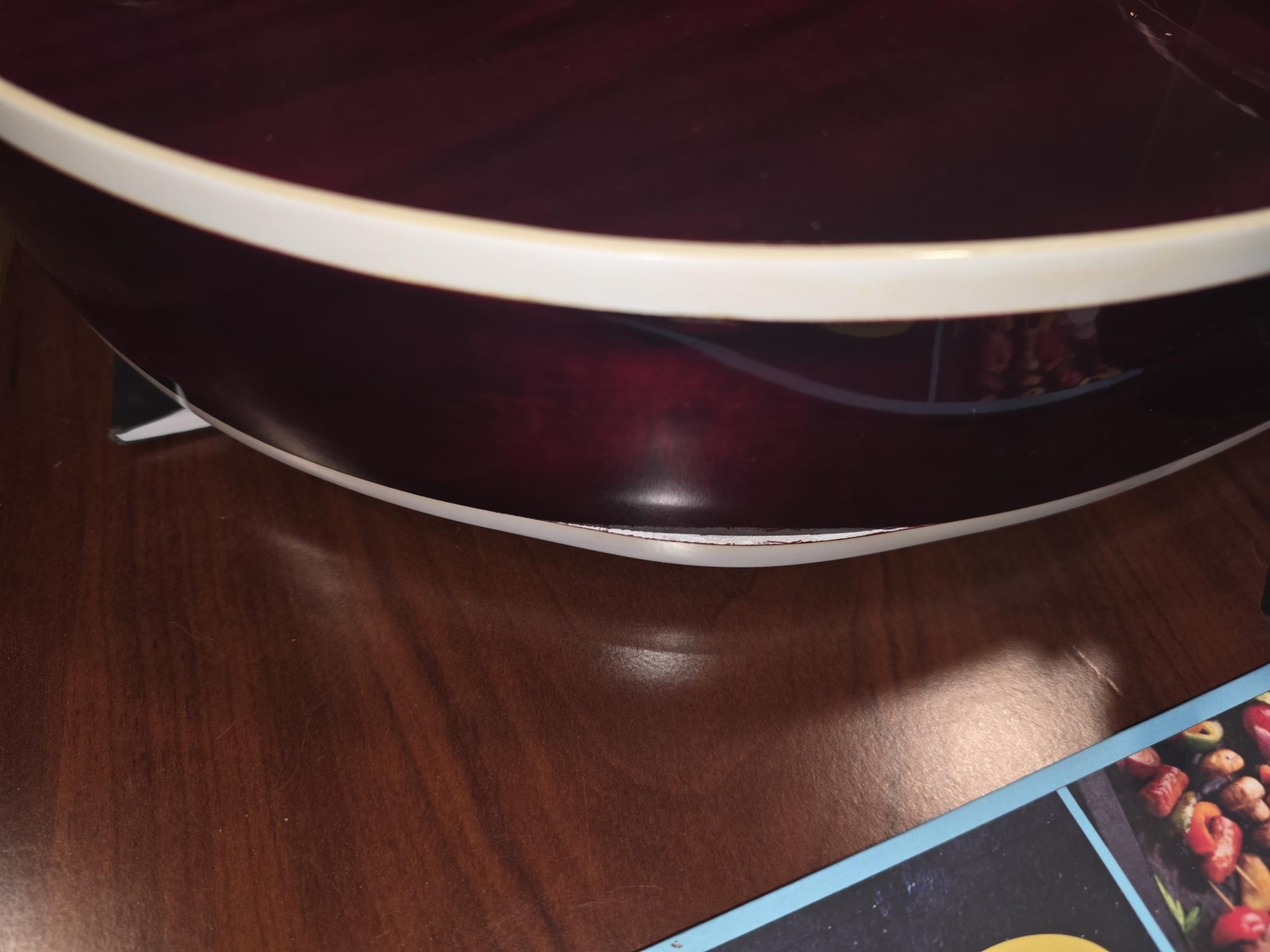
After the repair.
-
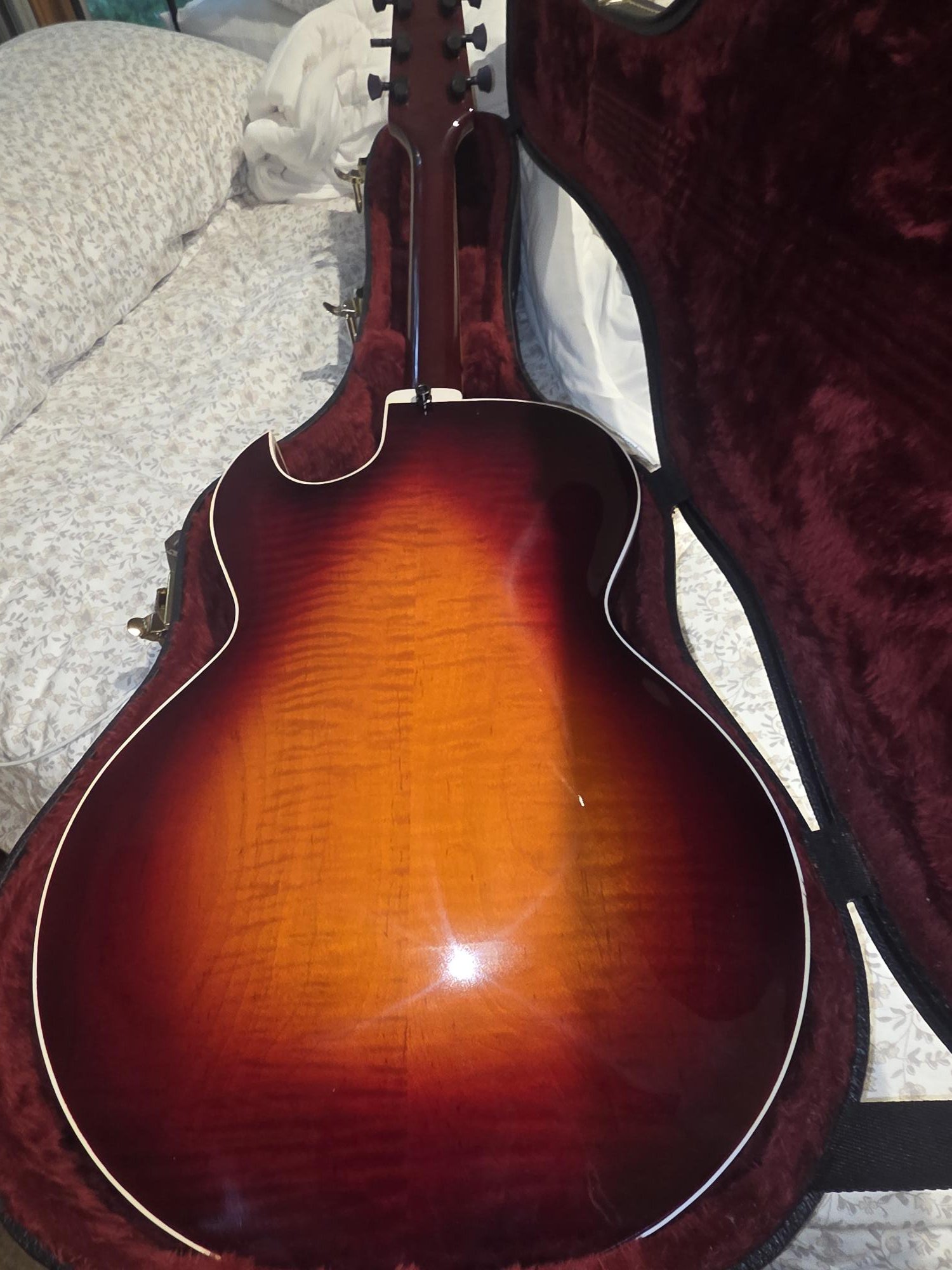
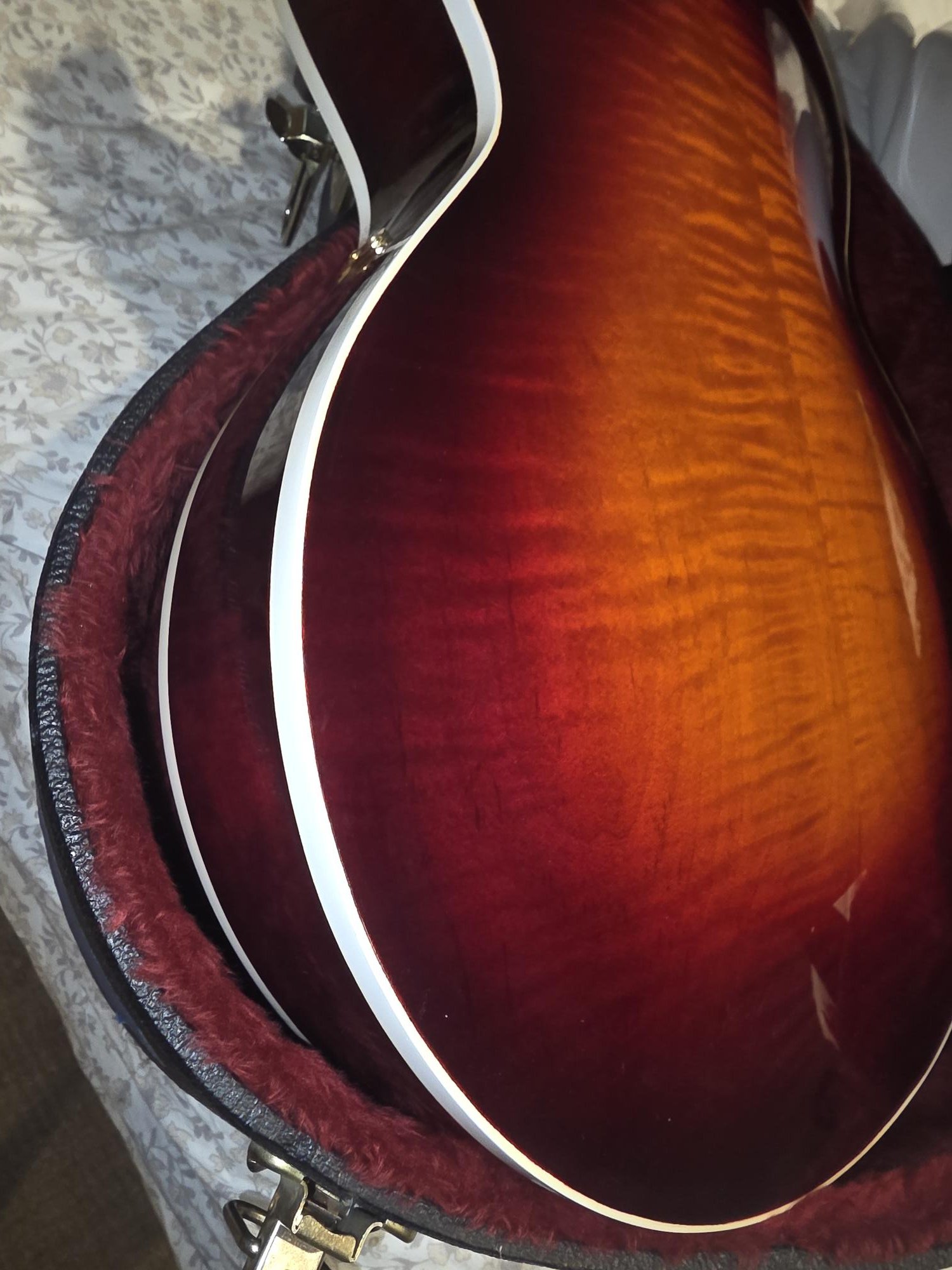
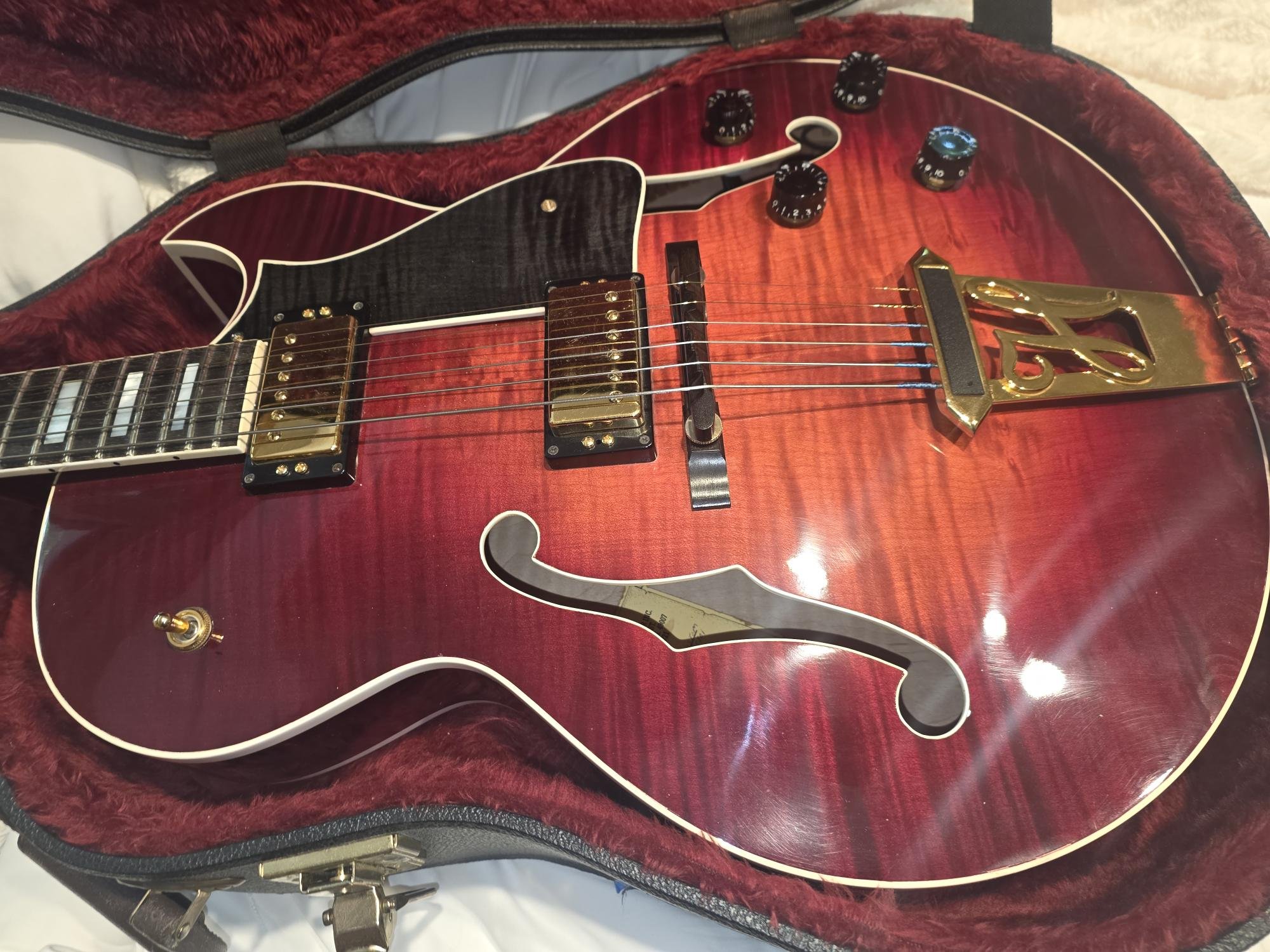
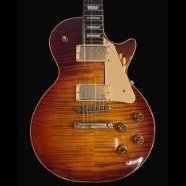
My H-575 had binding separation on the back. It wasn't subtle. I took it to one of the Heritage guys who has a shop in his house. He is a friend. I don't think he usually does commercial repairs. Anyway about a month later it's done. He had to head the binding and reapply it, which took several steps and a lot of patience. Once it was on well he had to touch up the lacquer. It is very hard to tell anything happened there anymore, although there are subtle indicators that I wouldn't have noticed much if he hadn't shown me. I've had binding work done before elsewhere but never better. Here are gratuitous pics.
-
Flatwound vs Round with Seth Lovers
MartyGrass replied to tsp17's topic in Amplification and Effects
I can't estimate how many string choices there are out there, but it's a big number. I listen to jazz players, especially the old school ones, who use flats. Surf music commonly involves flats. They sound great. I tend to use the hybrids (Brite Flats and Half Wounds). They get rid of the squeaks well enough and are brighter. I am well stocked with different string gauges and windings. I can't settle on anything really. I've made peace with that realization. -
The extra value of a Marvbird is the man who made it, the craftsmanship, and the woods. I played a Firebird V from the 60s for years. I have no idea if Marv ever touched the guitar. The Marvbird is on a higher level. Once you get used to the design of the body and the neck being out so far, it feels very natural to play.
-
Flatwound vs Round with Seth Lovers
MartyGrass replied to tsp17's topic in Amplification and Effects
The old surf sounds seem to use flatwounds with single coils. https://surfguitar101.com/forums/topic/35423/ -
https://www.ultimate-guitar.com/articles/features/is_it_cool_or_not_cryogenically_frozen_gear_explained-108422 I can't find any recent references to cryo treatment of pickups, but 20+ years ago they were a thing.
-
Neither Aaron nor his wife would have hesitated. I didn't know his son as well, but I know he was well trained with firearms and was an electronic warfare specialist in the Air Force. They were all very nice people with even tempers and a sense of humor. Aaron's shop was in a very small town. He had some expensive equipment and instruments. I'll bet many shop owners in that circumstance kept a gun nearby. My father owned a party store, where I also put a lot of work hours. There was a loaded revolver in the safe in back. We all knew how to pull it out and shoot to kill. Why, you ask? Because it often happens that once the thieves get the money, they kill the witnesses. I know of one time my dad held two at gunpoint until the police arrived. I understand the idea that merchandise and money can be replaced if insured. I also get that these were desperate men who robbed. The owners also had families to feed. Even if insured, the payouts would take a long time and would depend on the investigation outcome and whether they could prove the amount stolen. The best insurance at the time was to have it known that if you rob a small store, you can be shot as a means to prevent the robbery. Back in the day, I was quite a liberal polically. I met Bobby Kennedy about two weeks before his death. That was soon after the Martin Luther King shooting. There were also murders in our city, also. In our part of Michigan many boys learned to shoot and hunt. I did so since I was 5. There were strict rules about safety that were always primary. My grandfather and grandmother lived in very rural Minnesota. They lived off the land and hunted routinely. So it was a very different culture then in which guys, like fishing poles, were simply tools. I don't know that we will ever get that sense of respect for life back again, which is absolutely necessary for those who own any deadly weapon. But returning to the question, Aaron would have shot a robber with his .380. He was deeply Christian. That may be a paradox to many. And even beyond that, I'll bet he would have prayed for his soul. Our world is different now. It may be better-IDK. But here are recent statistics on home break ins and violence. https://www.supremecourt.gov/opinions/URLs_Cited/OT2017/15-1498/15-1498-1.pdf Here are some data from the Department of Justice as to where robberies occur. Back to our regular programming now.
-
My 13 year old grandson now owns it. He is a dedicated guitarist. He's likely going to be 5'5" as an adult. He currently has a large guitar, which is hard for him to play. I gave it to him last year. He's swapping an 18" Gretsch for the 575. https://www.flickr.com/photos/151972168@N02/albums/72157718796977248/
-
The secret remains.
-
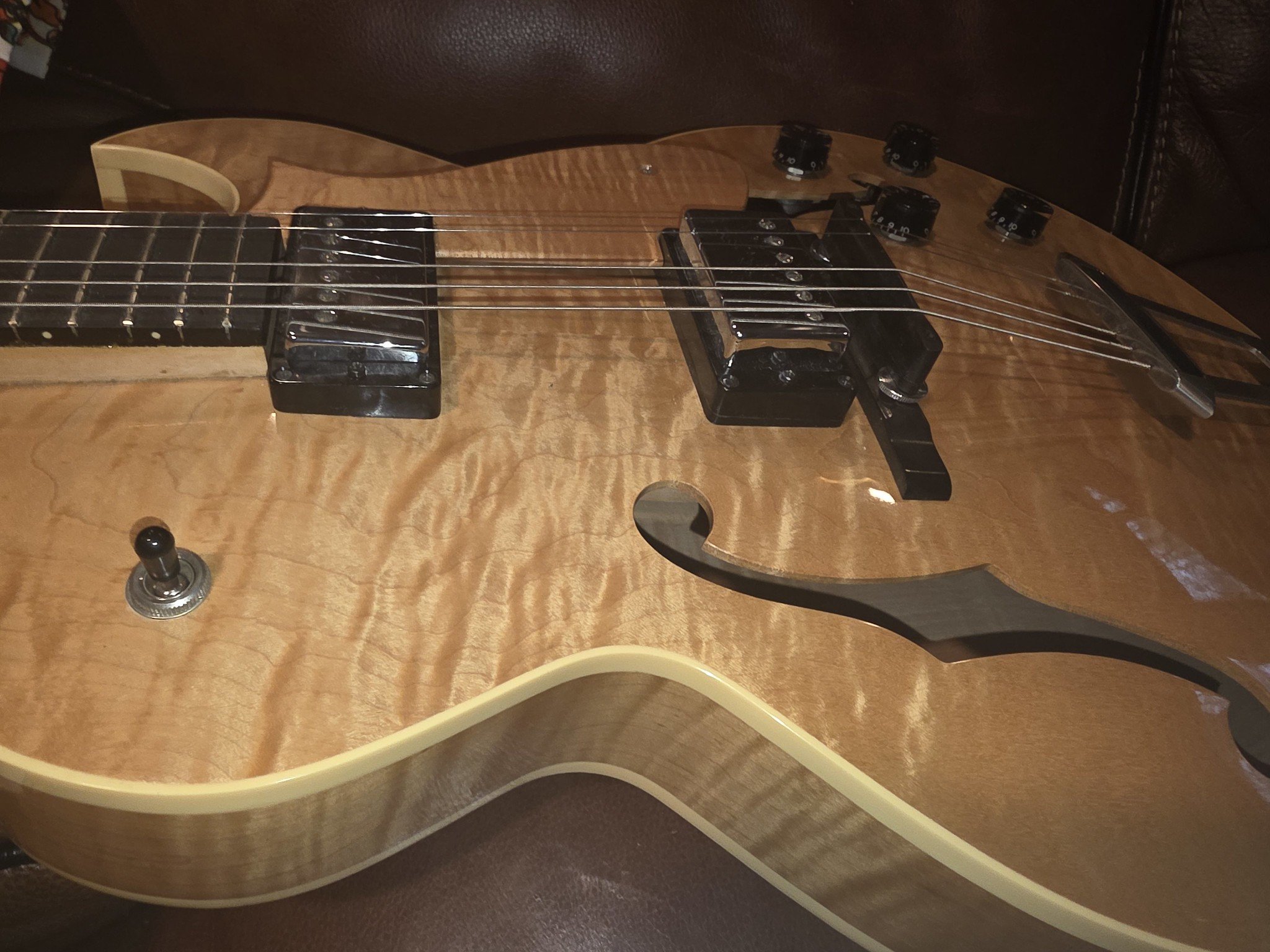
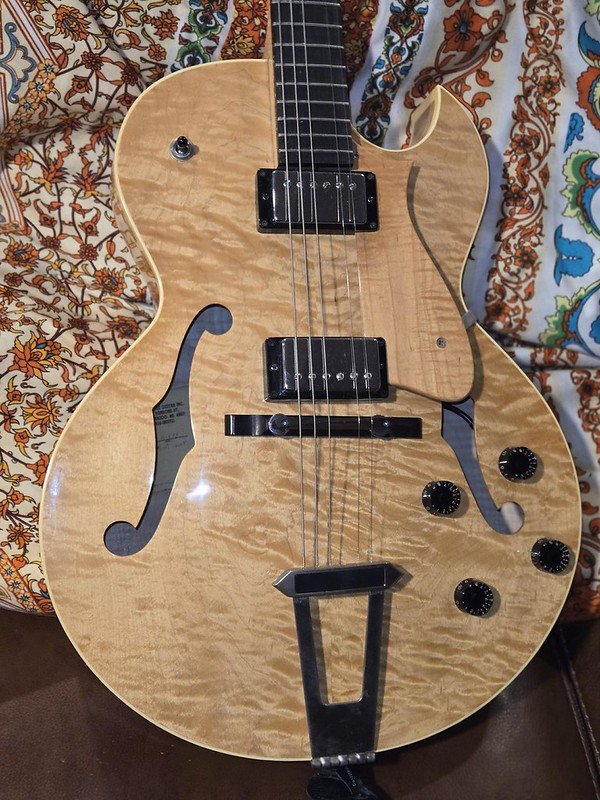
I'm still setting it up. It was down-tuned for a very long time and a string was missing. I didn't see it before it was renecked, but the first neck was mahogany. Few of us had the good fortune of meeting Aaron Cowles, a master craftsman of the highest order yet very pragmatic. That was the description also of the original Heritage owners. The H-575 is a jazz workhorse. I took video lessons from Mimi Fox and Alex Skolnick years ago, two extraordinary players both using the H-575. It does the job well and is sturdy. Unlike thin topped spruce jazz boxes, this is built for amplification and to take it. (As an aside, here's a fabulous rock solo by Alex that brought tears to the audience.) https://www.youtube.com/watch?v=X07ssteuM8o&t=245s Here's what I don't like: the tailpiece. It functions, but you have to learn how to keep the string ball in it. Previously I had the ball slots deepened in another guitar. If someone knows an easy swap out for the tailpiece that is more solid and secure, please let me know. Bigsbys need not apply.
-
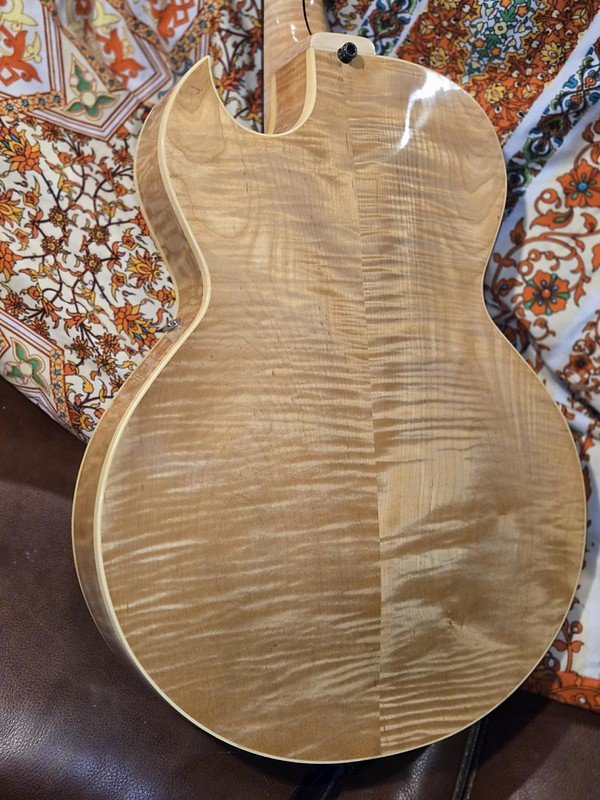
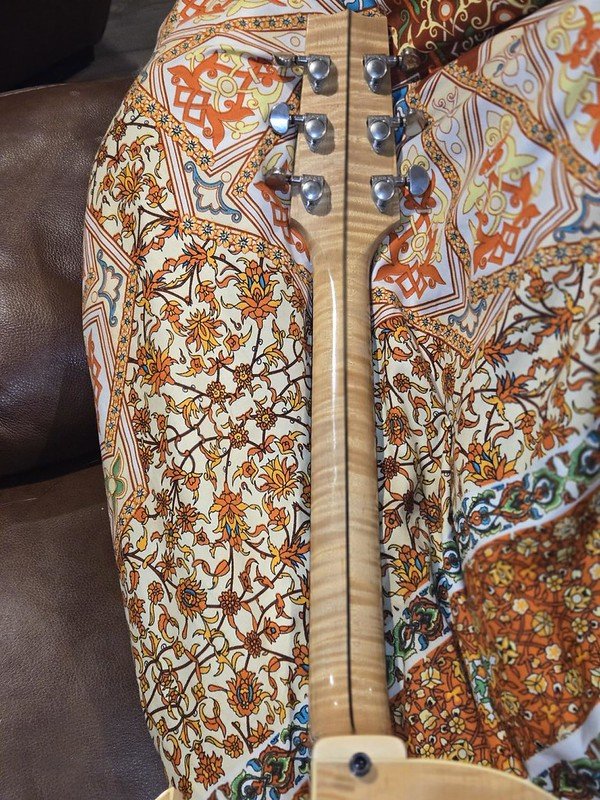
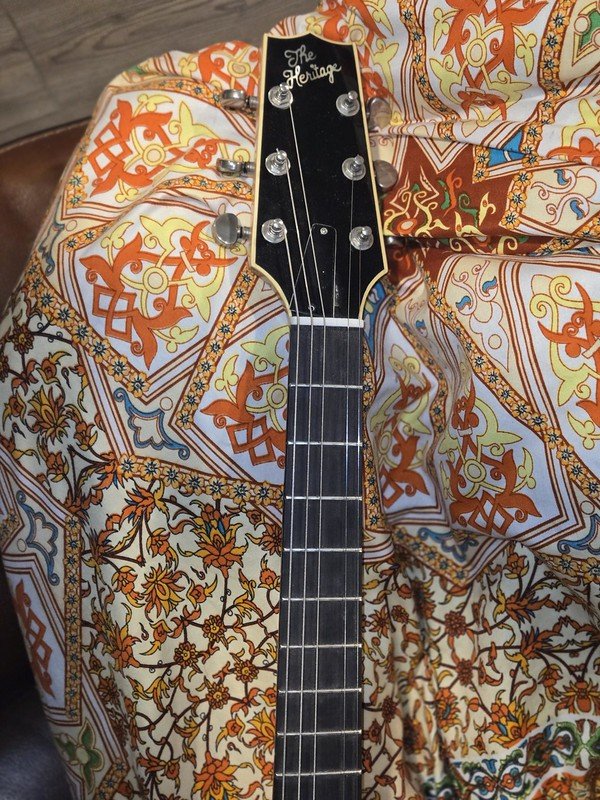
A friend of mine bought a natural 575 from a Guitar Center years ago. When he got it, he found some neck issue that could not be corrected by adjustment. He took it to the legendary Aaron Cowles, who was doing some upscale work for Heritage at the time. Aaron told him the neck needs replacement. I don't recall the details. Aaron did the replacement. Here's an interview with Aaron. https://scholarworks.wmich.edu/gibson-guitar-oral-histories/1/ Aaron died quite a few years ago. I ended up hanging on to the guitar for my friend but didn't play it. Yesterday he sold it to me without ever taking it to his home. If you are feeling sorry for him, consider he has more guitars than anyone else I know. So this is has Schallers. I scoped the innards. It's parallel braced (not all are). Aaron made the neck and but a plain ebony board on it. It's a 3 piece maple. The only piece he got from Heritage is the headstock overlay. My friend requested a five piece neck but Aaron recommended a 3 piece. Aaron fretted it. There are no nibs. That's true with other Aaron builds. Aaron was one of the best of the Kalamazoo luthiers yet a simple man to understand. He always had his pistol handy in shop. He charged very little for his hard work. His humble presentation contradicted his master skills at making guitars and mandolins. The guitar plays well. The neck is to me a medium C carve, maybe a medium plus. It sounds good.
-
My small experience with Gibson (Memphis and Nashville) has been pretty good. There may have been some rough times in the beginning. Heritage has had its ups and downs but seems quite good the last decade. Most of the earlier guitars also were nicely done. It takes an occasional bad apple that inspires a post on some forum that takes the shine off a reputation.
-
Ren wouldn't divulge his secret on HRWs. But I have talked about it with him and with his long-time co-workers. He would only smile when asked about what he did to Schallers. My guess is that they took a bath in liquid nitrogen. I highly doubt he did a partial uncoiling for several reasons. The first is the lack of any hum. The second is that a cryo treatment is an established way to modify a pickup. The third is that cryo treating is clean and relatively easy. Why did Heritage promote the HRW? The best answer I can come up with is because they could, especially is the process is secret. Here is what I got from AI. Cryogenic treatment for guitar pickups involves deep-freezing the components (typically to around or ) to permanently improve their molecular grain structure. Proponents claim this process relieves internal stresses in the metal parts, such as magnets and copper wire, resulting in enhanced clarity, smoother frequency response, and increased output. ProjectGuitar.com +4 Claimed Benefits While controversial in the guitar community, those who offer cryo-treated pickups cite several specific tonal and physical improvements: Enhanced Clarity & Definition: Treating materials like copper and silver is said to improve string definition and provide "faster" transients. Smoother Overtones: The process aims to align the molecular structure to be more uniform, which some makers claim makes overdriven tones smoother and more "in tune" by reducing dissonant overtones. Increased Output: Some manufacturers report measurable increases in output (up to 18%) because the treatment potentially lowers electrical resistance and improves conductivity. "Turbo-Aging": For hardware and magnets, cryo-treatment is often marketed as a way to replicate the "relaxed" feel of vintage parts that have naturally settled over decades. Brands & Services Several high-end and boutique brands incorporate cryogenic treatment into their products: Seymour Duncan: Offers the Zephyr Silver series, which uses cryogenically treated silver wire and magnets for maximum expression and detail. Lindy Fralin / Callaham: Features the Callaham Cryogenic Fralin pickups. Callaham has also been known to offer treatment services for customer-supplied parts. V.I.P. Pickups: Uses a "cryo-tuning" process for their LOVERS PAF-style humbuckers to achieve a more transparent, vintage sound. Faber Guitar: Provides cryogenic treatment for various guitar hardware and components to minimize "bad" overtones. Nitrofreeze: An industrial service provider often used by boutique builders to treat electronic and musical components. Scientific & Practical Considerations Skepticism: Critics often point to a lack of peer-reviewed data supporting tonal claims, suggesting that perceived improvements may be due to psychological factors or "marketing hype". Risk of Damage: Extreme cooling can sometimes cause plastic parts (like bobbins) or adhesives to crack if the process isn't carefully controlled. Metal vs. Wood: While the effect on ferrous metals (steel) is well-documented in industrial settings for hardening, its effect on non-ferrous metals like copper is more debated in the audio world.
-
I don't know if this previously was posted. https://www.youtube.com/watch?v=XXCAKNkDvL0 At 3:00 exactly you'll see Ren Wall's dad with a guitar. This is Rem Wall, a local country legend with a great voice.