Leaderboard




Popular Content
Showing content with the highest reputation on 08/25/26 in all areas
-
I'll choose one focal point, the bridge base. Was it drilled at an angle, were the holes too large, or did the angle migrate over time due to factors like heavy strings with slight reduction in string tension due to storing? It's not expensive or difficult to replace the base or to fill the holes and redrill them. Tuner alignment seems to be much better these days. It was a common issue in the earlier days. That's a third world complaint since the tuners generally function when canted. But it is annoying to not line the tuners well. It's not that hard to get that right. This discussion is in part about what is the function of the electric guitar. Is it merely a tool that allows musical expression? Is it a tropy or work of art? Is it a blend? Is it an extension of our ego? The cost of perfection in the complex process of creating guitars is quite high. That includes wood sourcing, which can involve experience, expertise, traveling, patience, etc. The final step for the factory is shipping to the retailer. These acts may seem simple to the naive. They are not. Every step between can be complex. There is the business of maintaining employees, particularly skilled ones. The point is that there are a lot of things that have to go exactly right to get an excellent instrument. These steps each cost money, yet guitar sales is a very competitive area. So then what is the purpose of the instrument? A couple of days ago I saw a Beatles tribute band during its tour. A lot of finesse went into making the show excellent. The audience loved it. But I looked at the guitars they used. They had a Les Paul, a couple of J-160Es, some Ricks, a Hofner, a Fender and an Epiphone. The finish was worn off in the strummed areas. There were dings and scratches evident. These were superb musicians. They appeared to play effortlessly. The natural ease of playing and the resulting sound told me that their focus was primarily their performance, not their tools. We have all known people who have great pride in the appearance of their possessions. This can include their homes, their cars, and even the tools in their toolbox. With ownership comes responsibility. Some say this is a midwestern mentality: you own it, you maintain it. But I've lived in enough places to know that this thought is more universal and pretty much essential for a manageable life. Things have slipped through Heritage in the early days, back when the viability of the company was in question and the owners were pushed to their limits. Things are much better for years now. My advice based on the experience of decades is that you learn to take care of your stuff. And if you don't like something, don't buy it unless you can fix it.2 points
-
1 point
-
Your just aggravated over tariffs that’s gonna make your next Heritage more expensive!!! 😂1 point
-
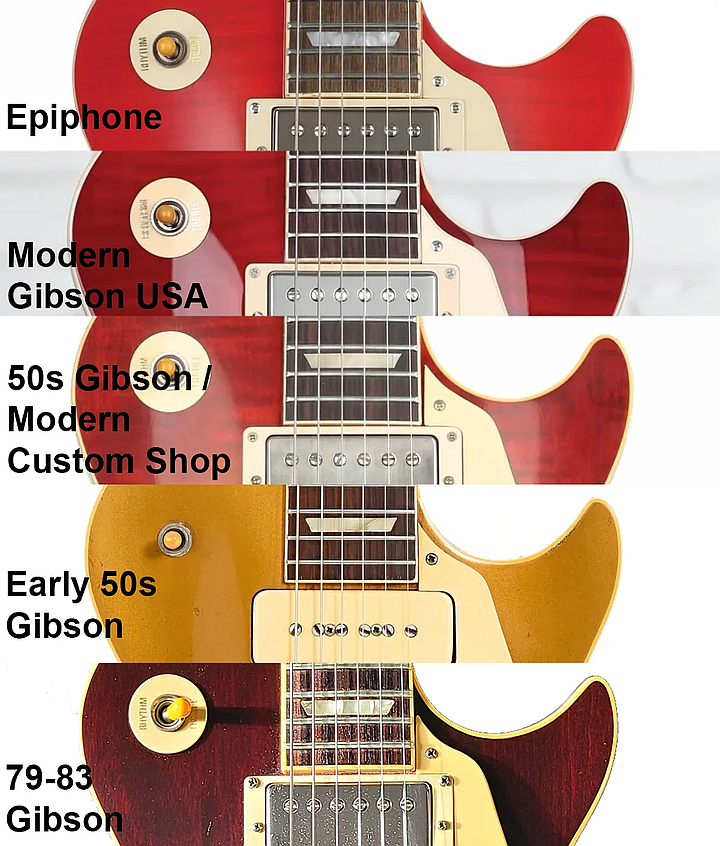
Yeah, it's the horn that's going to make or break a guitar. You simply can't play a guitar if the horn doesn't have the exact dimensions of that someone drew up 70 years ago and endorsed by a Youtube personality. Sorry, I don't get your point other than trying to start a pissing match. Oh yeah, that horn of which you speak has changed numerous times over the years at that "other company". Personally, I think it's the silly poker chip that is holding back the Les Paul player from being successful. Seriously, if the stupid guitar player has to stop, look down at the front of his guitar and decide if he's playing rhythm or "treble", he needs to find another occupation. Speaking of which, how exactly do you play "treble"? Does that mean you can only use the notes on the treble clef?
 1 point
 -
27 days later: I like the Duke of tone pedal! It displaced the Jetter Red2.1 point