
MartyGrass
-
Posts
2650 -
Joined
-
Last visited
-
Days Won
169
Content Type
Profiles
Forums
Gallery
Blogs
Events
Everything posted by MartyGrass
-
I've had two Roy Clark models. The first one was fully hollow and a thinline. That was a one-off. I have a standard model now which is just fabulous. It's gorgeous and plays very, very nicely. It's basically a 555 single cutaway. The cutaway is deep.

-

Heritage Guitars Ascent+ (Import series) Deep Dive
MartyGrass replied to HANGAR18's topic in Heritage Guitars
I see these in a different light. The guitar seems decent by this review. The price point is attractive to the begining and intermediate player due to the price. Those who can pay more and want "better", there are other places to go. I don't own anything in this series but have played a couple. I also recall one of my favorite rock players, Randy California of Spirit, played a Sears Silvertone in his early recording and performing days to great reviews. I have modded my H-150/157s over the years in some cases. The didn't "need" mods, but some fret work and slot cutting helped. If I were back in 6th grade, there's no way I could afford a new American built H-150 or H-535 from my paper route. If the Ascent+ was available, that may be within reach. I have an emotional bias though. I grew up in Kalamazoo. I'd take the temperature of the community since they are my audience. I don't think there would be resentment if I got the Asian version, especially as a kid. I can tell you that in Kalamazoo years ago, a lot of guys played Fenders and Gretsches. They never got any pushback for disloyalty. Rather, my friends liked trying them out. Quite a few were loyal Fender players. Some worked for Gibson. Brand loyalty has advantages. And if QC is solid, one advantage is you pretty much know what you're going to get before you open the case. If the Ascent series does have the quality and tight specs, those are strong positives. I don't own one, but I'm not allergic to them! A major reason I had a good early experience, 6th-10th grade, was a glut of Gibsons in my city. I got a Firebird V with a Kalamazoo amp from a neighbor for 6 weeks of paper route money. If I were not in Kalamazoo at the time, I'd probably would have had to go Asian! Let me mention that the Ascent line is still owned and managed by the Heritage company owners. If they can produce very good guitars with a significantly lower price in Asia, they likely have to strongly consider doing that for their investors. It is likely mandated. But it's our choice as to what we buy, and we buy for different reasons. My choice has been to buy locally. That's easy when the product is good and it supports your neighbors. If I were 13 again and had to earn the money for a guitar, amp and lessons, and a used Gibson or Heritage would cost more than a new Ascent, the lofty ideals of "buying American" may not be reachable. Lastly, the Ascent series idea came from somewhere. It may be what allowed the new Heritage owners the ability to maintain the original Kalamazoo site for the Heritage models. IDK. Recall that whatever the original Heritage factory owners were doing was not survivable, leading to its sale. Projecting from my youth when I'd stare at the Gibson catalogs, quite a few kids who get an Ascent will move up into a Heritage or Gibson or Fender or PRS. From what I see, the Ascent seems like it could work as an entry point for a kid into a lifetime of guitar. -
Guitar Makers in Kalamazoo, short documentary
MartyGrass replied to bolero's topic in Heritage Guitars
Heritage has made thin bodies with solid tops but not as a sustained model. I don't know the worth of a solid top over a full center block with mounted controls and two pickups on a thin body. Maybe. I don't recall such a model. The Gibson Johnny A used solid woods in a small hollow archtop. I really couldn't hear a difference in recordings with this design compared to a weight relievied H-150 or Gibson Les Paul Supreme. But that's just me. I know people who hear things that I have no idea what they're talking about. -
At 24:50 of the video you will see Rob. He gets maybe two seconds tops of this video- no more. I point this out as an example of the incredible talent Heritage has. Of course Pete Farmer is a seasoned excellent luthier. Rob has been a luthier building solid bodies, flattops and archtops for decades. He also is a master in designing and building pickups. An entire video of an interview with just him could take up an hour easily without being boring. He's rewired creatively severaly guitars for me without breaking a sweat. The talent Heritage has is impressive. I have been in the plant since the Gibson days. IMO, the factory has never run better from a quality perspective. That is not to say Gibson and early Heritage didn't make masterpieces. They did, of course. Nowadays the consistency seems to be very high. Dogs and borderline instruments don't appear to make it through. We should be proud of and grateful to these guys. I'm impressed.
-
Yes, a push-pull turns it off and on plus adjusts the volume. Every time I strap this bad boy on it takes a minute to reorient. I remember this guitar well from when I saw it at the factory. Stunning!
-
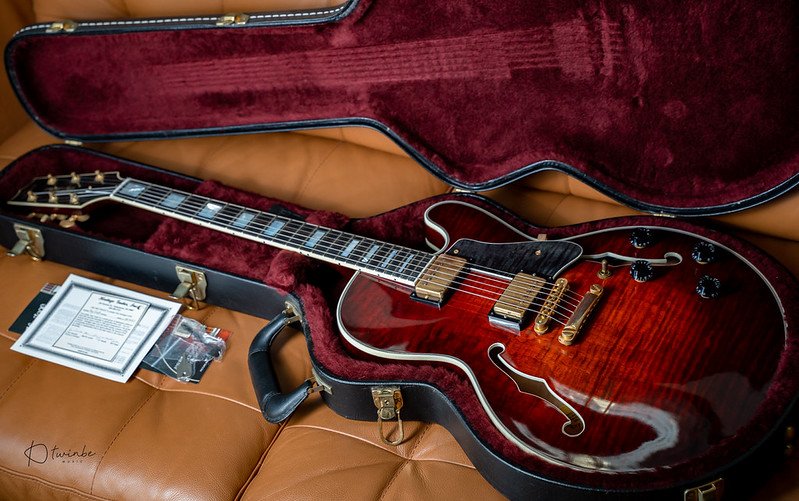
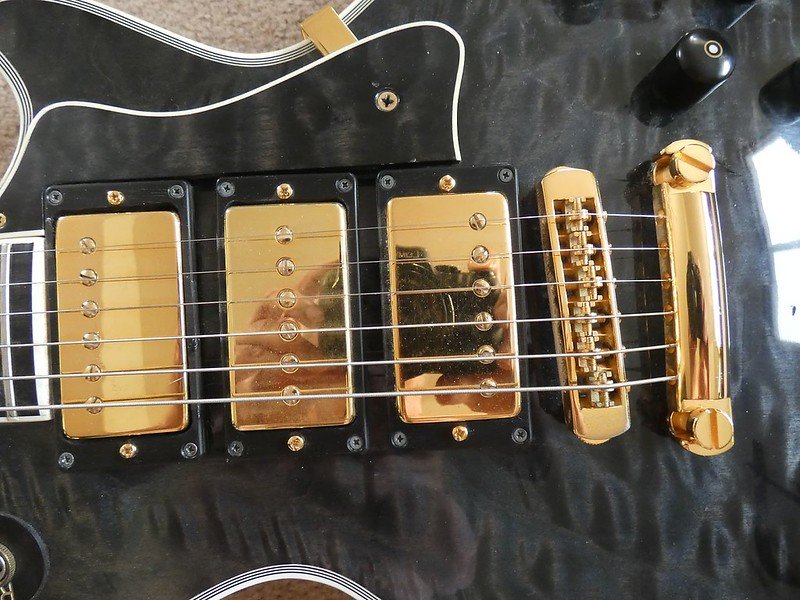
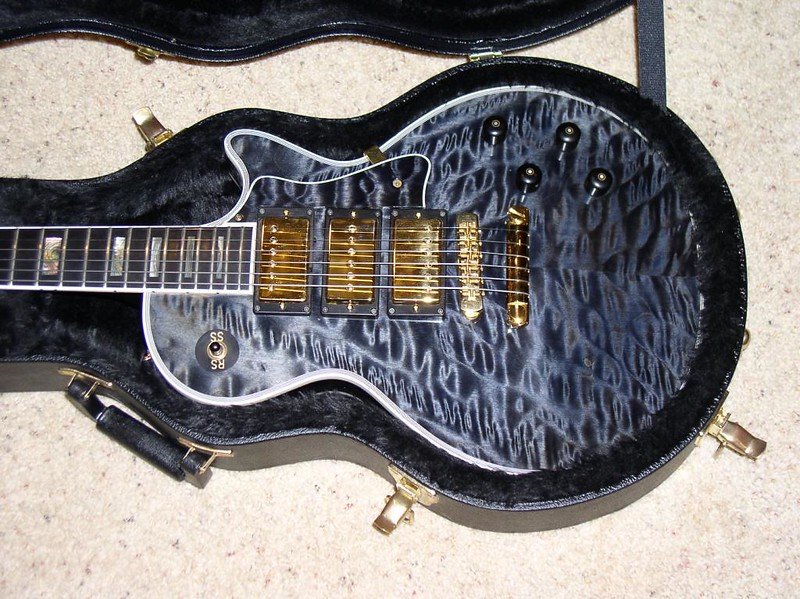
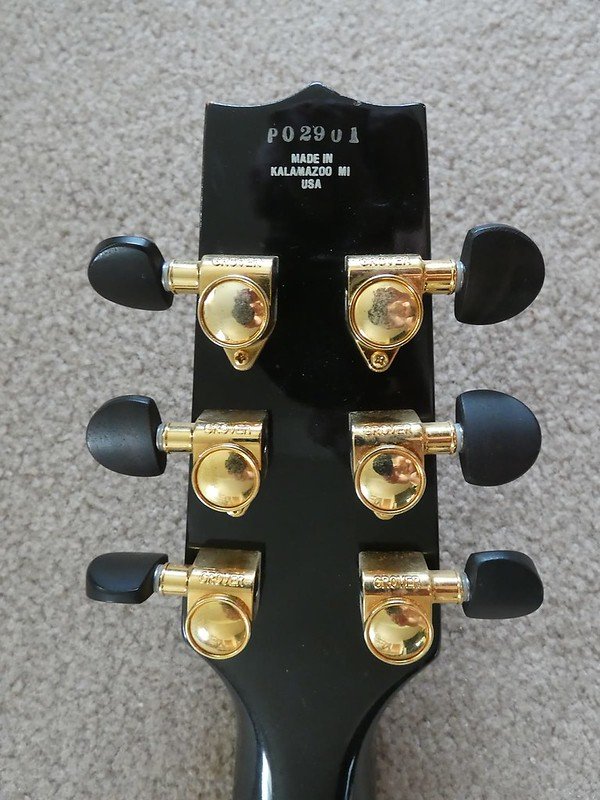
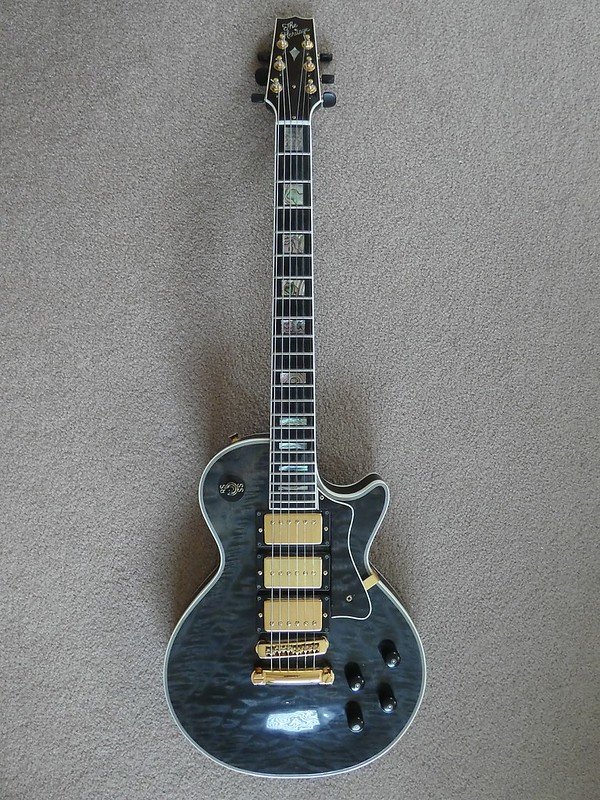
I don't know that this is my favorite, but it is up there. I posted this years ago. It's a 1999. If you flip the last three digits upside down, it's the mark of the beast. Pete Moreno did the circuitry. There are push-pulls for coil splitting and for blending the middle pickup.
-
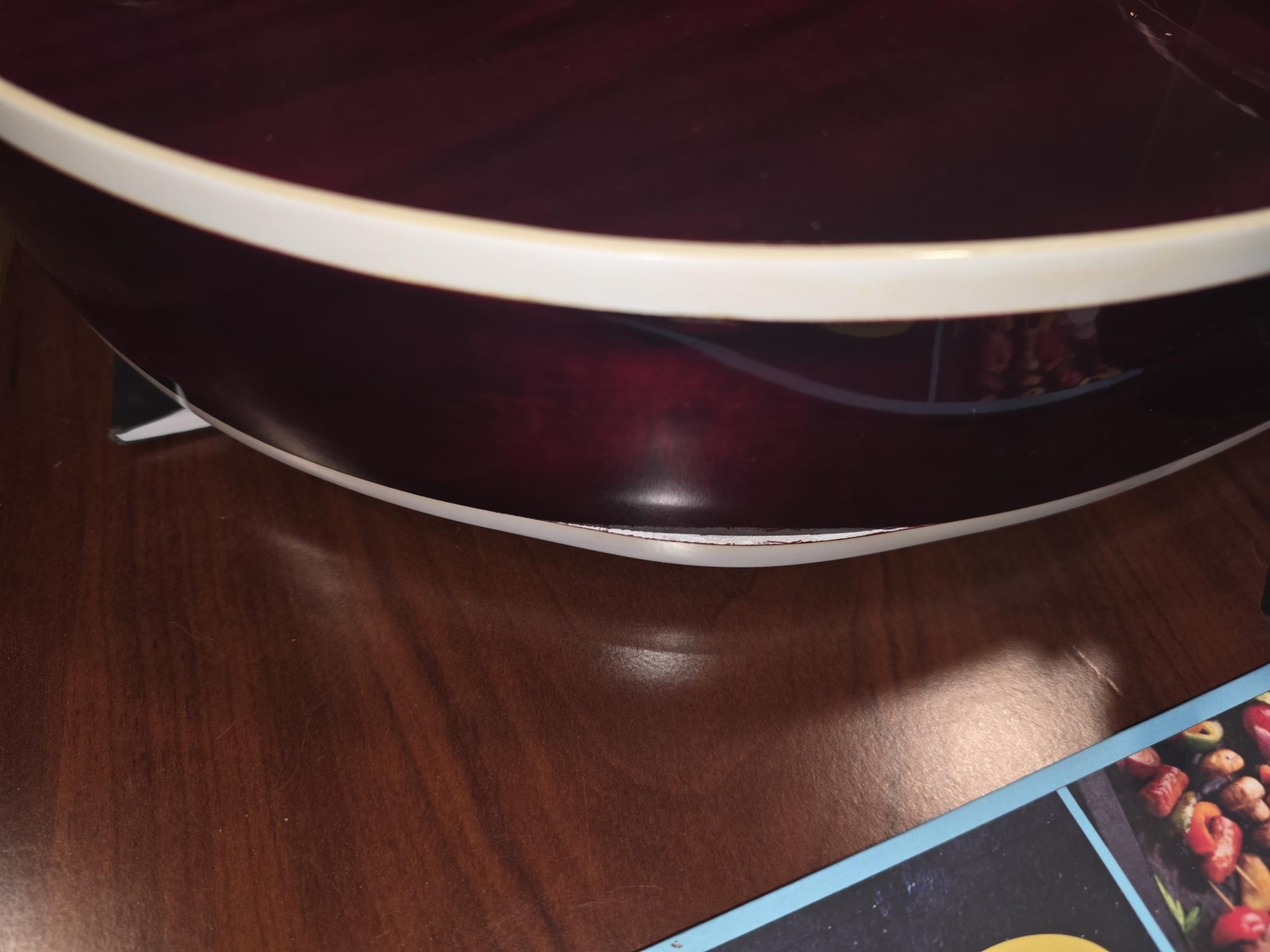
One other thing to note on the original photo is residual buffing compound on the f hole edge. That is easily removed but should not have come from the factory that way. Years ago it slipped by sometimes.
-
I'll add two more pics. This is one of their Gretsch Synchromatics.
-
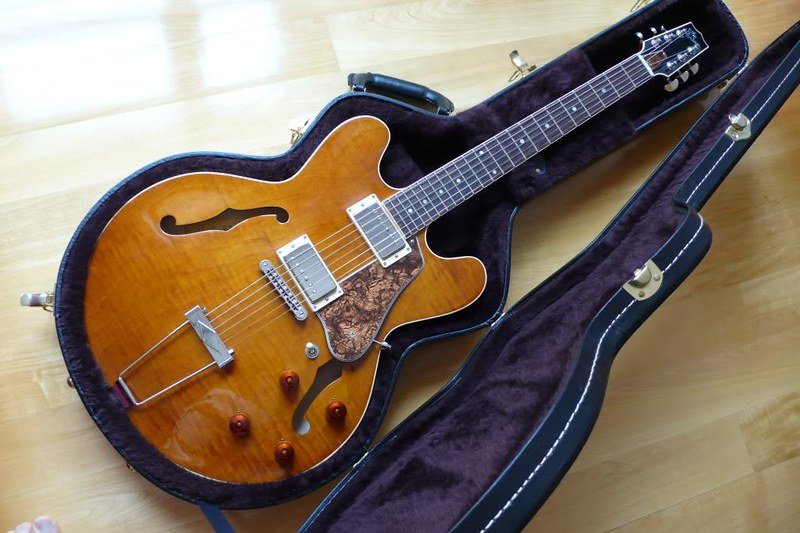
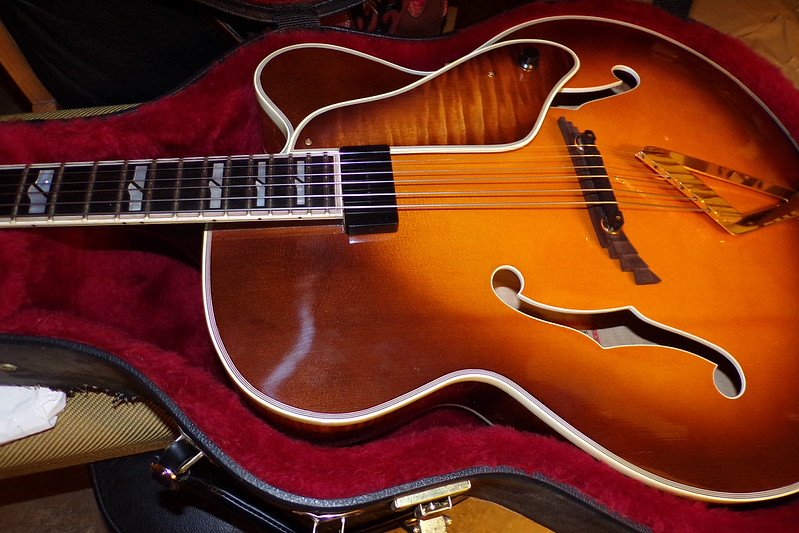
It's hard to choose favorites. Here are two. The first is a Johnny Smith 18". The second is a H-530 custom made with humbuckers.
-
I'll choose one focal point, the bridge base. Was it drilled at an angle, were the holes too large, or did the angle migrate over time due to factors like heavy strings with slight reduction in string tension due to storing? It's not expensive or difficult to replace the base or to fill the holes and redrill them. Tuner alignment seems to be much better these days. It was a common issue in the earlier days. That's a third world complaint since the tuners generally function when canted. But it is annoying to not line the tuners well. It's not that hard to get that right. This discussion is in part about what is the function of the electric guitar. Is it merely a tool that allows musical expression? Is it a tropy or work of art? Is it a blend? Is it an extension of our ego? The cost of perfection in the complex process of creating guitars is quite high. That includes wood sourcing, which can involve experience, expertise, traveling, patience, etc. The final step for the factory is shipping to the retailer. These acts may seem simple to the naive. They are not. Every step between can be complex. There is the business of maintaining employees, particularly skilled ones. The point is that there are a lot of things that have to go exactly right to get an excellent instrument. These steps each cost money, yet guitar sales is a very competitive area. So then what is the purpose of the instrument? A couple of days ago I saw a Beatles tribute band during its tour. A lot of finesse went into making the show excellent. The audience loved it. But I looked at the guitars they used. They had a Les Paul, a couple of J-160Es, some Ricks, a Hofner, a Fender and an Epiphone. The finish was worn off in the strummed areas. There were dings and scratches evident. These were superb musicians. They appeared to play effortlessly. The natural ease of playing and the resulting sound told me that their focus was primarily their performance, not their tools. We have all known people who have great pride in the appearance of their possessions. This can include their homes, their cars, and even the tools in their toolbox. With ownership comes responsibility. Some say this is a midwestern mentality: you own it, you maintain it. But I've lived in enough places to know that this thought is more universal and pretty much essential for a manageable life. Things have slipped through Heritage in the early days, back when the viability of the company was in question and the owners were pushed to their limits. Things are much better for years now. My advice based on the experience of decades is that you learn to take care of your stuff. And if you don't like something, don't buy it unless you can fix it.
-
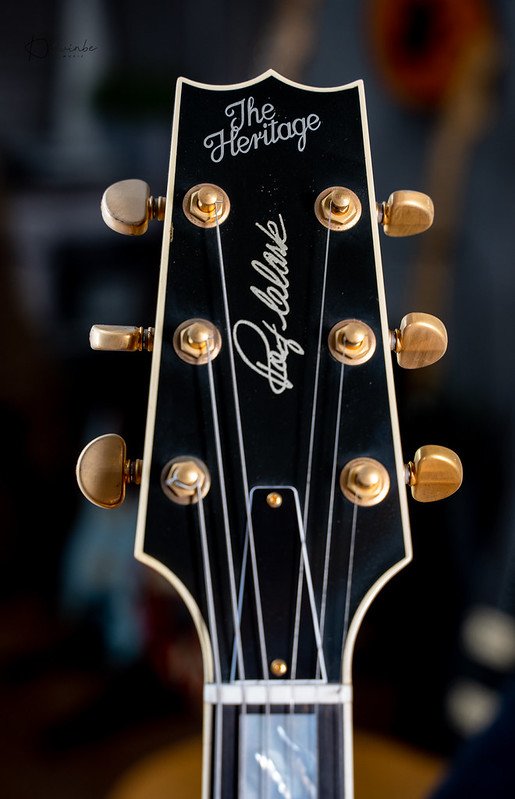
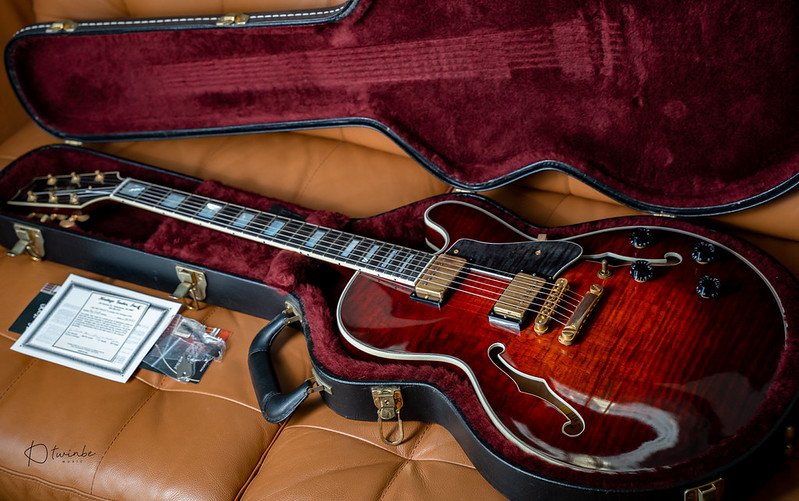
This is my Roy Clark. It's the size of a 535 with a deep single cutaway and a bit more bling.
-
I've had a few guitars that came with HRWs. Archtops with a single pickup sounded great. The bridge pickup being a HRW was too bright for me. I tried but couldn't come to terms with that. Many had a positive experience though.
-
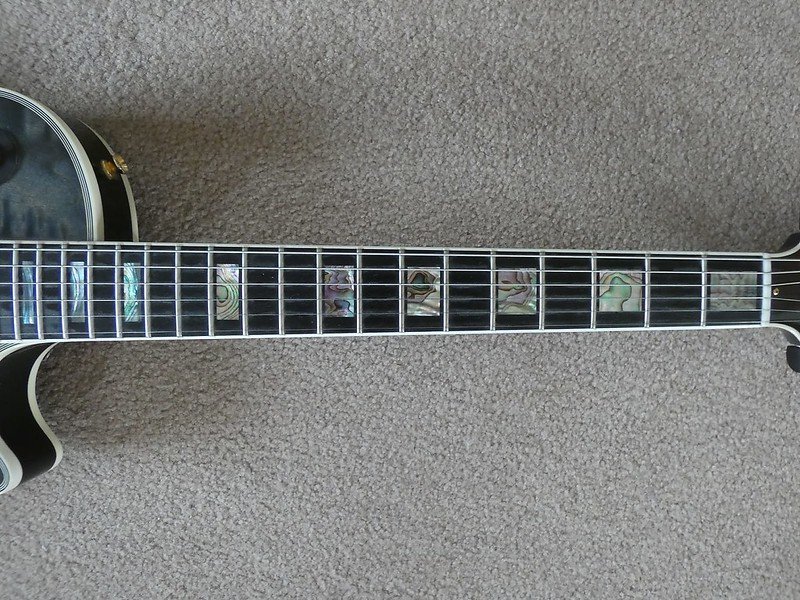
My favorite Heritage inlays are the abalone blocks. I haven't seen an example come out of the factory for a very long time. The H-555 inlays are less than subtle. The design came from the same guys who produced the controversial headstock. Both have grown on me. I don't even notice. If I do, it's part of old Heritage's personality, and I smile.
-
Binding repair with excellent outcome- H-575 Custom
MartyGrass replied to MartyGrass's topic in Heritage Guitars
Heritage began with an arrangement with Schaller for pickups and hardware. I assume they got some discount for bulk purchases. But there were some complaints about the pickups, not the engineering but the tones. Decades later, I believe that they are pretty decent and have more options for adjusting the heights. I think that many had a prejudice against them or simply wanted to personalize their guitar with the pickups of their choice, often expensive ones. Nowadays I don't hear as many complaints. Of course everyone can have an opinion. Here's a comparison with Seths v. Schallers. https://www.youtube.com/watch?v=9mURVofPTnY -
Binding repair with excellent outcome- H-575 Custom
MartyGrass replied to MartyGrass's topic in Heritage Guitars
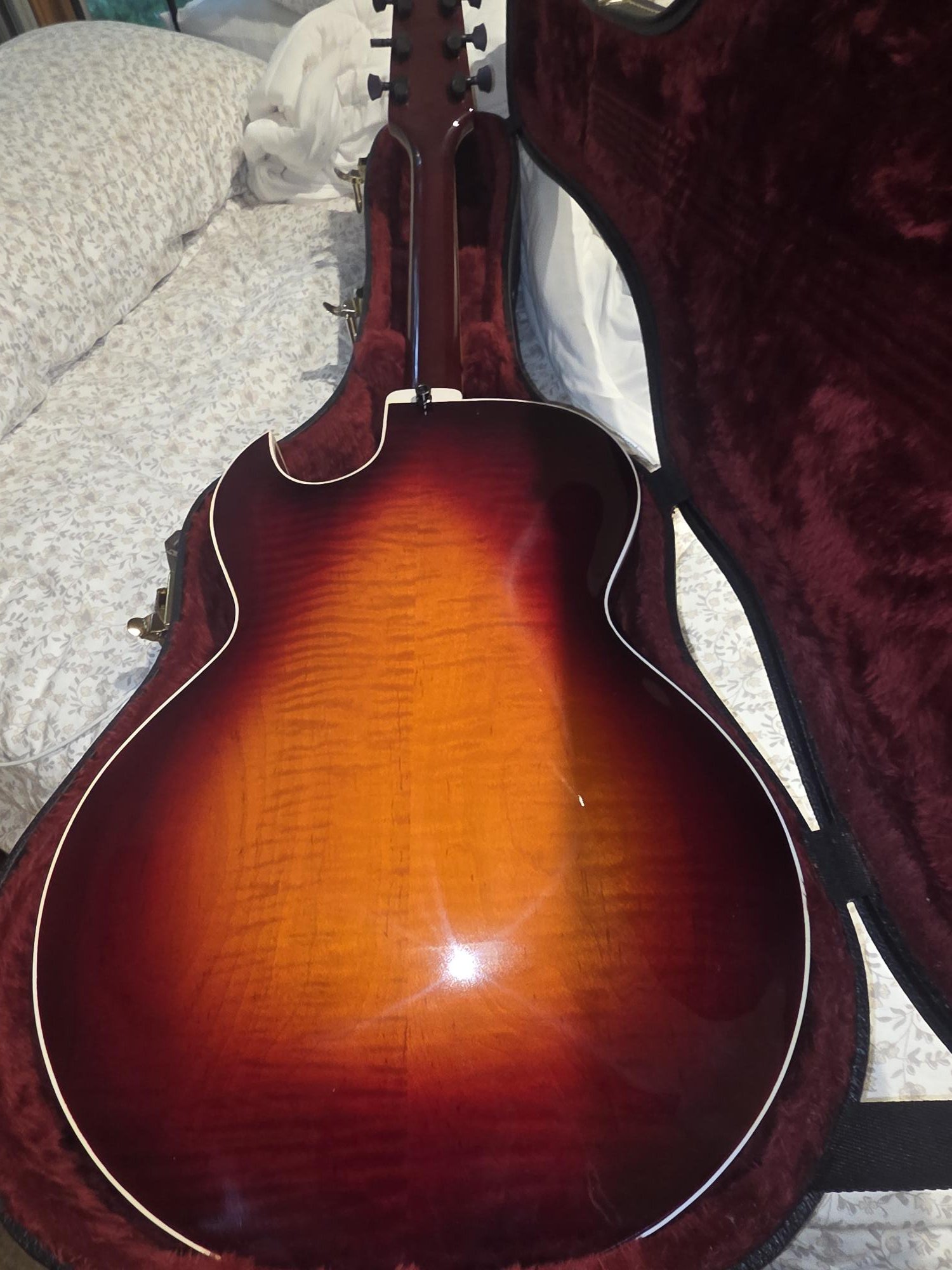
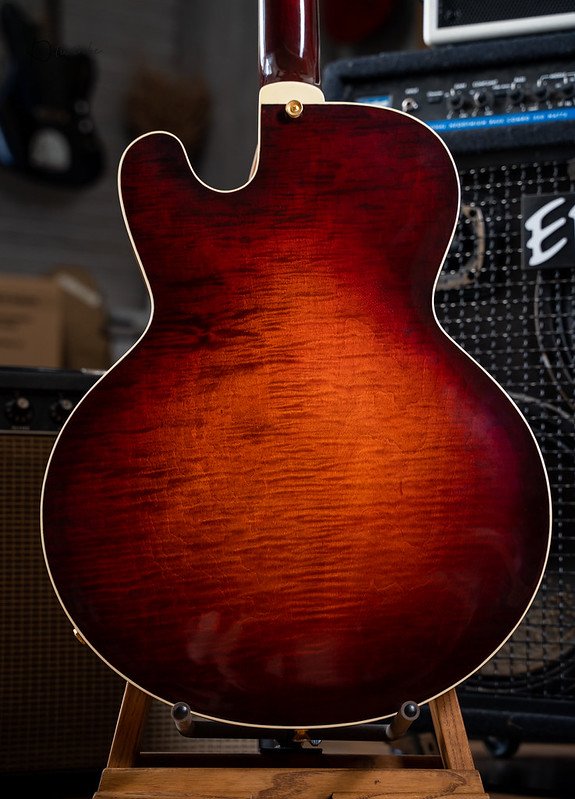
After the repair.
-
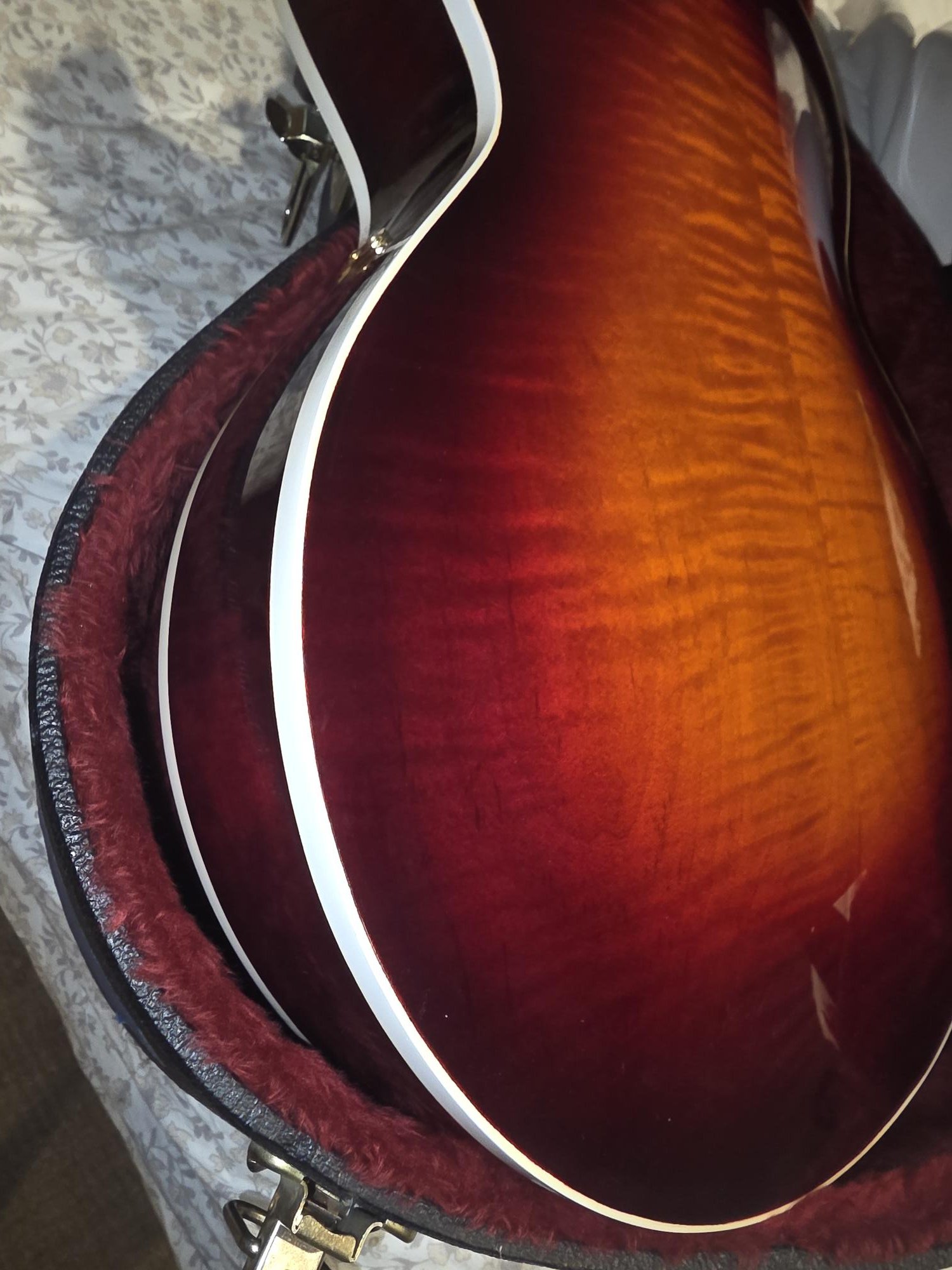
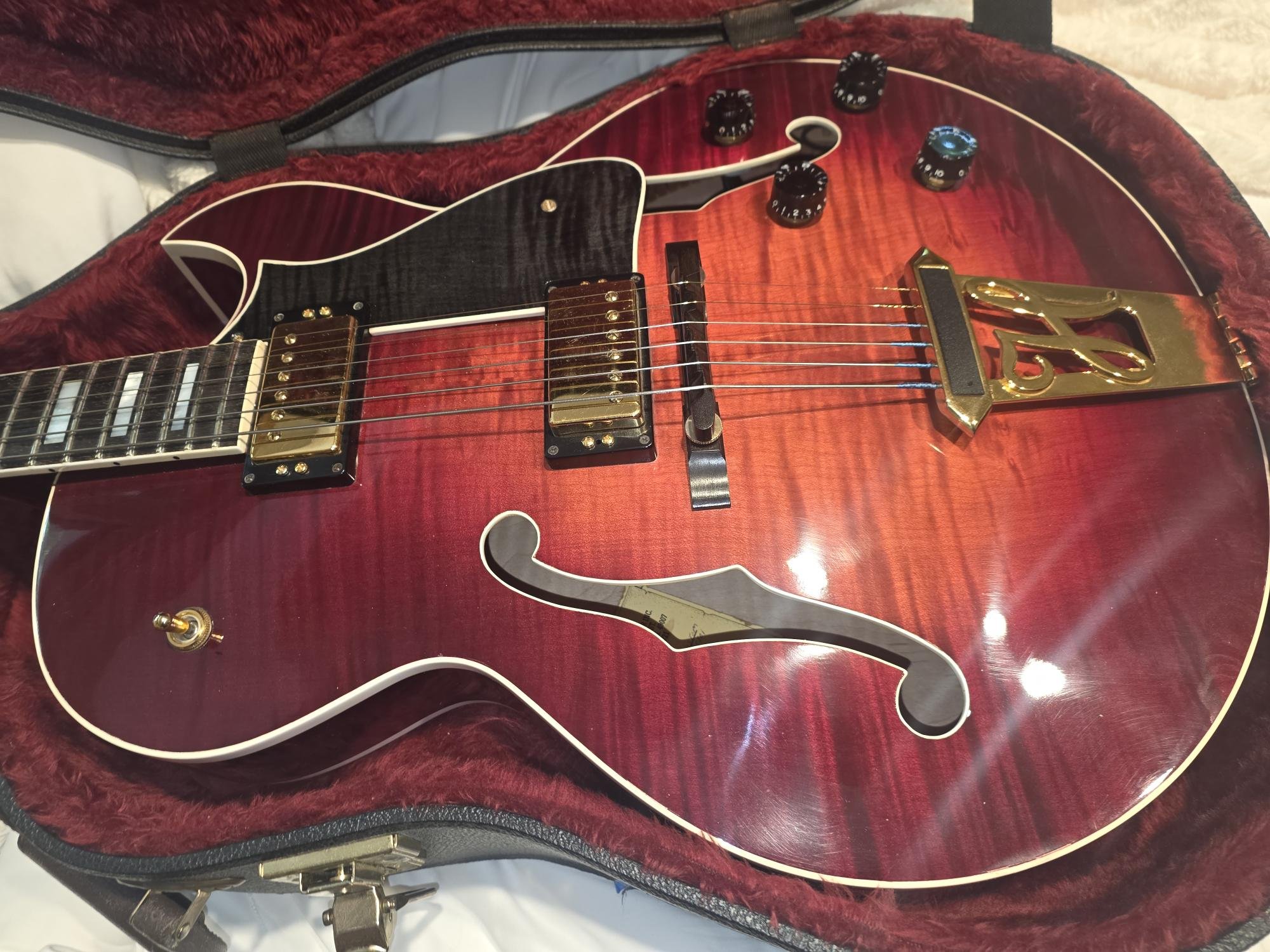
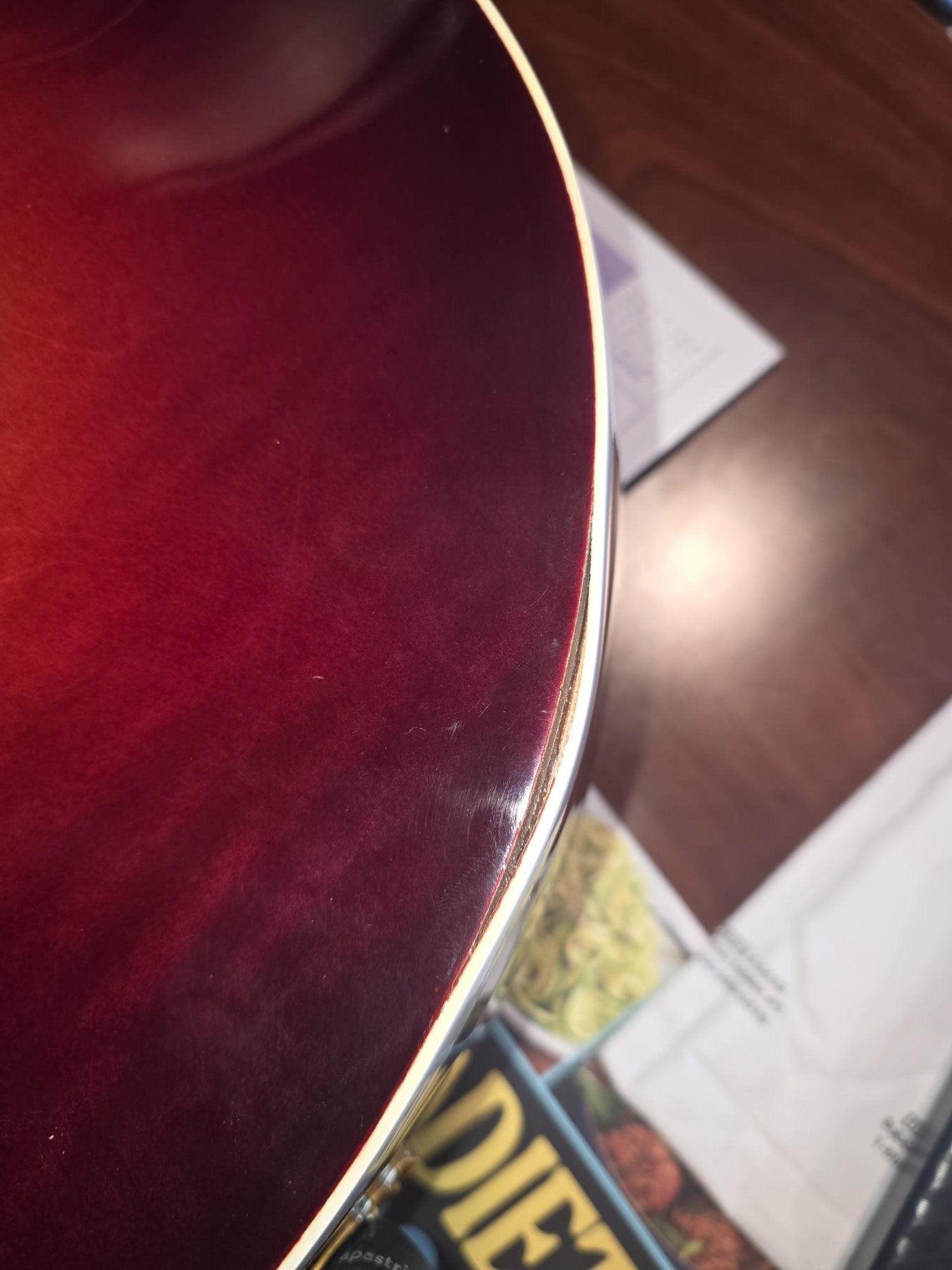
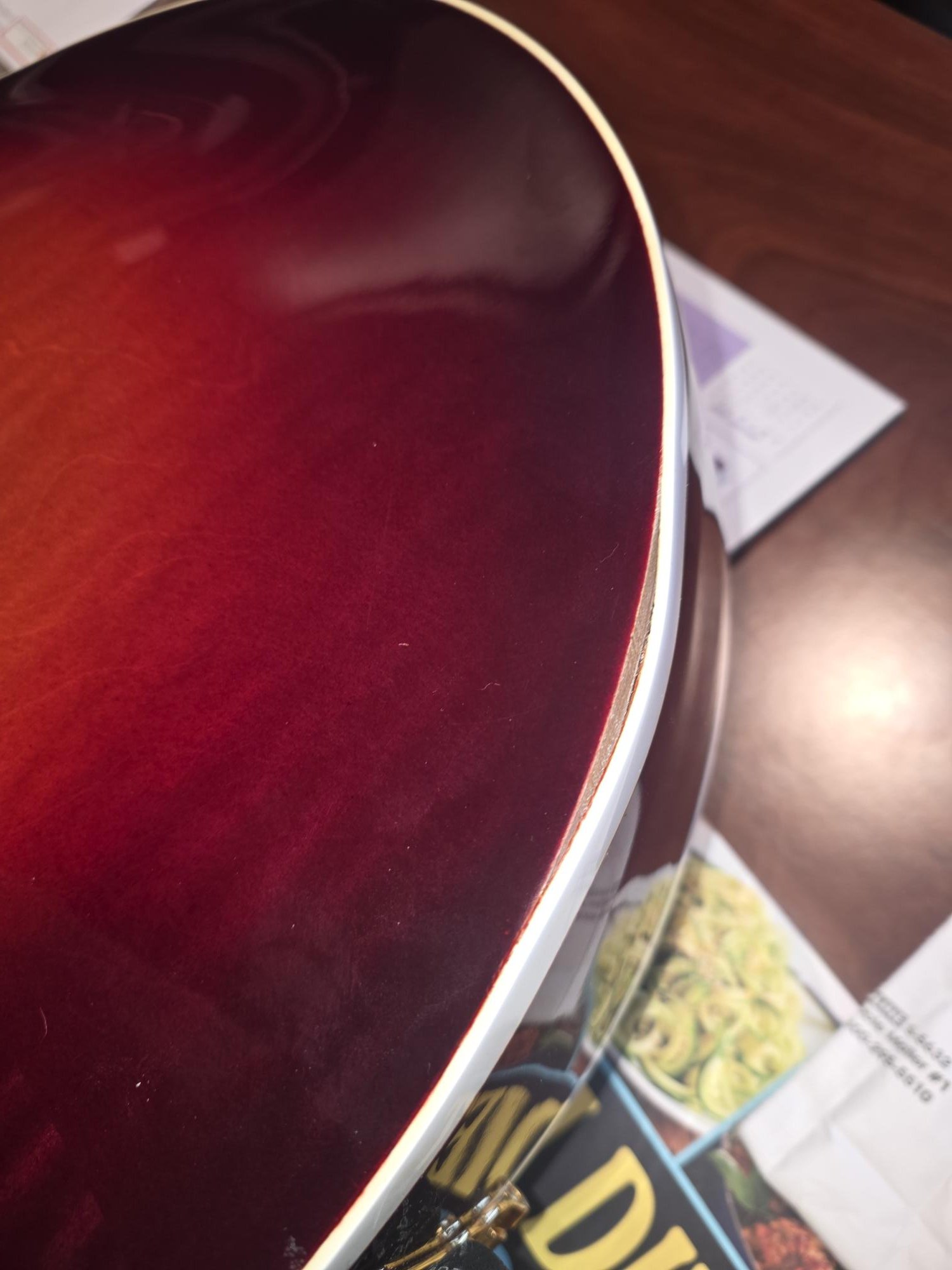
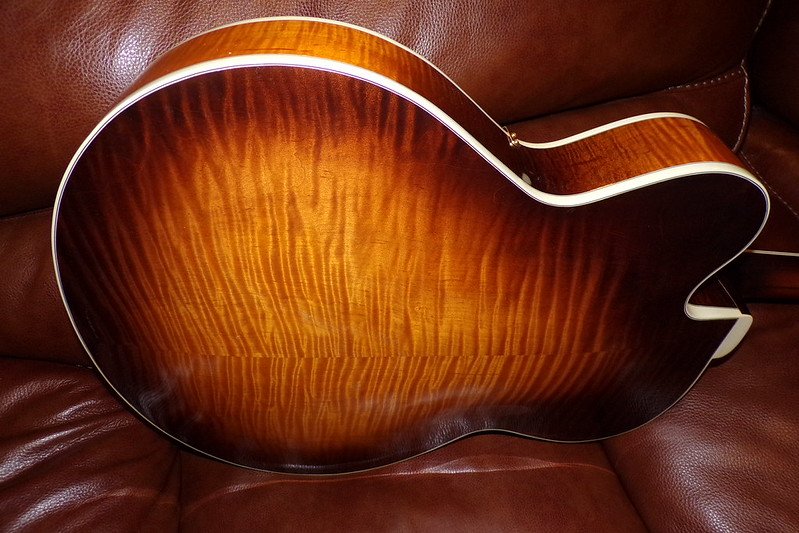
My H-575 had binding separation on the back. It wasn't subtle. I took it to one of the Heritage guys who has a shop in his house. He is a friend. I don't think he usually does commercial repairs. Anyway about a month later it's done. He had to head the binding and reapply it, which took several steps and a lot of patience. Once it was on well he had to touch up the lacquer. It is very hard to tell anything happened there anymore, although there are subtle indicators that I wouldn't have noticed much if he hadn't shown me. I've had binding work done before elsewhere but never better. Here are gratuitous pics.
-
Flatwound vs Round with Seth Lovers
MartyGrass replied to tsp17's topic in Amplification and Effects
I can't estimate how many string choices there are out there, but it's a big number. I listen to jazz players, especially the old school ones, who use flats. Surf music commonly involves flats. They sound great. I tend to use the hybrids (Brite Flats and Half Wounds). They get rid of the squeaks well enough and are brighter. I am well stocked with different string gauges and windings. I can't settle on anything really. I've made peace with that realization. -
The extra value of a Marvbird is the man who made it, the craftsmanship, and the woods. I played a Firebird V from the 60s for years. I have no idea if Marv ever touched the guitar. The Marvbird is on a higher level. Once you get used to the design of the body and the neck being out so far, it feels very natural to play.
-
Flatwound vs Round with Seth Lovers
MartyGrass replied to tsp17's topic in Amplification and Effects
The old surf sounds seem to use flatwounds with single coils. https://surfguitar101.com/forums/topic/35423/ -
https://www.ultimate-guitar.com/articles/features/is_it_cool_or_not_cryogenically_frozen_gear_explained-108422 I can't find any recent references to cryo treatment of pickups, but 20+ years ago they were a thing.
-
The secret remains.
-
Ren wouldn't divulge his secret on HRWs. But I have talked about it with him and with his long-time co-workers. He would only smile when asked about what he did to Schallers. My guess is that they took a bath in liquid nitrogen. I highly doubt he did a partial uncoiling for several reasons. The first is the lack of any hum. The second is that a cryo treatment is an established way to modify a pickup. The third is that cryo treating is clean and relatively easy. Why did Heritage promote the HRW? The best answer I can come up with is because they could, especially is the process is secret. Here is what I got from AI. Cryogenic treatment for guitar pickups involves deep-freezing the components (typically to around or ) to permanently improve their molecular grain structure. Proponents claim this process relieves internal stresses in the metal parts, such as magnets and copper wire, resulting in enhanced clarity, smoother frequency response, and increased output. ProjectGuitar.com +4 Claimed Benefits While controversial in the guitar community, those who offer cryo-treated pickups cite several specific tonal and physical improvements: Enhanced Clarity & Definition: Treating materials like copper and silver is said to improve string definition and provide "faster" transients. Smoother Overtones: The process aims to align the molecular structure to be more uniform, which some makers claim makes overdriven tones smoother and more "in tune" by reducing dissonant overtones. Increased Output: Some manufacturers report measurable increases in output (up to 18%) because the treatment potentially lowers electrical resistance and improves conductivity. "Turbo-Aging": For hardware and magnets, cryo-treatment is often marketed as a way to replicate the "relaxed" feel of vintage parts that have naturally settled over decades. Brands & Services Several high-end and boutique brands incorporate cryogenic treatment into their products: Seymour Duncan: Offers the Zephyr Silver series, which uses cryogenically treated silver wire and magnets for maximum expression and detail. Lindy Fralin / Callaham: Features the Callaham Cryogenic Fralin pickups. Callaham has also been known to offer treatment services for customer-supplied parts. V.I.P. Pickups: Uses a "cryo-tuning" process for their LOVERS PAF-style humbuckers to achieve a more transparent, vintage sound. Faber Guitar: Provides cryogenic treatment for various guitar hardware and components to minimize "bad" overtones. Nitrofreeze: An industrial service provider often used by boutique builders to treat electronic and musical components. Scientific & Practical Considerations Skepticism: Critics often point to a lack of peer-reviewed data supporting tonal claims, suggesting that perceived improvements may be due to psychological factors or "marketing hype". Risk of Damage: Extreme cooling can sometimes cause plastic parts (like bobbins) or adhesives to crack if the process isn't carefully controlled. Metal vs. Wood: While the effect on ferrous metals (steel) is well-documented in industrial settings for hardening, its effect on non-ferrous metals like copper is more debated in the audio world.
-
Highly unlikely that bobbins were wound at Heritage. Ren is a clever person. I'd bet on the cryo treatment. If not that, it's something that can change the sound but doesn't require a lot of labor. Is It Cool or Not? Cryogenically Frozen Gear Explained | Ultimate Guitar
-
To be candid about this, around a decade ago I really didn't like HRWs, at least in the bridge position in solid bodies. The high frequency output was too sharp to my ears. Eventually I sorted it out. The neck position was always fine. It's odd to me because I've never had an issue with Schallers. I'm pretty sure HRWs were cryo treated. I asked Ren once. He just smiled. In that particular context it would have been easy for him to say something like there's more to the story. He didn't. This conversation occured when I brought in a Johnny Smith with a Floating #3 pickup and asked about getting a tone control added. He did the work while I was there, which took maybe 15-20 minutes. He charged very little, no more than $50.


.jpg.f28c5f5a93ab7bb5c372c2ad2d86d75e.jpg)