All Activity
- Today
-

UA enigmatic 82 dumble in a box
DetroitBlues replied to greywolf66's topic in Amplification and Effects
Universal Audio makes some great stuff. I use one for all my modulation effects. The one thing though I remember watching from another gear review YouTube channel is when people describe "Dumble-esqe" or sounds like a Dumble, or any Dumble references... There are so few people who actually know what its like to play though one. Everyone claims its Dumble-like, but how many of them actually played a Dumble and had a side-by-side comparison with one? -
Ren wouldn't divulge his secret on HRWs. But I have talked about it with him and with his long-time co-workers. He would only smile when asked about what he did to Schallers. My guess is that they took a bath in liquid nitrogen. I highly doubt he did a partial uncoiling for several reasons. The first is the lack of any hum. The second is that a cryo treatment is an established way to modify a pickup. The third is that cryo treating is clean and relatively easy. Why did Heritage promote the HRW? The best answer I can come up with is because they could, especially is the process is secret. Here is what I got from AI. Cryogenic treatment for guitar pickups involves deep-freezing the components (typically to around or ) to permanently improve their molecular grain structure. Proponents claim this process relieves internal stresses in the metal parts, such as magnets and copper wire, resulting in enhanced clarity, smoother frequency response, and increased output. ProjectGuitar.com +4 Claimed Benefits While controversial in the guitar community, those who offer cryo-treated pickups cite several specific tonal and physical improvements: Enhanced Clarity & Definition: Treating materials like copper and silver is said to improve string definition and provide "faster" transients. Smoother Overtones: The process aims to align the molecular structure to be more uniform, which some makers claim makes overdriven tones smoother and more "in tune" by reducing dissonant overtones. Increased Output: Some manufacturers report measurable increases in output (up to 18%) because the treatment potentially lowers electrical resistance and improves conductivity. "Turbo-Aging": For hardware and magnets, cryo-treatment is often marketed as a way to replicate the "relaxed" feel of vintage parts that have naturally settled over decades. Brands & Services Several high-end and boutique brands incorporate cryogenic treatment into their products: Seymour Duncan: Offers the Zephyr Silver series, which uses cryogenically treated silver wire and magnets for maximum expression and detail. Lindy Fralin / Callaham: Features the Callaham Cryogenic Fralin pickups. Callaham has also been known to offer treatment services for customer-supplied parts. V.I.P. Pickups: Uses a "cryo-tuning" process for their LOVERS PAF-style humbuckers to achieve a more transparent, vintage sound. Faber Guitar: Provides cryogenic treatment for various guitar hardware and components to minimize "bad" overtones. Nitrofreeze: An industrial service provider often used by boutique builders to treat electronic and musical components. Scientific & Practical Considerations Skepticism: Critics often point to a lack of peer-reviewed data supporting tonal claims, suggesting that perceived improvements may be due to psychological factors or "marketing hype". Risk of Damage: Extreme cooling can sometimes cause plastic parts (like bobbins) or adhesives to crack if the process isn't carefully controlled. Metal vs. Wood: While the effect on ferrous metals (steel) is well-documented in industrial settings for hardening, its effect on non-ferrous metals like copper is more debated in the audio world.

-

Put vintage Gibson pickups in my 535 Custom….I like it!!
nuke replied to brentrocks's topic in Heritage Guitars
3 peace neck??? 😁 -
My Gibson R0 with CustomBucker 3 humbuckers have unbalanced coils (per Gibson) and they have a noticeable amount of hum pickup that other Gibson p'ups do not. (and just for fun, I recently yanked out the alnico 3 magnets and replaced them with alnico 2 magnets, which so far I'm happier with) My 2001 H535 with HRW's exhibits no hum, so I don't think the coils are unbalanced. I pulled out the Gauss meter and measured the magnetic field strength and polarization. One of the unusual things about Schaller pickups is the screws are "north" and the slugs are "south" which is the opposite of Gibson and most other humbuckers. The bridge and neck read about the same in terms of strength, and I'd estimate they are alnico 5 and strongly charged, with excellent field strength. Not the highest I've ever seen, but a bit more than most I've measured. The HRW's are definitely made from Schaller components, from the base plates to the covers and bobbin spacing, even the screw threads. But, Schaller could have simply supplied Heritage with the raw components, right down to empty bobbins for Heritage to wind themselves, and loose parts for them to assemble as they see fit. Or they may have supplied them wound or in any other state of partial assembly. I did check the electrical characteristics, the bridge is pretty hot, much higher wind than the neck. I wrote down the inductance and capacitance of the coils and If I didn't like the HRW's so much, I'd open them up. Schaller pickups are very well made. I'm working on several at the moment for a friend doing some restorations on 80's and 90's pointy shredder guitars. I just had one apart to replace the wire with a 5-conductor cable. I had them completely disassembled to clean up the baseplate and solder the ground shield. One characteristic that I've found is they are consistently wound, with very little variance pickup to pickup, and usually have low capacitance windings, so even hotter winds are nice and bright. I tend to wonder if Schaller built their own winders. They were certainly capable of that. If curious, maybe I can snap a picture of a Schaller pickup disassembled for repair.
-
I just picked up a Universal Audio Enigmatic 82 amp pedal, their idea of a dumble overdrive special in a pedal. I'm delighted, it makes all the other pedals sound better , amazing clarity, delicious warm cleans , and all the drive you could want. Stereo in and out capable, you can run straight to the board for recording or gigs.
- Yesterday
-
REN
-
Depends on the fuzz. I don’t care for Muffs or Fuzz Faces with humbuckers much. And higher output pickups are a no go. The overload the front end too much. Tone Benders? I’ve got a EQD Park Fuzz and I love it with singles, P90s, HBs and Filter’trons. The tone control is very powerful on that and it works great. It’s based off a Mk3 Tone Bender. I do want to try a MK2 Bender eventually. Might grab an EQD Barrows. If you want to use a Muff with HBs you can always put a SD-1 or TS in front of the Muff set to clean boost (volume up, gain at 0, tone to taste). I prefer an SD-1 because it cuts more lows and really tightens up the pedal. Muffs also can be put anywhere in the chain so it’s not as important to have them be first to see the pickups. Fuzz Faces and Tone Benders should be first before anything. I’ve tried them in other spots and this just works. Rats are more distortion boxes than fuzz per se but they can get pretty fuzzy. Catalinbread’s Katzenkönig is set up like a Mk 2 Bender but with the added EQ section of a Rat. I really like this one because it doesn’t cut as much lows as a Rat does and can get pretty fuzzy and raunchy at higher settings. Also has an input knob to balance the pedals input impedance against your pickups or wherever it’s at in the chain. Makes it buffer friendly. Lastly, but certainly not least, is Octave Fuzz. There’s a few variations out there but the mains are stuff based off the Ace Tone Fuzzmaster and the Octavia. My experience is with variations of the Ace Tone Fuzzmaster. EQD does a variation called the Fuzz Master General which takes the Fuzz Master circuit and adds a tone knob (originals had a tone switch) to go from scooped to mid heavy and anywhere in between. I love this pedal. It also has clipping options. Ge transistors, Si, or none for a cleaner boost and just the octave. The octave overtones only come into play on the neck pickup above the 12th fret with the tone rolled way back on the guitar. It’s a glitchy gnarly sound and with the mids up it cuts well. The Catalinbread Octapussy is closer to a Octavia in design but is still more mid forward and less scooped. Great with just about anything.
- Last week
-
I just ran across this video about the history of Gibson in Kalamazoo.
-
Thanks!
-
Thanks! Me too! Was hoping they'd do a 555 just like this, lucky to have it!
-
 Pete farmer
 -
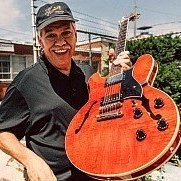 I assume it would be Jeff Nicholson, who was Archie Leach's partner at Plaza Corp.
 -
 A little over 10 years ago, I contacted the owner of this #5, who was a member of HOC, to see if he would be interested in selling it. He shared that it was purchased during the PSP trip and was not ready to sell. I had taken a hiatus recently for a few months from the forums and market due to life changes. I checked back in and saw #5 on Wolfe Guitars and immediately purchased it. The next morning I was contacted by their staff and notified that the guitar had previously been sold but kept reappearing due to a technical glitch on the website. So I was refunded. It may have been before this banner appeared on their site, but I didn't notice because of the excitement of finding the instrument; the same one I had tried to purchase several years before. 😢The elusive Heritage H-140 25th Anniversary 😭
-
From the link FredZepp shared:
-
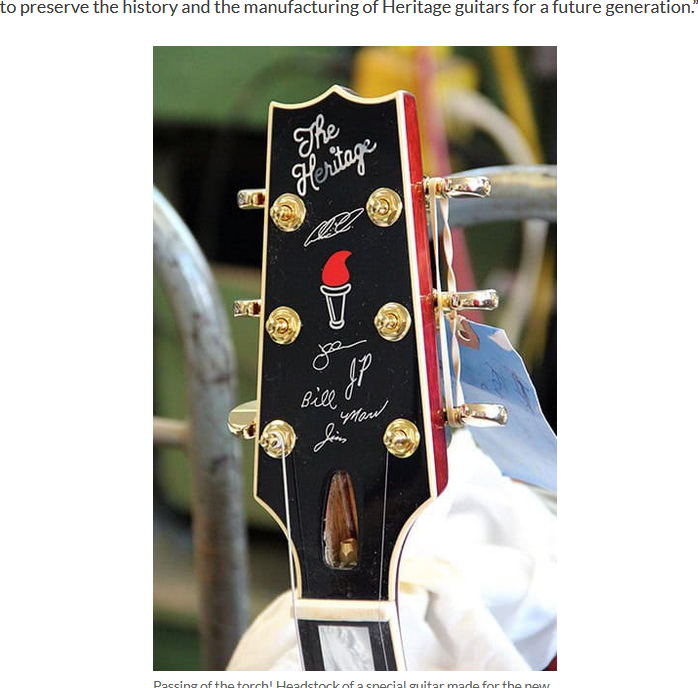
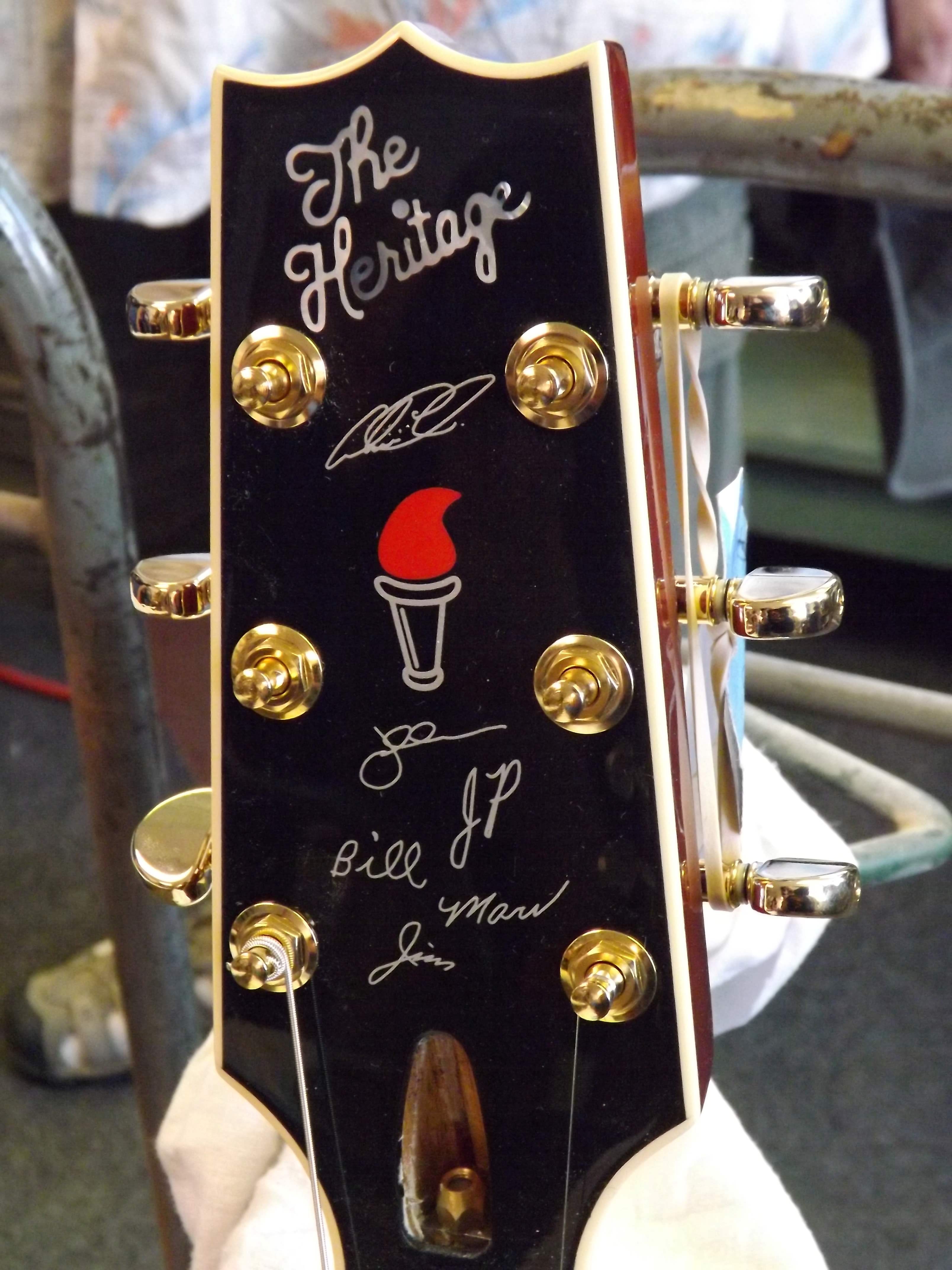
 Do you see six signatures? Jim, Marv, JP ,Bill I assume that one of the other two is Archie.. not sure who else.
 -
Found this... at the bottom of the page. Passing of the torch! https://the-guitar.com/a-heritage-of-guitar-making/
-
 Here's an H-140 25th Anniversary that was sold on Reverb a while back. https://reverb.com/item/91740095-heritage-h-140-cm-25th-anniversary-with-case-in-excellent-condition
 - Earlier
-
 Saw one at a PSP can't remember which one but I should appear in the group photo. Could have been 2012 or 2013. That was the reason I asked Marv to build my 147
 -
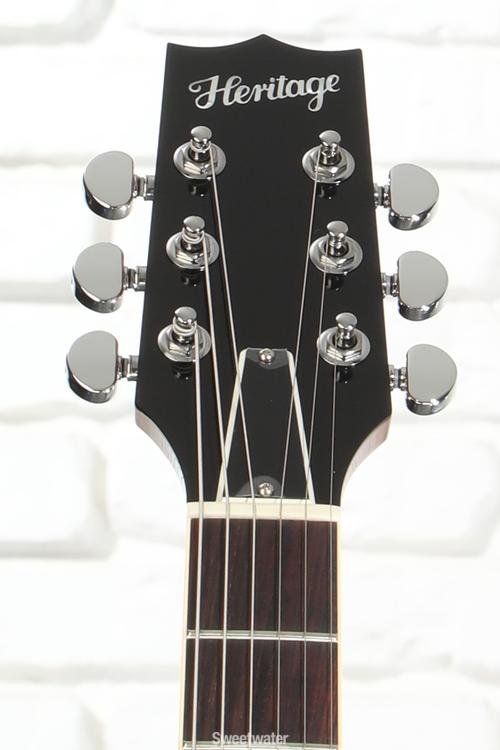
What is to wonder about? I bought it new as a standard II from Sweetwater in January, and here is a picture of the headstock. It is clearly not a custom core or the old standard with the decal logo.
-
 Jay Wolfe may be able to find you one if it exists.
 -
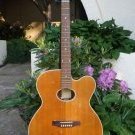 Ah! The caffeine just hit the last two working brain cells. The one I posted was a commemorative model to commemorate , funny how that works, the passing of the Heritage torch from the founders to the new owners.
 -
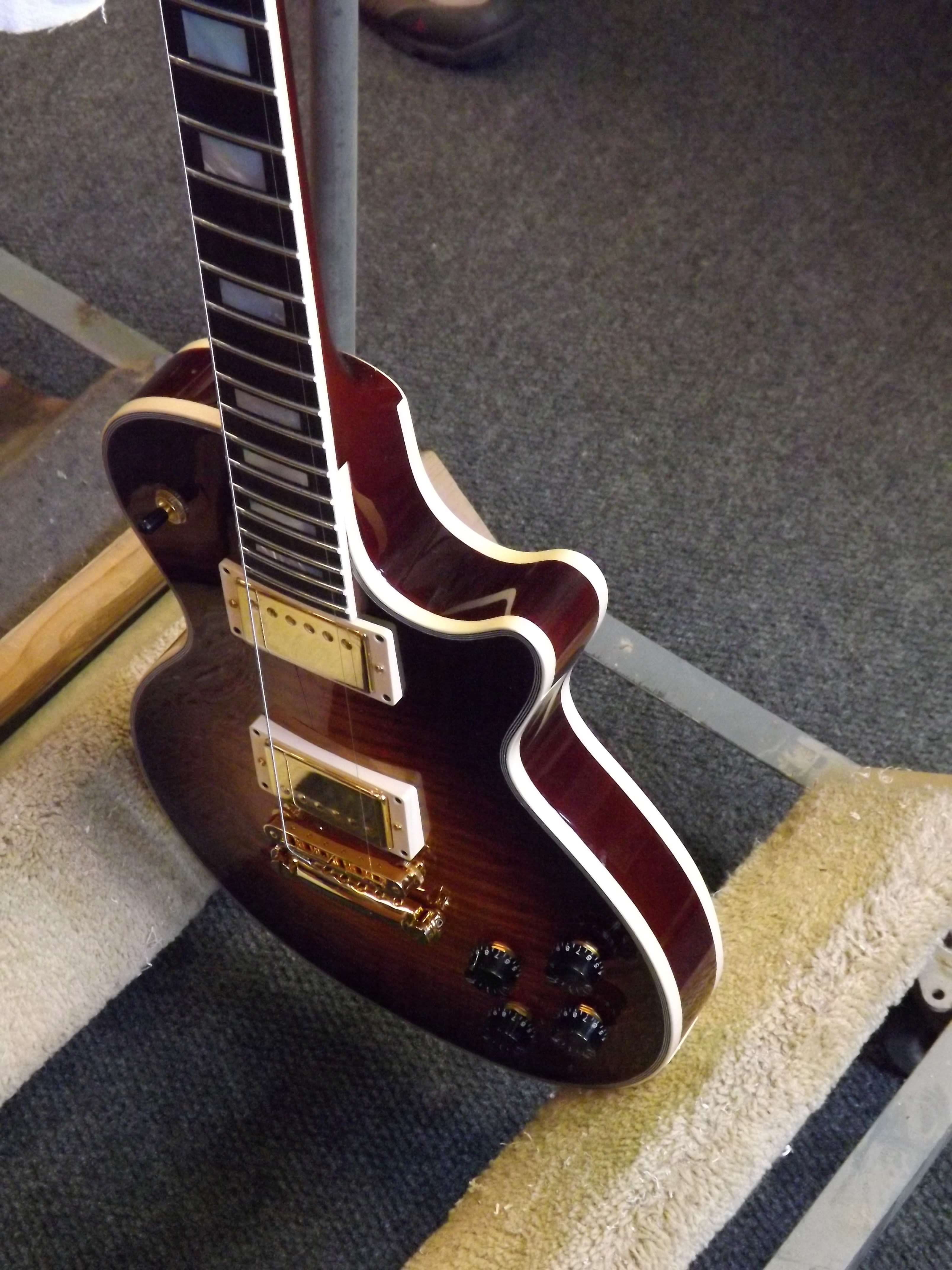
Can't really see the finish but it's the best angle I have.
-
I found the pics I took at the factory. It was PSP IX (2016?) It's a different head stock than the one on Reverb. It looks better executed. The Reverb 150 is located in Muscle Shoals which is about 30 minutes from Moulton, JP's home town, so it's possible JP received it after his retirement and his family let it go. The shop that has it for sale also had a Terminator for sale a couple of years ago. I picked up a HFT-480 from a guy in Moulton, about an hour from me, a while back who told me his father was friends with JP and he got the guitar from him. It's not inconceivable that head stocks were in in the works before JP left. Anyway, a bit of a caffeine induce ramble. Here's the shots from PSP
-
Interesting.... Wonder if it was really a Standard II?
-
Beautiful!