
DetroitBlues
-
Posts
3663 -
Joined
-
Last visited
-
Days Won
60
Content Type
Profiles
Forums
Gallery
Blogs
Events
Everything posted by DetroitBlues
-

Old Heritage H150 - perfect Les Paul.
DetroitBlues replied to les paulverizer's topic in Heritage Guitars
Sweet guitar and a killer setup. I have a DSL40C I used for a few years now, but I have since started using a Kendrick 5E3 Tweed Deluxe amp. I'm really surprised how great it sounds using both single coil Fenders and of course my Heritages. No tube screamer for me, I like the Timmy a bit better. Bad Monkey if I want to kick in some saturation. The Fender Champion II seems like an interesting amp, I was considering one of them when I finally found a Peavey Bandit Redstripe (I found that amp crunch channels sound nearly the same as a DSL40.) -
Bit of a tone report, used the Kendrick at a gig a couple weeks ago. Just running my typical pedal board, modulation and all, to the front of the amp and it was awesome. It fit in the mix just right and cleaned up perfectly with the volume on the guitar rolled back. My sole overdrive was just a Timmy V3. So much fun with a small combo.
-
Behringer was immediately sued for making near exact clones to include logo and naming. Zero shame in their game. They've done the same for high gain amps too if memory services. There are a lot of demo's and videos out there. It even when so far as stating the Digitech Bad Monkey was suitable as a Klon-like pedal. The prices skyrocketed on those pedals for a hot minute.. Debating selling mine for that very reason. Paid probably $25 for it years ago and they were selling for close to $200 used because of a video Josh Scott from JHS made comparing his actual Klon to the Bad Monkey.
-
Who here does any amp channel swtching via MIDI?
DetroitBlues replied to mars_hall's topic in Amplification and Effects
You lost me at Midi...I just plug a guitar cable into an amp. -
That's interesting. I was rather surprised to see after years and years, manufactures still employ a string to turn the volume pot instead of a treadle like a Wah pedal....
-
Excellent choices to have as keepers. Many on here, myself included, have owned and parted with several Heritages we regret selling/trading off. It happens. But you still have some excellent tools in the shed now, so it all works out in the end.
-
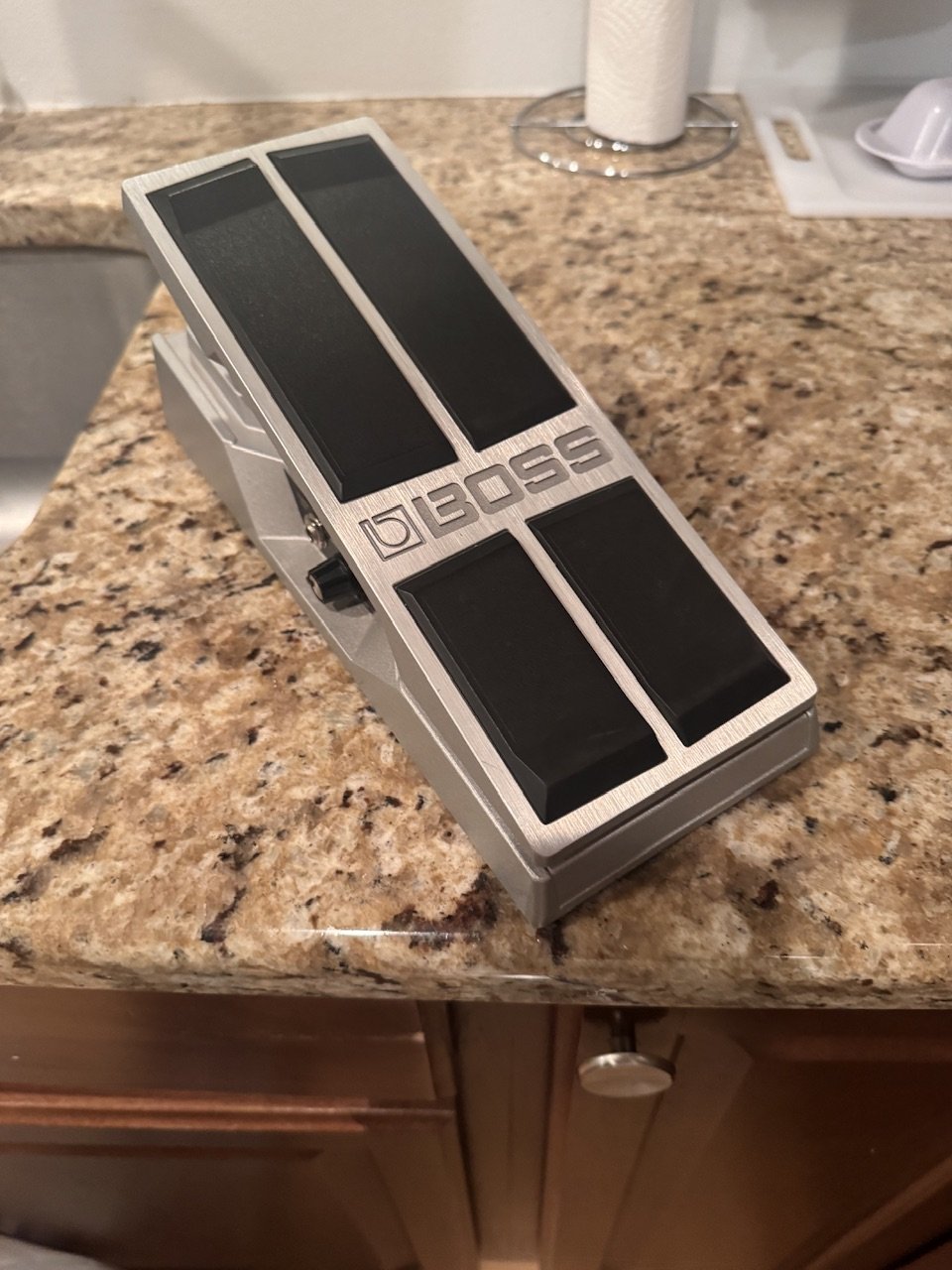
I was going to add a volume pedal to my board... The interwebs recommended to find a used Boss FV-500H. So I bought a used one.... However, this beast of a pedal is about 20% bigger than a standard WAH pedal... Not sure what Boss was thinking making such an oversized pedal... Not sure who they think is supposed to be using this.... wowzers.

-
In the midst of going back and revising the board for a simple method of running everything to the front of the amp and forgo the effects loop. At the same time, I am also adding in a volume pedal as it is something I've been wanting to add and with a possibility of a being in a tribute band that covers Stevie Nicks Fleetwood Mac music. Lots of ambient guitar parts Lindsey Buckingham plays that calls for some additional effects.
-
Your Favorite Heritage Guitar is...??
DetroitBlues replied to Gitfiddler's topic in Heritage Guitars
Plan for next year is to give back to all those who have helped me through dark times so I can retain what I have but make whole of what I possess. -
Heritage Guitars Ascent+ (Import series) Deep Dive
DetroitBlues replied to HANGAR18's topic in Heritage Guitars
Rather surprised on the neck carve. That is a step up to an Epiphone alone. Electronics seem a bit on the budget side, but I’m sure they are fine. -
The Peavey Bandit - Redstripe
DetroitBlues replied to DetroitBlues's topic in Amplification and Effects
This Peavey was my second Peavey Bandit Redstripe (first one was ten plus years ago with a faulty reverb). This one was much more pristine and sounds great. Back then I compared the amp to my new DSL40C with a Celestion Creamback. I found the overdrive on the 2 amps sounded nearly identical. I parted with both of those amps (really shouldn't have amongst the dozens of other great gear I let go). A friend of mine sent me his DSL40C a couple years ago (which I still have) and gigged with it for a long time. I had to get rid of most of my gear since my divorce so it was my one remaining amp. Most recently, I did buy a used Peavey Restripe Envoy 110 (baby-brother to the Bandit). Its a very usable amp, sounds pretty close to the bandit without as many features. The FB pages debate on the use of different speakers to improve any of these amps, but for the most part people keep them as-is. I'm good with that myself. -
I tried one of those Boss units for a hot minute and found it too confusing to run the way I wanted it to.
-
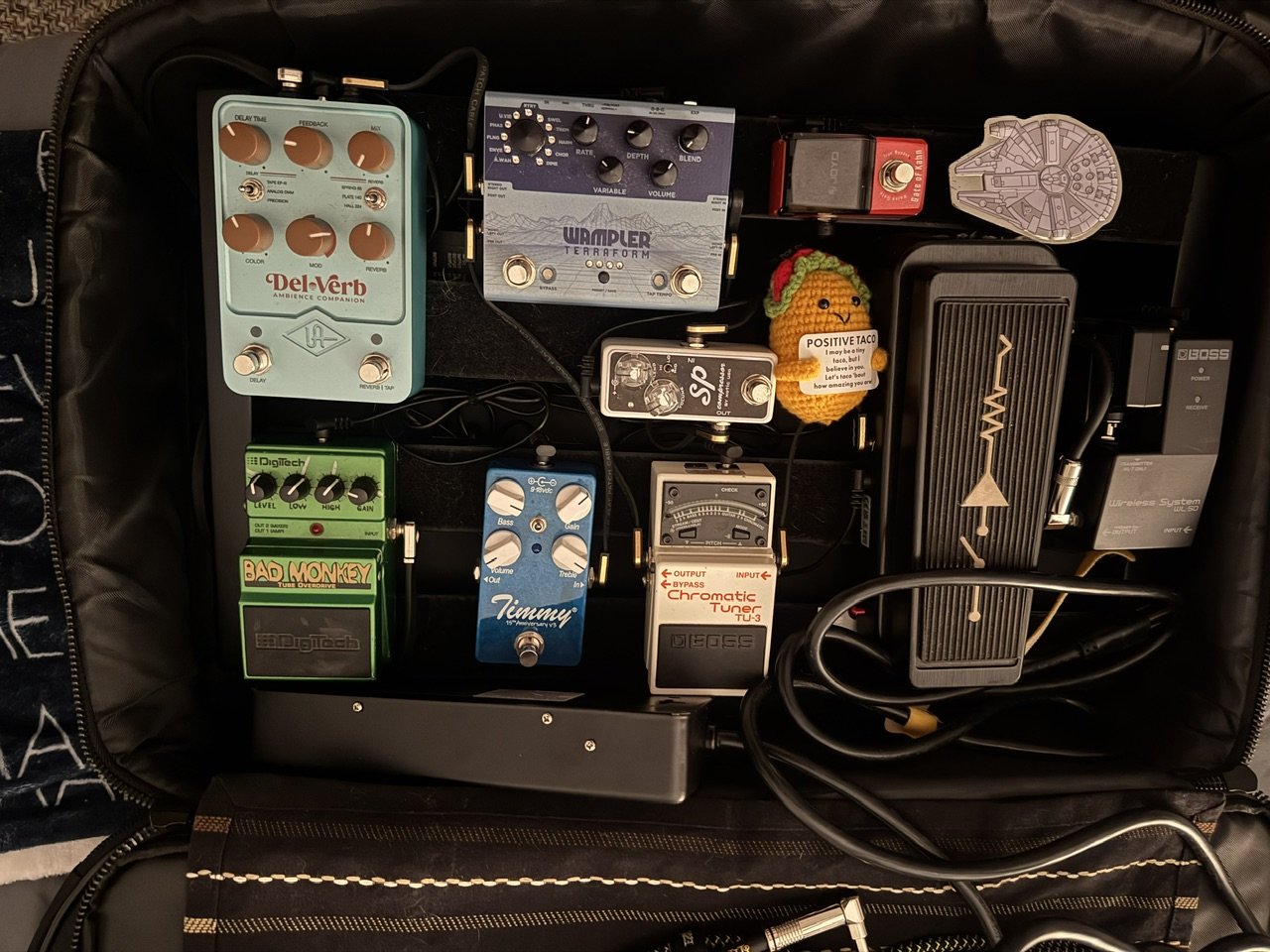
While I have a pair of Timmy's, I only use one at the moment. I use my Digitech Bad Monkey as my solo boost through an effects loop, only works on my Peavey, it doesn't work on my Marshall. I will try it out on my Kendrick this weekend. Here's the flow: Front of Amp: Boss WL-60 > Dunlop Wah > Boss TU-3 > Xotic Compressor > Wampler Terraform (pre-effects loop side) > Timmy v3 > Amp Input Effects Loop: Joyo Gate of Khan (Noise Suppressor) > Wampler Terraform (effects loop) > UA Del-Verb > Digitech Bad Monkey
-
Congratulations! Sellers need to know their gear. If they don't and has some "no return" policy, that definitely raises some red flags. You'll pay a bit more for new, but you'll have some piece of mind now.
-
Your Favorite Heritage Guitar is...??
DetroitBlues replied to Gitfiddler's topic in Heritage Guitars
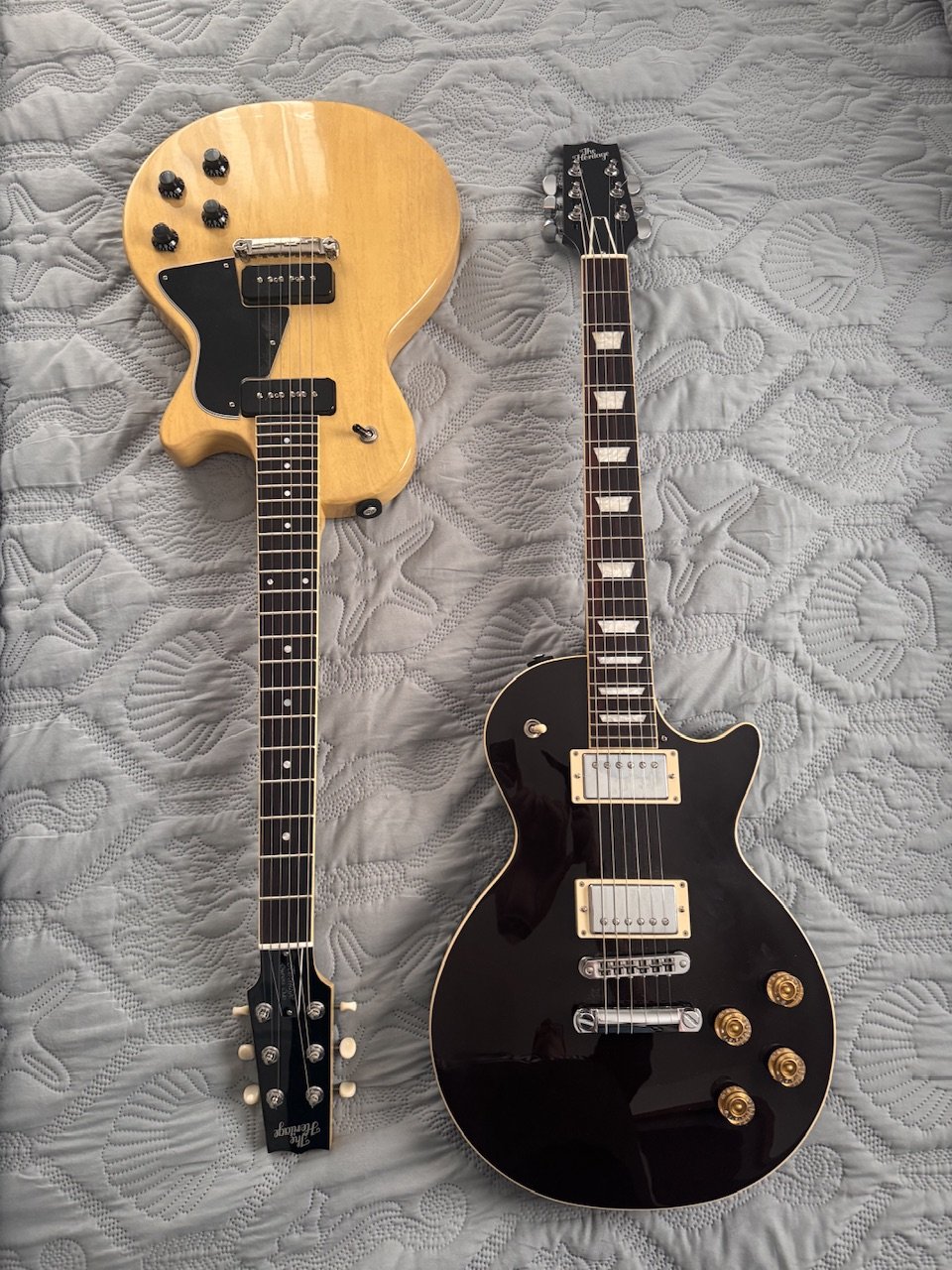
While I do have a few various models to drool over, I find my 2023 H150 Standard I as my #1 Heritage. Been on the stage more over the last three years than any guitar I have and it has some of the battle scars to show for it. Feels best in the hand and sounds great through the amps.
-
I think there are some fair criticisms in here, but I also think you’re drawing some pretty big conclusions from things that are, at best, speculation. First, the QC issues you mention are legitimate. A tuner that isn’t straight and a bridge that isn’t perfectly aligned shouldn’t be dismissed simply because the guitar plays and sounds great. Heritage absolutely has room to improve consistency. But I don’t think it’s reasonable to jump from “I’ve found some fit and finish issues” to “this is why Heritage is struggling,” particularly when you don’t have any insight into their actual manufacturing, financial, sales, or distribution situation. There’s also some important context regarding why Heritage guitars look and feel the way they do. Heritage wasn't created to be PRS. It was essentially born out of the old Gibson/Kalamazoo tradition, with many of the craftsmen, methods and philosophies associated with that factory continuing in a new company. The traditional designs aren't some failure of imagination. They're the product. A lot of players specifically buy a Heritage because they want a hand-built American guitar that carries forward that tradition rather than another company trying to reinvent what a guitar is. And the old factory environment matters. These weren't guitars coming off a modern, climate-controlled, highly automated production line with CNC machines and automated inspection at every stage. You're talking about an old industrial facility, older tooling and a manufacturing philosophy heavily dependent on individual craftsmen. That doesn't excuse a crooked bridge or tuner, but it absolutely provides context for why some of the older guitars can have inconsistencies. More importantly, I think you're overlooking a significant change in the company's history. Heritage changed ownership in 2016 when Plaza Corporation and BandLab became involved, and the company subsequently invested in improving its manufacturing processes, quality and consistency. So if we're going to use individual QC examples to diagnose the company, we also need to recognize that the manufacturing operation isn't frozen in 1985. A lot of the QC issues people associate with older Heritage guitars may very well be considerably less representative of what the company is producing today. That's actually one of the reasons I am cautious about judging Heritages based referencing an older guitar, or even a handful of guitars, as evidence of the current state of the company. I also think calling their innovation an “F-” is a little unfair. If your definition of innovation is “introduce radically new body shapes and designs,” then sure, Heritage isn't trying to win that competition. But innovation doesn't necessarily mean abandoning the thing you're known for. Heritage has taken traditional designs and, in many cases, built them to an extremely high level with features and construction techniques that weren't necessarily present on the guitars that inspired them. That's also why I think the Gibson comparison needs some nuance. Saying they're “just making Gibsons with a different headstock” ignores the fact that the entire heritage of the company is intentionally tied to that lineage. If you don't like that business strategy, that's a perfectly reasonable opinion. But it doesn't necessarily make the strategy a failure. The endorsement and sales-force arguments are more interesting, but those are also largely speculation unless you have actual information about Heritage's sales strategy, dealer agreements, margins, production capacity and the decisions behind particular artist relationships. There may very well have been missed opportunities. I wouldn't argue otherwise. But “they should have signed X artist” and “they should have had a bigger dealer network” doesn't automatically explain their business performance. And honestly, the tone of the post is where I have the biggest issue. You start by saying you absolutely love your Sweet 16 and H-575, acknowledge that they are impressive guitars, acknowledge that the flaws don't prevent you from playing the hell out of them, and then essentially use those same guitars as evidence that Heritage has a fundamental manufacturing problem. It's perfectly legitimate to say, “I love Heritage, but I wish their QC were more consistent.” That's useful criticism. It's a different thing to take a handful of personal observations, add a series of assumptions about endorsements and distribution, give the company an “F-” for innovation, and then confidently declare what is causing their lack of success. That's less constructive criticism and starts to feel a little more like trolling dressed up as a business analysis. Heritage certainly isn't perfect. But there's also value in recognizing that they deliberately chose to preserve a very specific American guitar-making tradition rather than become another company chasing whatever the latest market trend happens to be. And if you're going to criticize the company today, I think it's important to judge the current Heritage, not simply repeat criticisms that may have been much more applicable to the old Heritage. For a lot of Heritage owners, the fact that they stayed true to that Kalamazoo tradition isn't a weakness of the brand...it's the reason we bought one.
-
Since you insist on going down this road... Let's talk about legality.... Gibson sued Heritage over the body shape.... Namely because the first year of H150's were made from unused Gibson Les Paul bodies. So if you want a Gibson Les Paul body with a Heritage headstock, look for a 1988/1989 H150 (can't remember the exact year of production start) Gibson sued because it was their body design... So Heritage changed it ever so slightly to avoid the lawsuit as well as some other "design" restrictions of the time they had with Heritage. In recent years, when new leaders at Gibson decided to go at just about everyone, including Heritage, most of those restrictions were eliminated thanks to the deep pockets of Bandlab. However, I personally believe the sharp cutaway of the 1st gen H140 was the most "accessible" cutaway for the singlecut, solidbody guitar style.
-
The used to be sponsored by True-Fire. I've been really interested in those lessons, particularly since 2 of my favorite guitarists now have their own videos. Davy Knowles and Greg Koch have lessons there now. Both are monster players.
-
There you have it. The idea for the laminated top of spruce and maple was designed for less movement when playing to help reduce feedback that were a common issue guitarists had playing archtops though loud amps. If I remember right, Heritage also makes sure the grain of the middle piece goes in the opposite direction of the top and bottom pieces to help keep the top rigid. Heritage follows the original Gibson recipe for making their semi-hollow bodies. There could be some out there that are solid tops, but those would be custom orders.
-
I was wondering if that was one of your pictures...background looked familiar.
-
I like how he touched on several points including the purchasing of the factory and all the drama that occurred when a ramp up failed.
-
While I didn't use it at my last gig (I wanted to try it a practice first), I am looking forward to hearing this Kendrick 5E3 amp in action. She's dusty but trusty as she is about 35 years old now. (from what I can tell, the amp was made between 1991 and 1994). Curious though about using any modulation in the front of the amp, such as chorus, tremolo, phaser.... Will they sound okay as long as I keep the amp "clean"?
-
Magnificent snatch Dave! Congratulations!
-
Binding repair with excellent outcome- H-575 Custom
DetroitBlues replied to MartyGrass's topic in Heritage Guitars
I was thinking about this post when I heard Dan (Production Manager) at Heritage talk about Heritage moving away from tape to a more traditional method of securing binding to the body. I remember back in the day, binding was held on the body using tape, never thought much of it then. I've seen several videos where Gibson to this day follows a very specific method wrapping a cord to hold binding in place while it dried. I suspect when Edwin Wilson (former Gibson Custom Shop) went to Heritage, this change may have been his idea. I also learned the adhesive used to glue the binding to the body is a mixture made up melted binding and acetone. Heritage used to make the glue themselves but found a supplier that makes it and it's less messy to deal with. -
Looks really cool!