All Activity
- Past hour
-
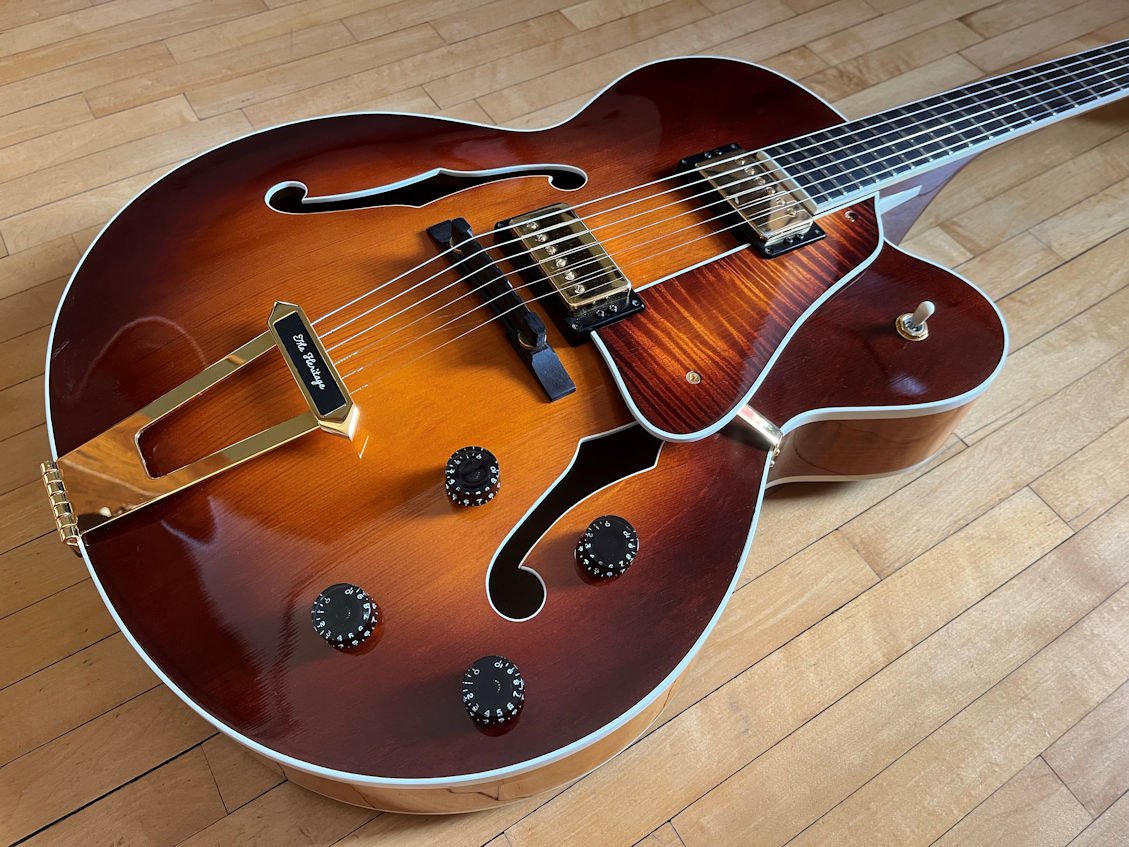
I currently own five Heritage guitars and recently sold my old 1992 H-535. Of all of them, though, I'd have to say that my all-time favorite is the Eagle Classic that I bought new from Jay Wolfe in 1996. At the time I just wanted to purchase a quality jazz box that would carry me well into my senior years. This one gets the least amount of play time than any of the others, but while I consider my others to be tools of the trade, I think of this one as being more like a collectible piece of art that also reflects the beautiful craftsmanship of electric hollow-body guitar building. It's just one of those guitars that will always remain with me.

- Today
-
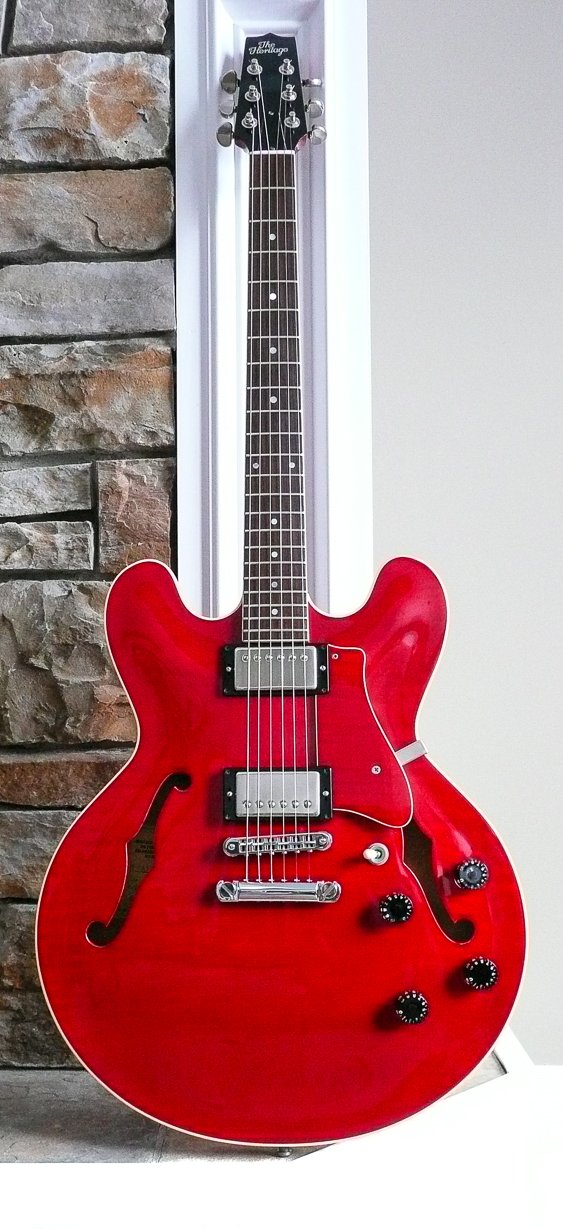
My 1996 H535 has been stellar since I bought it many years ago. It can do anything. Always easy to play, always sounds great. The only Heritage still in my personal cache today. However, my H150 20th Anniversary is the beauty of the family. And it happens to be the best playing, best sounding solid body I've ever owned. Excellent in all respects except one. I couldn't get used to the weight, and this one now resides with son Chris. I've had other Heritages over the years. Sold two of them (H155 Millie and H137) and bought them back shortly thereafter. Had Kuz's H525 for a while but couldn't get comfortable with its physical size and let it go to TalismanRich, who apparently is very happy with it. But the H535 and H150 are the standouts.
-
The original post reads like AI that hasn't paid very close attention in an eighth grade English composition class....
-
I know, this is a silly, maybe even sophomoric topic. But, that said, this is the Heritage Owners Club, right?! 🙂 And haven't we all thought about all of the many Heritage gitfiddles we've owned, played or lusted after? You know, that uber-flame-top H-(whatever) model that you never should have let go. Or maybe that sweet axe that you've worn down the frets on, and rubbed the finish off, due to its irresistible tone and feel? It doesn't matter if your favorite is an Ascent, Standard, Custom Shop, Core, Artisan-aged, Custom one-off, or an old school from the early days of Heritage. Bring it! And share a photo if you have one. No model is off limits as long as it is a Heritage Guitar. I'll kick things off with my all time favorite model...it's the no longer in production H525. I've been blessed to own two of these great instruments, but my all time favorite is the one-off custom that Marv built to my specs back when they built almost anything customers or dealers asked for. Here's a photo of Marv just after spraying it, taken by our dear friend, Ron (High Flying Bird) Warren. OK, YOUR TURN!! LET'S SEE YOUR FAVORITE HERITAGE!!
-
-
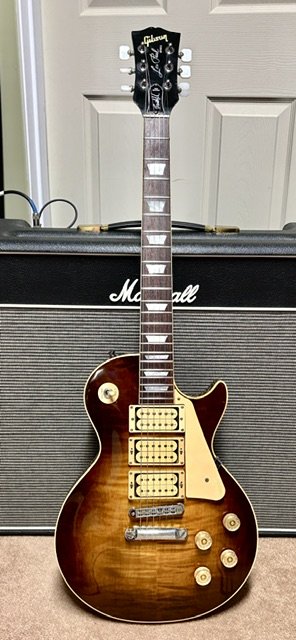
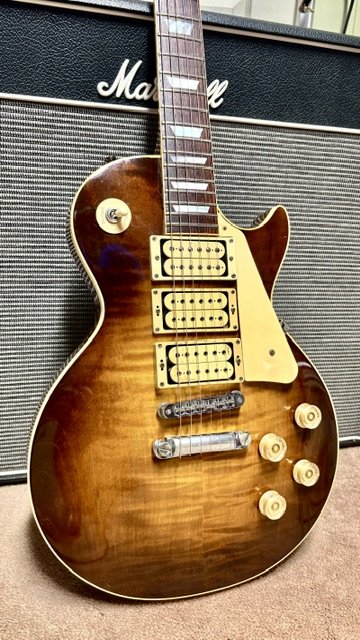
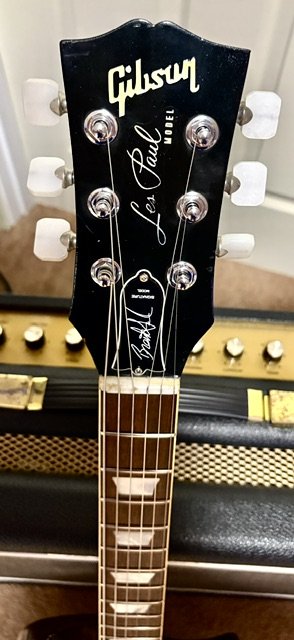
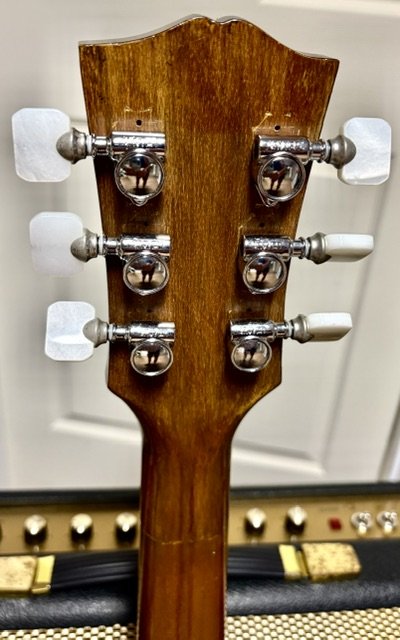
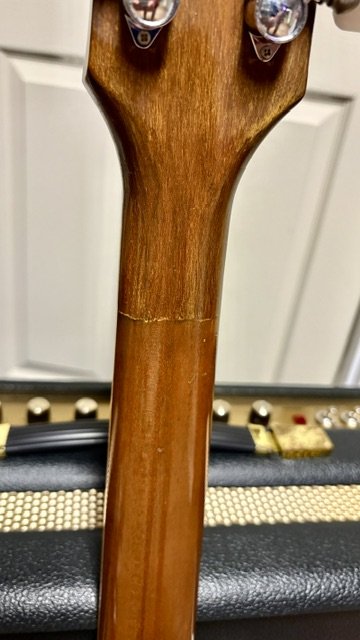
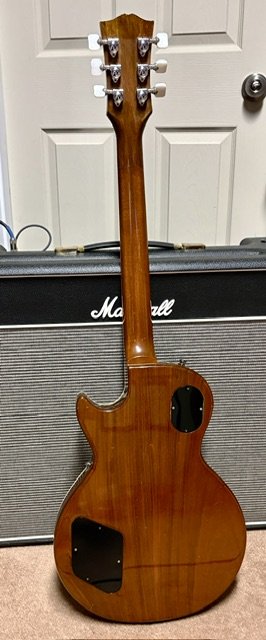
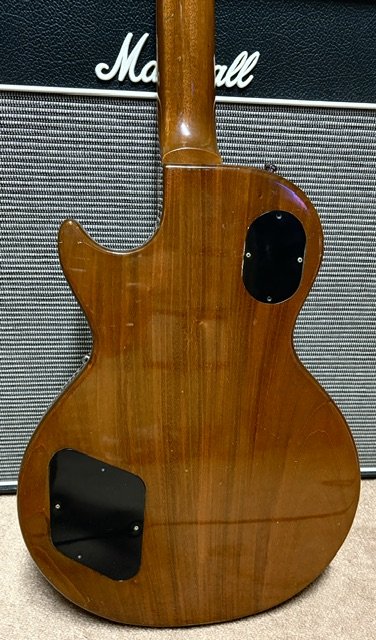
My old “heritage” back home for a setup!!! This was originally a 1989 Heritage H150. The 1988, 1989 and early 1990 H150s bodies were the EXACT SAME CUT as a Gibson Les Paul Standard!!!! It suffered a really bad neck break!!! A local luthier constructed a Gibson Headstock and repaired the neck!!! When I bought the guitar for the first time, I had the middle pickup route done by Pete Moreno. I was trying to make an Ace FREHLEY “smoker” clone. I also added the milk bottle tuners. Added the DIMARZIO pups. Completely re wired it. Then I sold it to a friend. Then I bought it back. Then I sold it to that friend again. Chris asked me to do a string change and a setup on it. It’s 11.25 lbs!!!! But it plays so good!!! And the tone is absolutely amazing!!!
-
Huh? Was this AI generated? Pretty sure Heritage hasn't made a Sweet 16 for about 10 years now, so I have no idea what this thread is about. Yes, Jay Wolfe was and is a Heritage dealer. He was pretty much THE dealer for a while, and also one of the main dealers of G&L guitars. However that is fairly outdated information, and Heritage is now carried by many dealers, small and large.
- Yesterday
-
Love it.
-
I just see a lot of wasted energy being expended on claims of quality issues with guitars that likely were purchased used years ago. There, perhaps wisely, has been no rebuttal or effort to restate. An effort is made to equate quality as the singular factor accounting for all hits to the bottom line, grossly discounting everything else that would belong in the equation. I have to ask myself why would someone make such claims and come up with competition in manufacturing or social forums, ignorance, and imbalances. Truly in the back of my head, I see the whole thing as someone wanting to initiate dialogue to either liven up the place out of their own self boredom/importance, or to test marketing preferences in brand loyalty. In either case, I would not expect a distractive panic in the sheep against a series of one-off incredulous statements. Oh, and "Bad Dan!! Bad!!".... there I'm done. 😜
-
Wow !!!!!
-
Not quite. USA tariffs imposed on other countries are paid by the importer, not the country suppyling the goods. So all of Trump's tariffs are in reality a tax on U.S. consumers.
-
That is not how tariffs work. When the USA enacts 50% on Canada, the government of Canada pays the 50% not the consumer. When Canada retaliates with a 50% tariff on the USA, Canada pays the additional tariff. Bolero pays the retail price, no tariff and Canada pays down the USA debt.
-
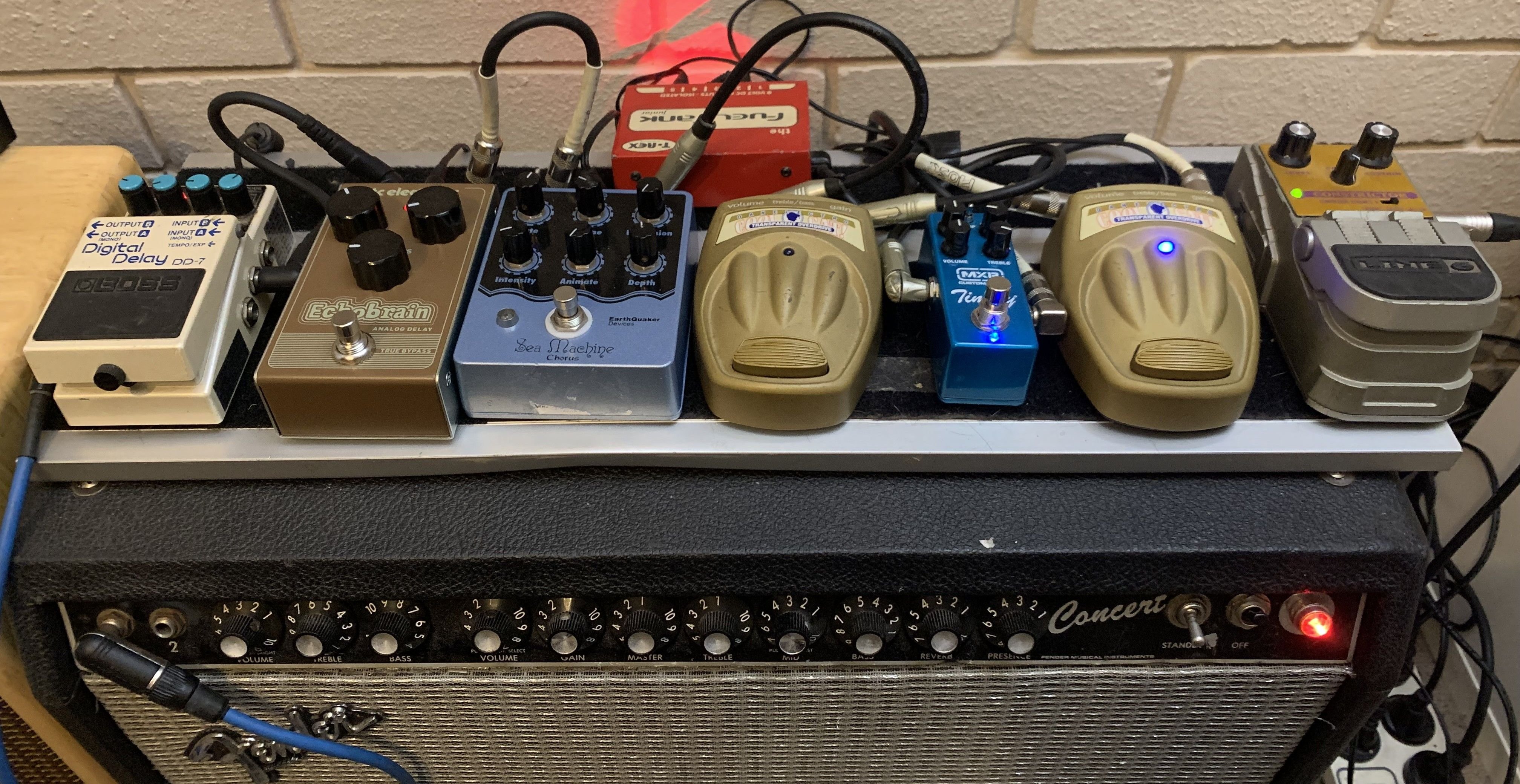
Well, I posted that 68days ago. Since then: Duke of Tone displaced Jetter Red2... but then, the DoT was displaced by a MXR timmy and two Danelectro Timmy clones, 3 timmy's!!!... and also an on all the time Line 6 Constrictor set to the mellow/LA-2A setting Rest of the board is EQD sea machine and 2x delay (short analogue, long digital) Its not the finished thing, but it is finished for today.
-
All da money in da right hand.
-
I know we are supposed to be nice around here, but I feel this is truley the rant of a troll. This diatribe should have ended after sentence number five, right before where the second paragraph should have started. So in defense of Heritage, who I think has really stepped up their game, and is putting out some great guitars, I have something to say (In my best Utah Morman vernacular off course)... Fudge off Shizz head, get you own guitar company. With your new company, you can learn how to fix croooked archtop bridge posts and tuners. Then you can get back to playing your Heritages you love. Okay moderators. I probably deserve punishment for this post, but it was worth it. Gratuitous Heritage picture...
-
Fekkin' brilliant! Exactly what the OP asked for. That, and RJLII's observation.
- Last week
-
I'll choose one focal point, the bridge base. Was it drilled at an angle, were the holes too large, or did the angle migrate over time due to factors like heavy strings with slight reduction in string tension due to storing? It's not expensive or difficult to replace the base or to fill the holes and redrill them. Tuner alignment seems to be much better these days. It was a common issue in the earlier days. That's a third world complaint since the tuners generally function when canted. But it is annoying to not line the tuners well. It's not that hard to get that right. This discussion is in part about what is the function of the electric guitar. Is it merely a tool that allows musical expression? Is it a tropy or work of art? Is it a blend? Is it an extension of our ego? The cost of perfection in the complex process of creating guitars is quite high. That includes wood sourcing, which can involve experience, expertise, traveling, patience, etc. The final step for the factory is shipping to the retailer. These acts may seem simple to the naive. They are not. Every step between can be complex. There is the business of maintaining employees, particularly skilled ones. The point is that there are a lot of things that have to go exactly right to get an excellent instrument. These steps each cost money, yet guitar sales is a very competitive area. So then what is the purpose of the instrument? A couple of days ago I saw a Beatles tribute band during its tour. A lot of finesse went into making the show excellent. The audience loved it. But I looked at the guitars they used. They had a Les Paul, a couple of J-160Es, some Ricks, a Hofner, a Fender and an Epiphone. The finish was worn off in the strummed areas. There were dings and scratches evident. These were superb musicians. They appeared to play effortlessly. The natural ease of playing and the resulting sound told me that their focus was primarily their performance, not their tools. We have all known people who have great pride in the appearance of their possessions. This can include their homes, their cars, and even the tools in their toolbox. With ownership comes responsibility. Some say this is a midwestern mentality: you own it, you maintain it. But I've lived in enough places to know that this thought is more universal and pretty much essential for a manageable life. Things have slipped through Heritage in the early days, back when the viability of the company was in question and the owners were pushed to their limits. Things are much better for years now. My advice based on the experience of decades is that you learn to take care of your stuff. And if you don't like something, don't buy it unless you can fix it.
-
 Gitterman changed their profile photo
 -
lol
-
Your just aggravated over tariffs that’s gonna make your next Heritage more expensive!!! 😂
-
But they did!!
-
Never heard of her. But there are plenty of female shredders out there.
-
A six pack of Molson is better
-
So, I'm one of those nerdy engineer types in real life. I've read the Peavey Transtube patents and they're pretty interesting. Sondemeyer was Peavey's chief engineer for decades. Hartley Peavey hired him directly from RCA's solid state division, back in the days when RCA was a giant manufacturer of tubes, transistors, integrated circuits and even microprocessors, as well as a huge maker of TV and other consumer electronics. Sondemeyer was a brilliant engineer. He created many things, including the CS-400 sound reinforcement amplifier. That was the world's first truly bullet proof professional audio amplifier. I still sometimes see these in venues that have probably been in use since the 1970's. Sondemeyer passed away about 10 years ago. I've actually bread-boarded out the original transtube preamp circuits from the patents and the first-generation amps. It is extremely clever, (getting nerdy here) a modified Darlington pair of transistors, and a couple of other tricks, to mimic the characteristics of vacuum tube triodes, like the 12AX7 tube used widely in guitar amps. That generation of guitar amps are actually quite good. Reliable too.
-
Wow! Very nice!
-
No, it's laminate Semi Hollow.