Leaderboard


Popular Content
Showing content with the highest reputation since 05/26/26 in Posts
-
Never sell. My youngest daughter has dibs on it.
 4 points
 -
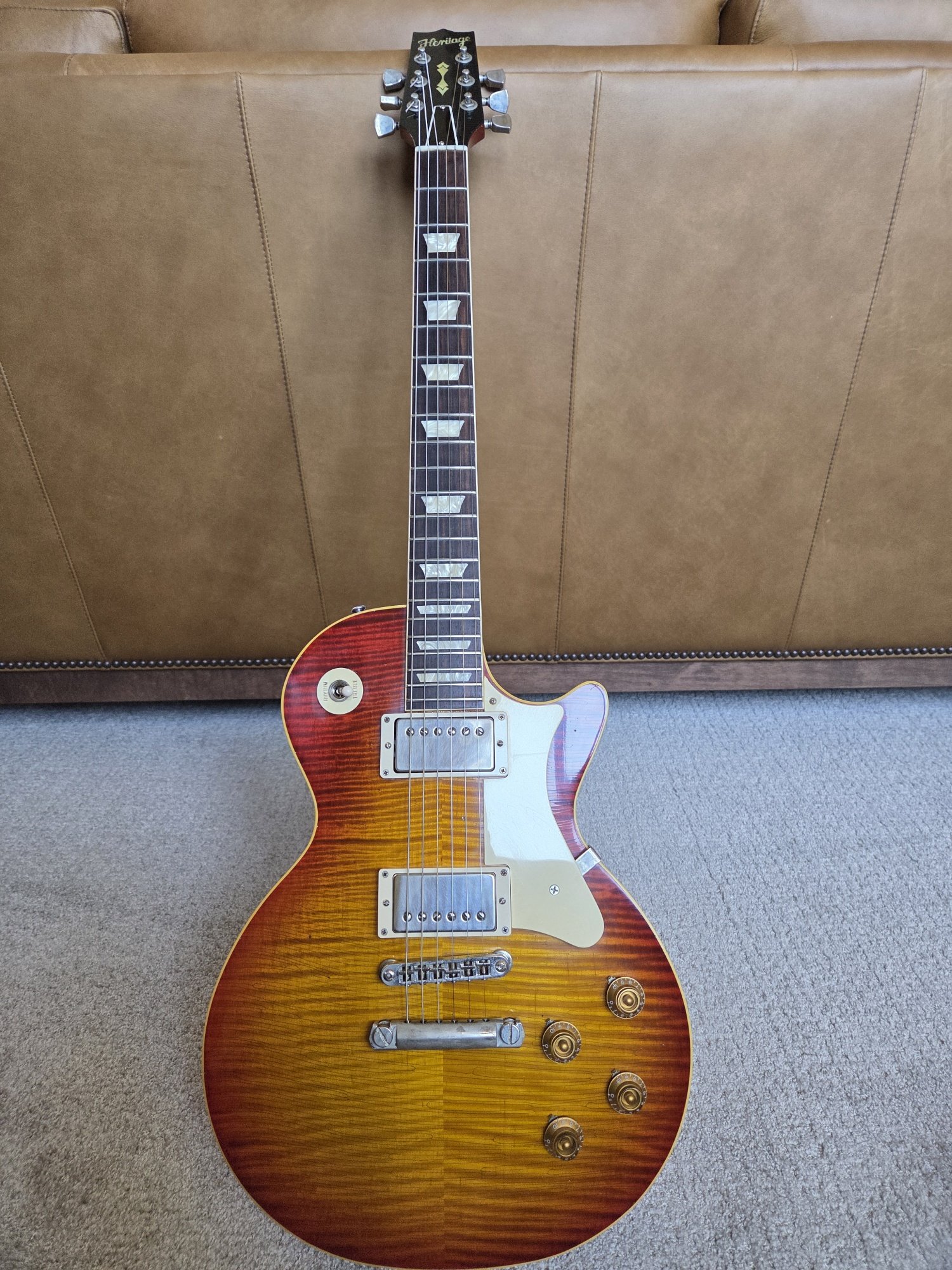
Nice H-150! I have one that looks pretty similar! And yeah, I agree with you about the frets, for I wish that they were just a bit taller, too. I ended up raising the strings a little higher so that I could bend them a little easier but, in the end, I can live with them as well. I also tend to think that the plek process is what brings the frets down a little lower, but I'm not certain of that. When comparing them to my Gibson R9, it feels as though the R9's frets are slightly taller. One of the three CC H-150s that I own did come from the factory with Jescar jumbo frets, and I really like them a lot! It's what they call the "Build 1215" model, though, so it is a special order. You'll probably like the new Heritage bridge once you have it installed. It's not exactly a "night and day" difference, but it is noticeable in sort of a "vintage" kind of way.
3 points
-
Against my better judgement, I’m gonna try one of these. I will report back.3 points
-
Thanks for the info. I did end up ordering the new ABR-1 bridge and thumbwheels from Heritage. They were not expensive ($39 plus $15 shipping). Have not installed the setup yet. I have a 2021 Artisan Aged CC H150 and it has Amber Spirit of '59 pickups in it from original owner. I have been very impressed with them. I have had a couple CC H150 guitars before and liked the 225 pickups but do prefer other unpotted PAF humbuckers. This is the best CC 150 I have had of the three. Only thing I wish was different was having the fret height a bit taller. Not sure if they were Plek'd lower in factory or were shorter to begin with. They come in around .036. I can live with them though. I do like the Pinnacle bridge overall, but am used to the ABR-1 bridges after having several Gibson Custom Shop Les Pauls over the years.
2 points
-
Sorry for the late reply, for I've been away from the forum for a while. Since no one seems to have answered your question, I do feel that there is a subtle, but distinct difference in tone between the Pinnacle and the ABR-1. If I'm not mistaken, I think that the base on the Pinnacle is indeed aluminum, and I'm not sure about the saddles. The ABR-1 is definitely zinc with brass saddles. To my ears, the Pinnacle sounds a bit more "airy" and a bit scooped while the ABR-1 seems to have a little more of a direct punch in the mid-range. The attack on the ABR-1 just seems to be a little more immediate with a little bark thrown in, if that makes sense. I mostly prefer the ABR-1 primarily because it has more of a traditional vibe going on, both in tone as well as aesthetics. It's also a tad narrower than the Pinnacle, so it typically does provide a tiny bit more clearance between the strings and the bridge. It's pretty marginal, though. Heritage started using the ABR-1 style of bridges with their 2025 CC models, and I believe they're made by Advanced Plating. They're practically identical to what Gibson has been using for their CS Historic models for many years with the exception that the mounting holes are drilled larger to accommodate the 8-32 thread pitch on a Heritage bridge post vs Gibson's 6-32 thread pitch. If one so desires, the Heritage bridge is a direct drop-in replacement for the Pinnacle bridge, so there's no need to swap out any bridge posts or tailpiece parts to install one. Unlike the Pinnacle system, the ABR-1 is not locking, so that may be a deal breaker for some folks. However, Faber does offer a Tone-Lock bridge that can be directly installed on the existing Heritage posts while using the Pinnacle thumbwheels, but the thumbwheels will need to be turned upside-down in order to have a flat surface for the bridge. It's also necessary to use the Pinnacle tightening screws to lock the Faber bridge in place, but it does work. Interestingly, Heritage clearly dumped the Pinnacle bridge on their CC models in 2025 in favor of the more traditional ABR-1, but I've never heard the reason for doing so. If one is concerned about saddles falling out when breaking strings with the ABR-1, it can be an issue. I also know that the Heritage ABR-1 bridge, thumbwheels and bridge posts can be purchased through Mike at Heritage, so they are readily available to anyone looking for that kind of a setup.2 points
-
After the repair.
2 points
-
Doesn't seem like a, "vs." question to me. I think they work great with either.2 points
-
Somebody mentioned a P90 535 wish list .. I'd add this one to the please make it wish list, wired with a blend knob
2 points
-
My friend that I play guitar with just bought one of those, basically exactly like the one Skydog has. His friend put on some better pickups - maybe the 225 Parsons ones, and it plays pretty well. he likes it and plays it at our band practices. He said it was set up decent and the hardware and pots etc. are not too bad. I played it and it didn't seem bad at all.2 points
-
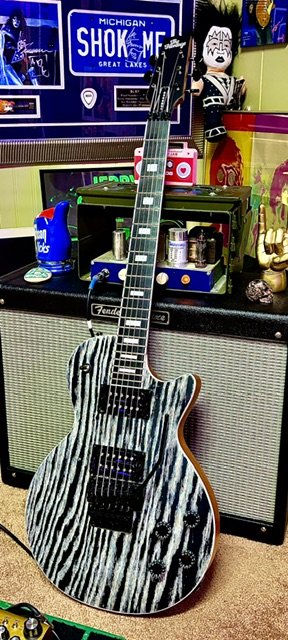
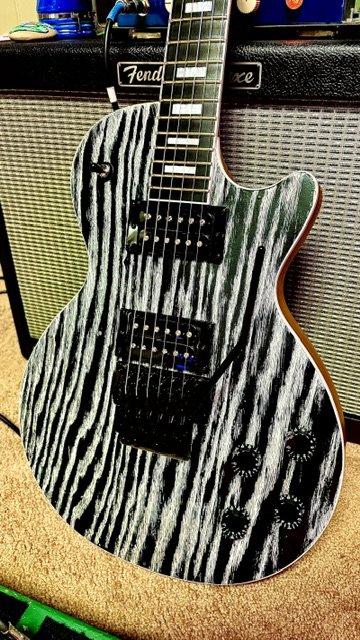
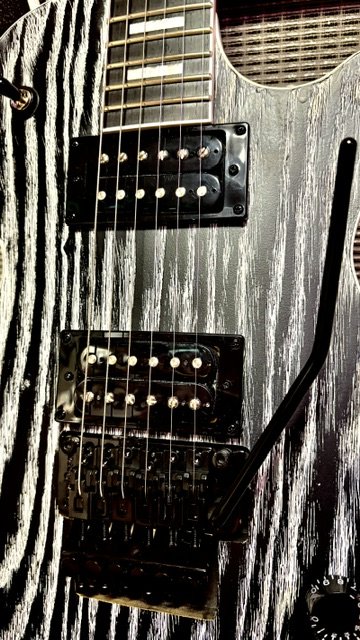
Well I finally had time to dive into this guitar today. I have mixed feelings about it. The construction/fit and finish are quite good. Fretwork is pretty good too. The electronics are very decent. I’m not exactly in love with the bridge pickup. I love the neck pickup. The push/pull coil taps are useless to me. I’ll never use them. But the pots have good taper (mini pots). The toggle switch is very tight. I’m able to get a pretty low action. There were 2 main problems. One, the tremolo springs rubbed the bottom of the cavity when you did a divebomb….thats not good!! So I had to take a wood file and file away some wood inside the trem cavity. Two, the Floyd would not stay in tune. Cheap springs!!!! I set it up for 9s. Came from the factory with 10a. !!! I bought a set of Floyd Rose noiseless springs….problem solved. The neck carve is a medium C. It’s close to a 60s neck. The satin finish is smooth as a baby’s bottom. Fast n smooth. The sculpted heel joint is great for upper register access. It’s light and quite resonant. Playability is quite good. Neck has almost no relief and sets up quite nicely. If I wasn’t a DIY person, I probably would’ve instantly boxed it back up for a refund. The springs rubbing on the back cavity, in my opinion, is a huge drop of the ball by QC! That is inexcusable, especially for a Guitar of that design and style! And is obviously a playability and Tone problem because when the springs rub against the wood like that, it obviously makes a really bad noise that disrupt the vibration of the strings! As far as the Tremolo not staying in tune, I think it was a combination of junk strings and bad springs. I put a nice little dab of BIG BENDS nut sauce on each pivot point of the Tremelo before I installed the new strings on it and between that and the new springs, I am not having any tuning issues at all. And I do some pretty heavy dive bombs with it. After a lot of TLC, this is actually a really nice guitar. Out of the box, it was not. And I blame Heritage for not checking for quality control issues, this Guitar was in Kalamazoo before it shipped off to me so they had every opportunity to double check the quality control of the Chinese factory, and obviously they chose not to! If you’re going to charge $1200 for a Chinese made guitar with the Heritage name on it, the QC needs to be A LOT BETTER!!!!
2 points
-
I have a Heritage Standard H-137 that I purchased in 2020. It was built in 2018. The P90's in this guitar (I think) are Lollars. The guitar sounds great to my ears and I have no plans to change out the pick ups. A great axe!
2 points
-
He was THE BEST.2 points
-
Ok, I am trying the ABR-1 I got from Heritage directly and swapped out the stock Pinnacle. Again- I have the Amber Spirit of '59 pickups in this- not the 225's. https://amberpickups.com/en/products/spirit-of-59-paf Your description above of the difference is pretty accurate. Subtle but the Pinnacle is slightly brighter overall. Like them both.1 point
-
Last time I saw JB, he had his customary 5 or 6 amps behind him and road cases just offstage with a dozen or so early Marshall’s. I’d wager there’s financial incentive somewhere buried in this announcement. Digital are better with absolute frequencies but, the valves give it soul. I’m pretty sure Joe understands that.1 point
-
There are many, but not all, guitarist who like to modify instruments. This is their right, of course. But the reasons are varied. One is that the person may want to simply personalize it just for the sake of it. There's nothing wrong with that. They may put a sticker on it, a different TRC, etc. Many want to tinker with some components. Quite a few know exactly what they want. Strings and pickups come to mind.1 point
-
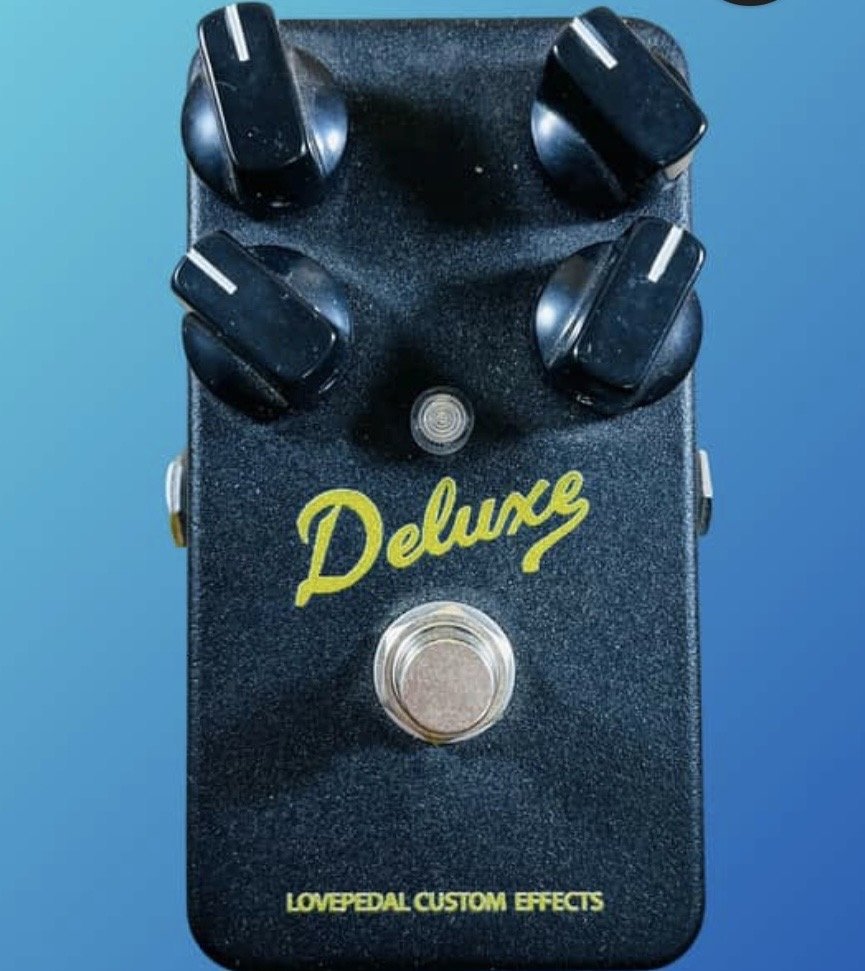
Does exactly what it claims to do. Super transparent overdrive. Simple - three dials, no fuss. Works best at 18v. I’ve got it in front of my Lovepedal Blackpanel Deluxe pedal. They sound great together. Or i can use either as an always on. Trying to decide which one. Great combination. I think i like the Lovepedal always on, then use the Lightspeed to push it sometimes, but i’ll keep tweaking and see how it plays out. Excellent pedal.1 point
-
Agree, there are a tremendous number of factors when considering - desired tone, style of music, fingers and touch, wood and build, amps, ears, (hearing is MAJOR as frequency range decreases with age ((except for one of our members who has dog ear 20 -20,000 HZ range) Marketing and brain perception1 point
-
1 point
-
Same here. Different times I like different combinations. With this particular guitar and pickups - as of now I hear a more complex, dynamic and interesting sound with round wound strings. it feels a little presumptuous of me but I’m going to start bringing both my 575 (or550) and the chambered Millie to gigs for different vibes. We typically do a mellower classic jazz set then a more upbeat groove second set, so a move to the Millie between sets seems fun.1 point
-
I can't estimate how many string choices there are out there, but it's a big number. I listen to jazz players, especially the old school ones, who use flats. Surf music commonly involves flats. They sound great. I tend to use the hybrids (Brite Flats and Half Wounds). They get rid of the squeaks well enough and are brighter. I am well stocked with different string gauges and windings. I can't settle on anything really. I've made peace with that realization.1 point
-
He bought it..1 point
-
UA like most of us is aware of the uniqueness of each of Dumble's amps, they have a large library of tone permutations available .. for me. Having been a sound man for 40+ years, I just dial in a good tone and smile. Dumble's have a reputation for liking to be dimed, I'm more of clean Hi-Fi base tone guy and play at 85 db or lower the majority of the time .. at 71 I'd like to keep my hearing a while longer. I'm very happy with the clarity the pedal gives .1 point
-
Yeah, there's no such thing as a, "Dumble". If Dumble didn't make or rebuild it for you, specifically, it's not YOUR Dumble, it will always be the amp Dumble built for the artist he built it for. There are many amps built by Alexander Dumble and they're all different. That's no judgement on the quality of this particular pedal. It might be great. And Mr. Dumble built some pedals too...1 point
-
Wondering what one would need to pay to get a marvbird, not an assembly line 357?1 point
-
The standard run 357 had thinner wings and the slim 60’s one piece mahogany necks.1 point
-
New favorite pedal, at least for today. Bought used and as with many Lovepedals, no control labels and no manual. Couldn’t find a manual on line either. But - Simple to dial in once you figure out which dial does what. Works great in front of my Mesa California Tweed 40 at low gain (both pedal and amp) for “always on” tone enhancer then a a little hair and grit as you dial up the guitar volume and dig in a little. With guitar volume at 10 - Doesn’t take much pedal gain to get a nice dark and complex breakup kind of like the lead guitar part on the Beatles “I Want You” from Abbey Road. Nice not expensive, fancy or complicated “amp in a box” for a pretty good approximation of Black Panel Deluxe Reverb base tone and breakup. No reverb on the pedal, but my amp has that, so no problem. Add a little delay and it is great clean for jazz and rhythm playing, dime the guitar volume and play a little more aggressively (doesn't take much) and you’ve got a great lead tone with some hair around the edges and more sustain. Definitely a keeper. I’ve got a Greer Lightspeed on the way and thinking to pair the two together and see if there is good synergy between them or maybe run them separately for different flavors, or both.
1 point
-
I put a Duncan JB in the bridge position last night and discovered that it is a mahogany body with a carved maple cap that has the Ash veneer on top of that. I should have taken a pic. I forgot. lol. 😆1 point
-
I have been using my Iridium as a direct into an interface, either recording, or at our jams where everything except drums are direct (it's a the drummer's house anyway). Usually on the Deluxe Reverb setting. I don't think I've ever even plugged it into an amp. I'll probably take it off the pedal board when I come to PSP. I could put my EHX B9 organ pedal there!1 point
-
Thanks for the report, Brent. Manny's must have delivered it pretty quickly. I've been looking at one of the H-150+ models but haven't pulled the trigger yet.1 point
-
Were the springs just too big for the cavity? It's strange that they would rub. I probably wouldn't get that model with the Floyd, so I wouldn't have that problem. I only have two guitars with trems, and one is decked. There other is my G&L Legacy but I don't really use the bar.1 point
-
After a few weeks with this pedal, pairing it with different tube and solid state amps: I’m finding it most useful in front of a tube amp. Very warm overdrive. Thickens tone and gives it more weight, with just a bit of softness around the edges. Really nice. Not “transparent”, definitely colors your tone in the way intended. I’m sure I have not explored or mastered all it can do, and I haven’t used it as a “pedal in a box” straight to interface or PA, but I like it a lot used simply. Maybe because I’m an effects simpleton.1 point
-
found locally at a killer price, picking it up this afternoon . . . the Deluxe Reverb will take a breather . . .
1 point
-
We saw Albert Lee a few years ago at the Acorn in Three Oaks. He was playing his signature guitars through an old Silverface Twin. It’s a small venue so the amp wasn’t jacked up much. It still sounded stellar, both clean and with pedals.1 point
-
last I heard was about $3.50 and a pack of smokes1 point
-
There’s been one for sale near me for the last year. It’s a Silverface MV model that’s been completely refurbished. No affiliation. I’ll send you a PM1 point
-
I also missed the inaugural meeting. Unfortunately, there were some issues at work that necessitated me being there. Didn’t get out to my first one until 2013. I also made it to the following, and final “Barn” year. Man those were sweet!1 point
-
Very happy with the results with round wounds. Definitely more of the pickup character comes out. Especially with guitar volume at max or close.1 point
-
And they weighed a ton! My friend's 2x12 combo buckled my knees when I lifted it, I imagine the 4x10 combos weighed a bit too1 point
-
Those MusicMan amps were great.1 point
-
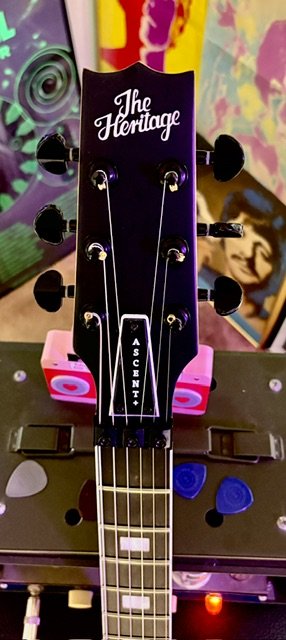
$1200 isn't unreasonable. Not all Chinese shops are the same. An Eastman SB59 made in China is $2000. It's not the same guitar as an AliExpress Chibson Les Paul for $250. If they are using a genuine Floyd Rose 1000, that's a couple of hundred bills right there. It looks like they are using a traditional headstock, not a scarf joint. I do like the way they are doing the neck joint on the Ascent+.1 point
-
Well, there was no dragging, kicking, or screaming. She enjoyed those PSPs as much as I did.1 point
-
I saw Johnny Winter in a medium size club and he was playing through 2 Fender Twins with JBLs stacked on top of each other. That's 170 watts of power through 4 JBL 12s. It was loud. Good times.1 point
-
You might also try a set of half rounds. You get much of the ringing of a round wound but the smoothness of a flatwound. I have a set on my 535. I got them after I tried half rounds on my bass. No more finger squeaks, but it sounded more like an old broken in set of roundwounds than the typical dullness of flatwounds. D'Addario makes them. $10 a set, so it's not like there's a major investment. 9-42s thru 12-52s so you have options. I tried them instead of using Elixers to quiet the finger noise. GHS calls them "Bright Flats". Same style as D'Addario.1 point
-
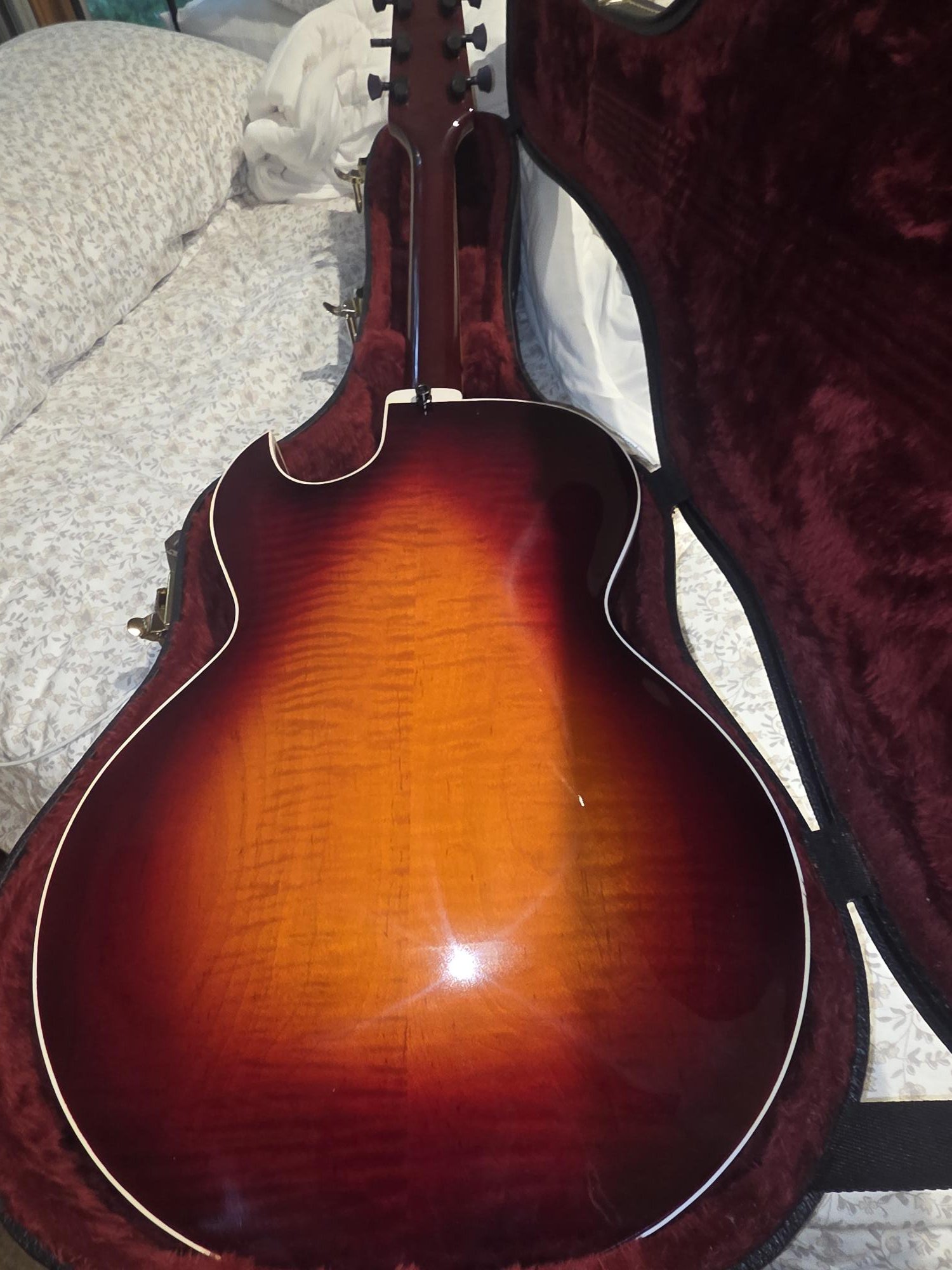
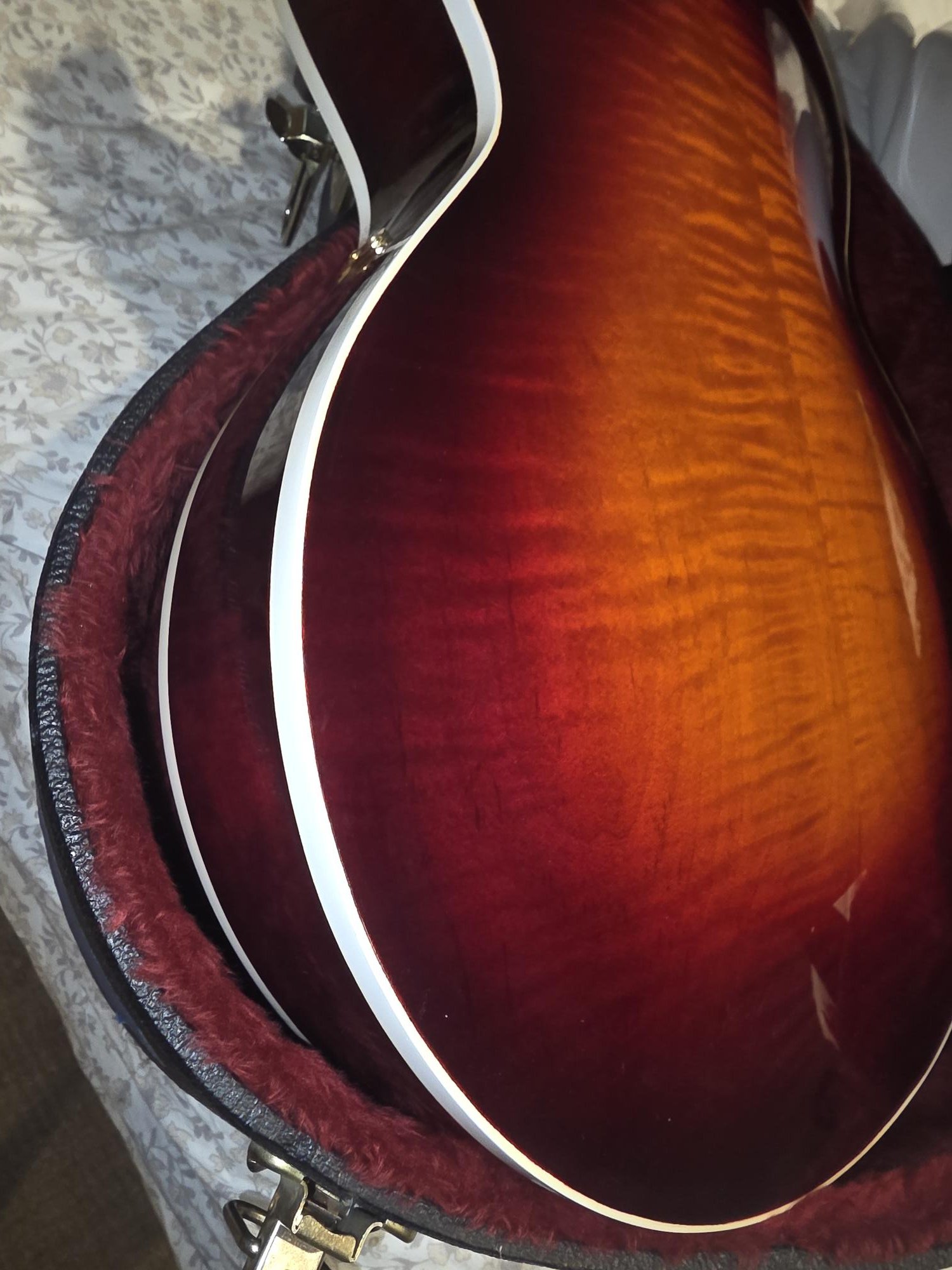
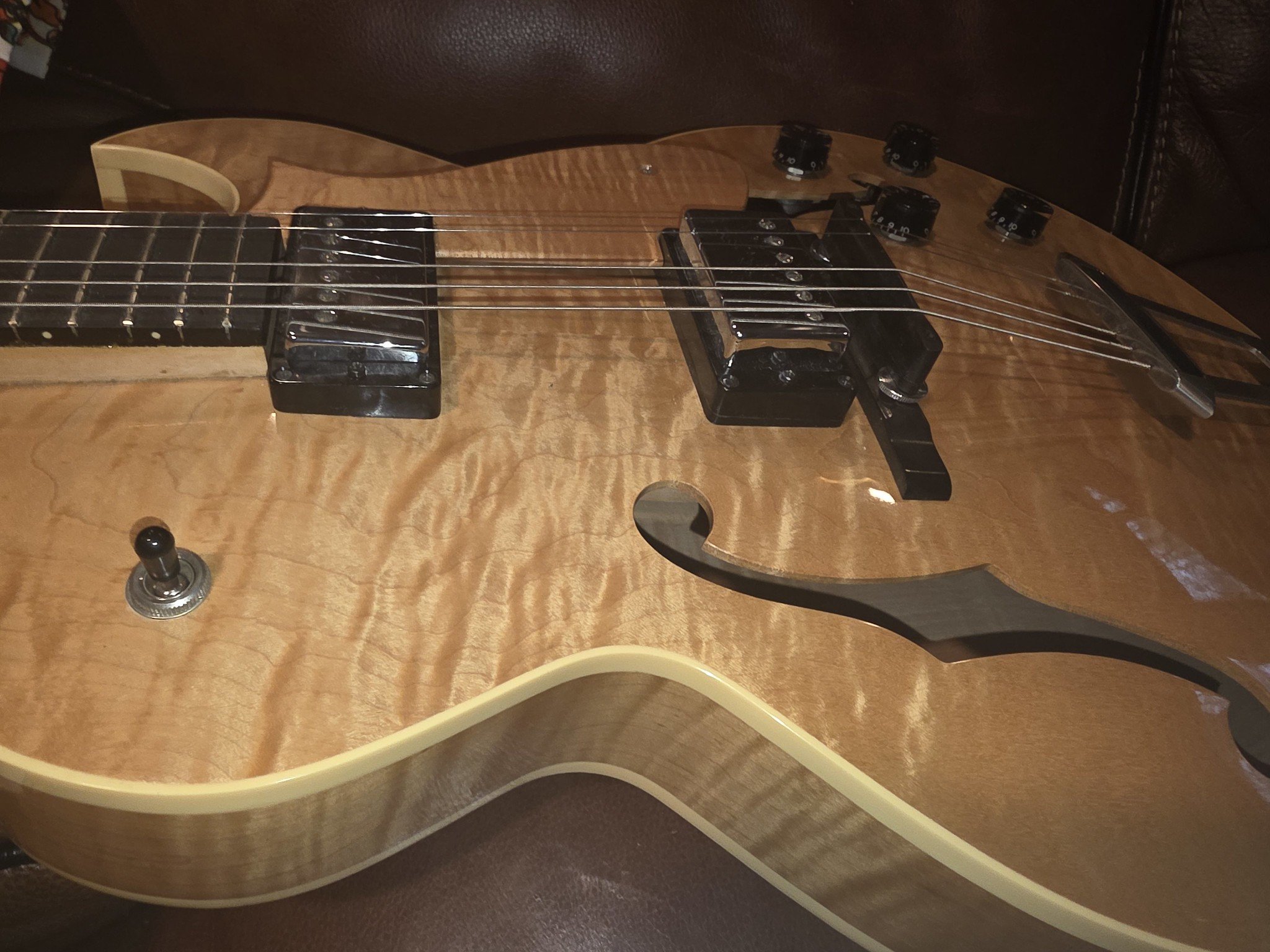
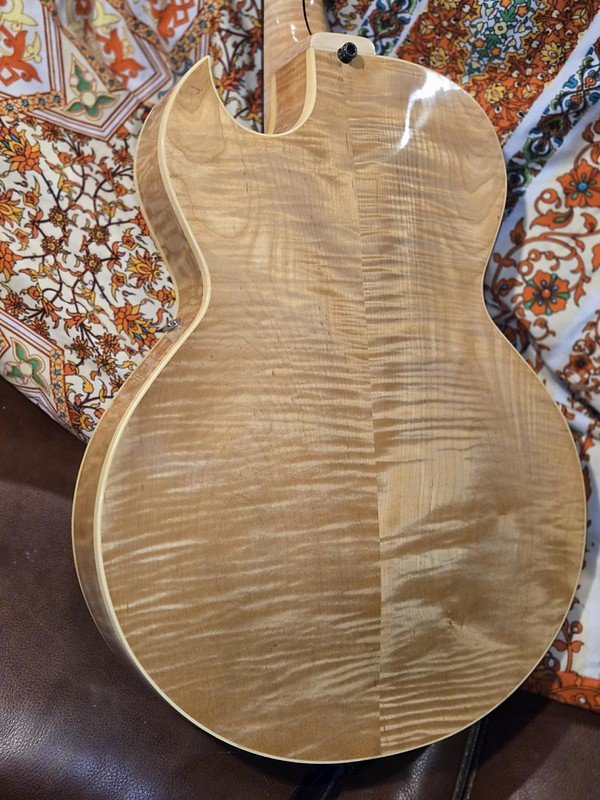
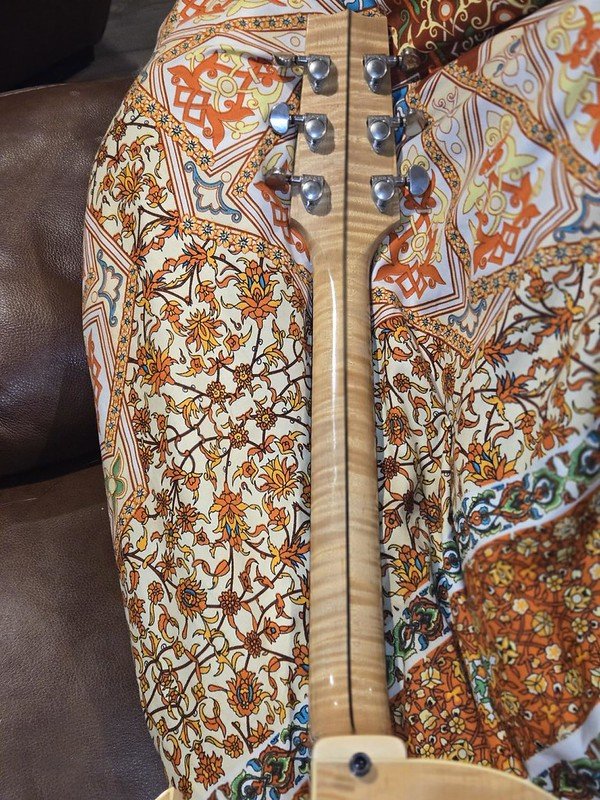
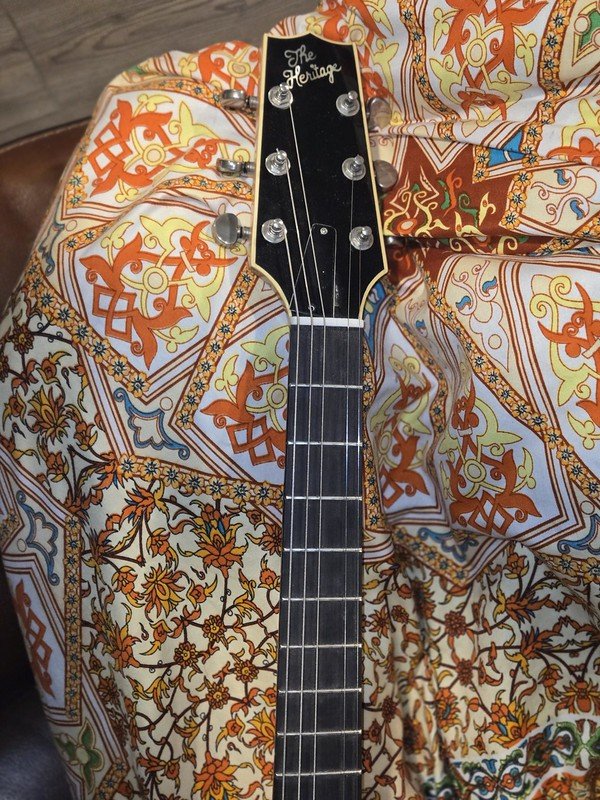
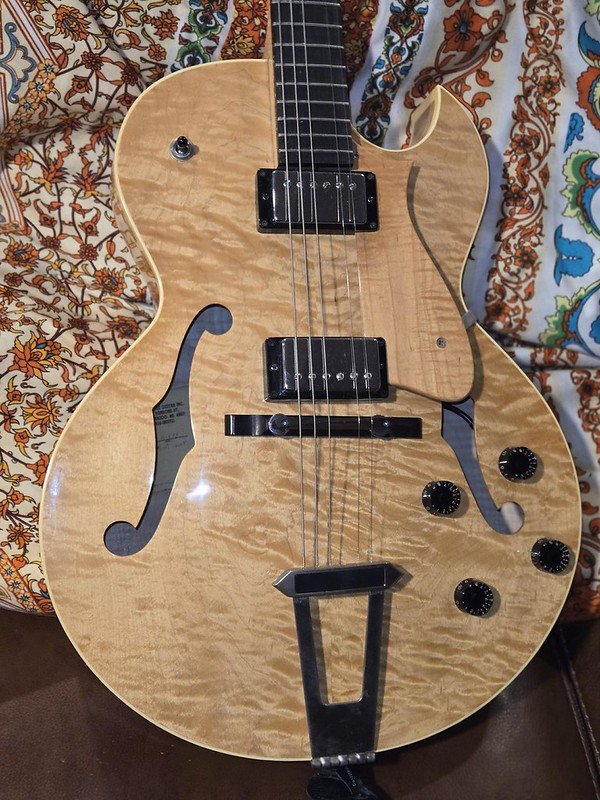
A friend of mine bought a natural 575 from a Guitar Center years ago. When he got it, he found some neck issue that could not be corrected by adjustment. He took it to the legendary Aaron Cowles, who was doing some upscale work for Heritage at the time. Aaron told him the neck needs replacement. I don't recall the details. Aaron did the replacement. Here's an interview with Aaron. https://scholarworks.wmich.edu/gibson-guitar-oral-histories/1/ Aaron died quite a few years ago. I ended up hanging on to the guitar for my friend but didn't play it. Yesterday he sold it to me without ever taking it to his home. If you are feeling sorry for him, consider he has more guitars than anyone else I know. So this is has Schallers. I scoped the innards. It's parallel braced (not all are). Aaron made the neck and but a plain ebony board on it. It's a 3 piece maple. The only piece he got from Heritage is the headstock overlay. My friend requested a five piece neck but Aaron recommended a 3 piece. Aaron fretted it. There are no nibs. That's true with other Aaron builds. Aaron was one of the best of the Kalamazoo luthiers yet a simple man to understand. He always had his pistol handy in shop. He charged very little for his hard work. His humble presentation contradicted his master skills at making guitars and mandolins. The guitar plays well. The neck is to me a medium C carve, maybe a medium plus. It sounds good.
1 point
-
Here's another cool fuzz, this is a germanium pedal Ryan built for me, a Rangemaster style treble boost combined with a Big Muff with an adjustable bias. At 22 seconds in the first fuzz lick kicks in, and at 2:06 I crack it wide open for the slide solo!1 point
-
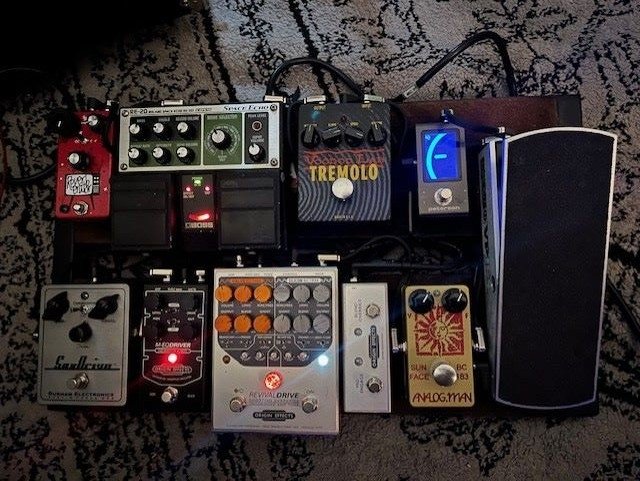
When I'm recording demos/songs, I have a few fuzz pedals that I love the sound of, and almost all of them are germanium based. But I've always been against using fuzz pedals on my pedal board because of the instability of the germanium transistors used in most of the pedals that I like. When they work, they sound killer, but if the temperature changes in the room, so can the sound of the pedal. But recently, my buddy Ryan, my guitar partner in crime, and who's a fuzz afficianado of the highest order, gave me a silcone based fuzz made by Analogman, the BC183 Sunface which has earned a permanent position on my pedalboard. It just makes the solos cut so much better. And it's ridiculously consistent sounding. I love combining it with my Origin Effects M-EQ Driver for serious vowel like singing sounds! Not the prettiest board, but it gets thew job done... the solo i play at the end of this song is the BC183...
1 point
-
May have posted this in the past, But since we're focusing on fuzz here.... Never a fan of it, but given this is a Lucinda Williams tune, and I'm a big fan of the fearless Stuart Mathis, I thought...why not get way out of my little box. This is from the Be Good To Yourself project, and since we were tracking nearly thirty songs, I figured I'd better come up with a variety of tones and approaches. I'm pretty much down with what Randy (fdx99) observes in his notes, above. As I recall this track was my Tele for electric rhythm, a Nashville tuned Red Label Yamaha FG-110, and the fuzz was my Nash Strat, bridge pickup, into my Low Power Tweed Twin clone. The fuzz was an MXR Hendrix Octavio, which has a pretty great fuzz! Fuzz is there in a couple of early chords, but doesn't really appear until the guitar outro, last 1:30-ish of the tune. I'm a little proud of this one. The vocalist is eighteen-year-old phenom Māya Beth Atkins.1 point