Leaderboard



Popular Content
Showing content with the highest reputation since 09/24/26 in all areas
-
At 24:50 of the video you will see Rob. He gets maybe two seconds tops of this video- no more. I point this out as an example of the incredible talent Heritage has. Of course Pete Farmer is a seasoned excellent luthier. Rob has been a luthier building solid bodies, flattops and archtops for decades. He also is a master in designing and building pickups. An entire video of an interview with just him could take up an hour easily without being boring. He's rewired creatively severaly guitars for me without breaking a sweat. The talent Heritage has is impressive. I have been in the plant since the Gibson days. IMO, the factory has never run better from a quality perspective. That is not to say Gibson and early Heritage didn't make masterpieces. They did, of course. Nowadays the consistency seems to be very high. Dogs and borderline instruments don't appear to make it through. We should be proud of and grateful to these guys. I'm impressed.6 points
-
Saw this doc on PBS featuring both Heritage and Kal-Tone guitars: web link https://www.pbs.org/video/guitar-makers-in-kalamazoo-ljajem/4 points
-
It was my 2017 H150, but the 1998 H535 just came home yesterday and changed everything.
 4 points
 -
Would have to be my 2019 DLB with ReWind Electric '58 PAFs and a pair of NOS black beauties. Gives that Tele on steroids vibe!
4 points
-
Hola folks! I used to frequent these forums about 15 years ago but was unable to get back with my old account (Jazzpunk) so had to do a reboot. In the past I was the proud owner of a 575 and a 530 but those are long gone now. Life took me on a different path for a while but happy to say, I have found my way back to the guitar and I am excited to be playing again. Now for the "just woke up from a coma, Soap Opera trope" of it all...wow have there been some changes! I've got the itch for another 530 and it really felt like I was stepping out of a time machine from a long ago past into the present when I started researching Heritage guitars again. I'll have to read up more on the changing of the guard but I have to say that my initial impressions are very good. The updated website and youtube content is really fantastic. It's so nice to see Heritage being showcased in the proper light I think it has always deserved. The players they gathered are fantastic and all of the demos look and sound top notch. Kudos to the new (to me) team for making that happen! Speaking of "top notch", once I got over the sticker shock, I was quite impressed with the differing tiers Heritage now offers. The custom stuff may be a bit out of my price range but it sure looks and sounds great. I imagine there was quite the controversy here when they updated the headstock design on some of the models but personally, I think they look great. The addition of the headstock inlays adds a nice touch of bling. Anyway, it's nice to be back and to see some familiar faces still posting here. Hopefully I will have another 530 in the not too distant future and be part of the Heritage crew once again. Cheers. 🙂3 points
-
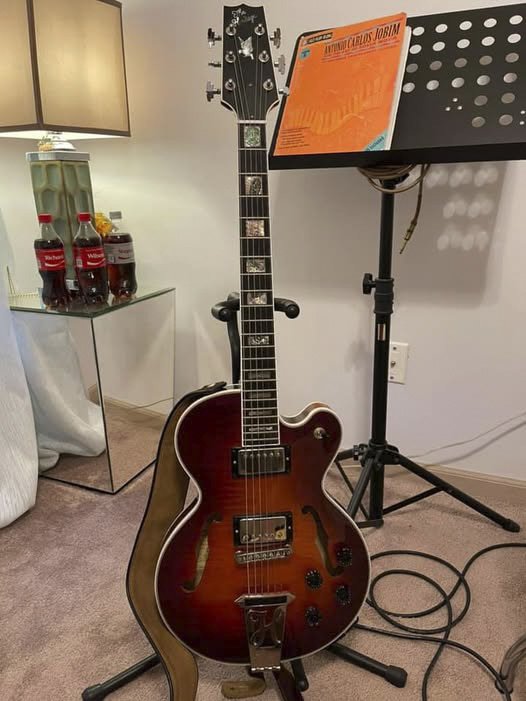
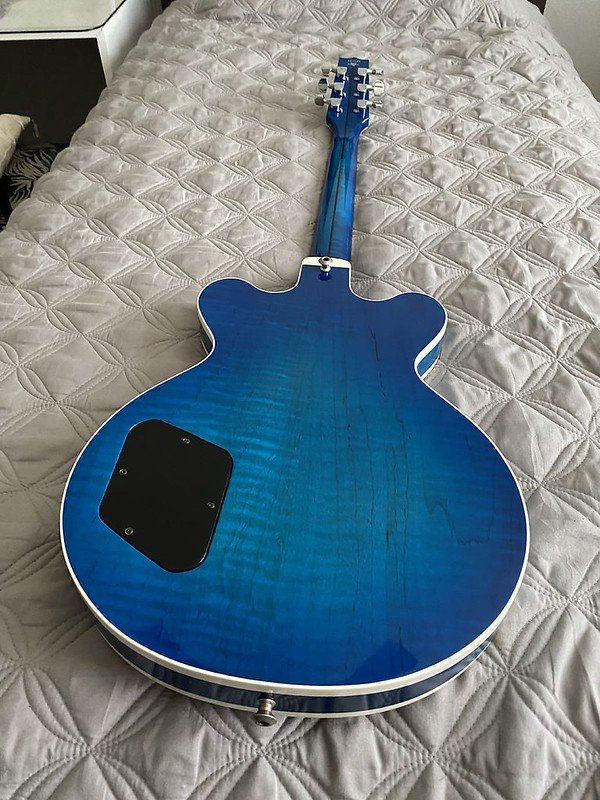
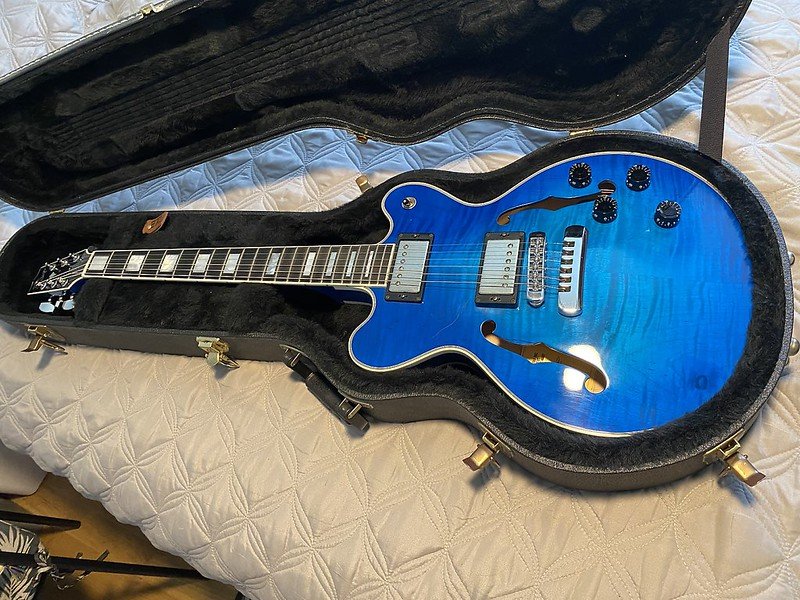
Here is a Millie DC. It has a lot of maple- the back, top and neck. Upper register access is easy. It balances well enough. A consideration with a blue guitar is that it will very slowly have some yellowing emerge. The original owner swapped out the HRWs with a set of PRS pups, which sound very good. I have the HRWs sitting in the case pocket, but so far have not had the urge to install them. From an aesthetics point of view, a well done burst is grand. Black is elegant. I like block inlays. I got a Les Paul Supreme earlier this year from a friend. There are similarities to the Millie series. The Supreme has solid woods with a lot of body hollowing, so both the Millie series and the Supreme are fairly light. The Supreme is less "neck heavy", but in neither is that a real concern. The Supreme has no back cavity cover. PIckup and harness work is doable but challenging. The better return on your dollar investment is the Millie if you plan to keep it. I'll add a little controversy. Of course every element in the signal chain and instrument affects the tone. I play the blue DC through four amps. Each takes the same instrument but sounds different. The Supreme is most like the chambered but has no back plate. I wish I had kept my Millie Eagle 2000. I had a lot of time with that guitar. I don't even remember why I traded it now. Oh well.
3 points
-
I'm fortunate. Back in the early 80's when I was studying guitar at the local community college, Joe Pass played 2 shows in one night. Prior to that, he hosted a student seminar. I met him. I sat in on the seminar, and watched 2 solo shows that night. It's a night that I won't ever forget. Joe was such a nice guy who went through a lot in his life. He was incredibly blunt, honest, and inspirational.3 points
-
I think Kent had a deal with parents. Buy your kid a Kent guitar and they'll never want to play guitar again, you can thank us later.3 points
-
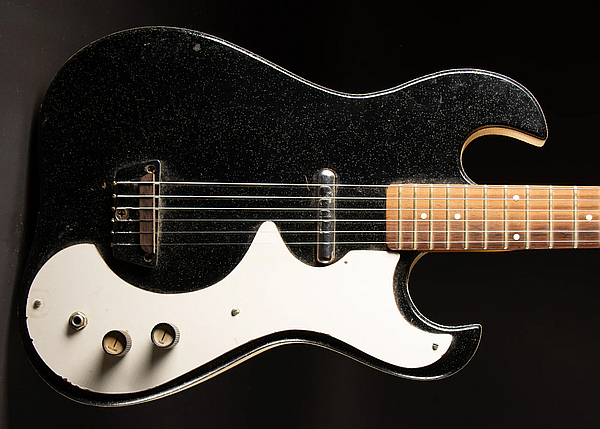
I see these in a different light. The guitar seems decent by this review. The price point is attractive to the begining and intermediate player due to the price. Those who can pay more and want "better", there are other places to go. I don't own anything in this series but have played a couple. I also recall one of my favorite rock players, Randy California of Spirit, played a Sears Silvertone in his early recording and performing days to great reviews. I have modded my H-150/157s over the years in some cases. The didn't "need" mods, but some fret work and slot cutting helped. If I were back in 6th grade, there's no way I could afford a new American built H-150 or H-535 from my paper route. If the Ascent+ was available, that may be within reach. I have an emotional bias though. I grew up in Kalamazoo. I'd take the temperature of the community since they are my audience. I don't think there would be resentment if I got the Asian version, especially as a kid. I can tell you that in Kalamazoo years ago, a lot of guys played Fenders and Gretsches. They never got any pushback for disloyalty. Rather, my friends liked trying them out. Quite a few were loyal Fender players. Some worked for Gibson. Brand loyalty has advantages. And if QC is solid, one advantage is you pretty much know what you're going to get before you open the case. If the Ascent series does have the quality and tight specs, those are strong positives. I don't own one, but I'm not allergic to them! A major reason I had a good early experience, 6th-10th grade, was a glut of Gibsons in my city. I got a Firebird V with a Kalamazoo amp from a neighbor for 6 weeks of paper route money. If I were not in Kalamazoo at the time, I'd probably would have had to go Asian! Let me mention that the Ascent line is still owned and managed by the Heritage company owners. If they can produce very good guitars with a significantly lower price in Asia, they likely have to strongly consider doing that for their investors. It is likely mandated. But it's our choice as to what we buy, and we buy for different reasons. My choice has been to buy locally. That's easy when the product is good and it supports your neighbors. If I were 13 again and had to earn the money for a guitar, amp and lessons, and a used Gibson or Heritage would cost more than a new Ascent, the lofty ideals of "buying American" may not be reachable. Lastly, the Ascent series idea came from somewhere. It may be what allowed the new Heritage owners the ability to maintain the original Kalamazoo site for the Heritage models. IDK. Recall that whatever the original Heritage factory owners were doing was not survivable, leading to its sale. Projecting from my youth when I'd stare at the Gibson catalogs, quite a few kids who get an Ascent will move up into a Heritage or Gibson or Fender or PRS. From what I see, the Ascent seems like it could work as an entry point for a kid into a lifetime of guitar.3 points
-
There's an album -- they play Hank Williams tunes...3 points
-
3 points
-
Post pick of them or tell me about the ones you have. I've been looking on Reverb etc and there aren't a lot out there. Im kinda curious. Cheers2 points
-
Welcome back JP. A year ago, I snagged a 530 after checking one out at the factory during PSP. Mine is the original Standard, with the Lollar P90s, not the newer Std II with the new Heritage pickups but it's still every bit a great guitar! It's since edged out my 535 for "most playing time". I can play without an amp, and plug in when I need to. Yeah, prices bumped up, but the standard lines are still good values for a quality US build. Plus they come Plek'd so we hear very few comments about poorly cut nuts or fret issues. The factory is stressing consistently high quality control.2 points
-
2 points
-
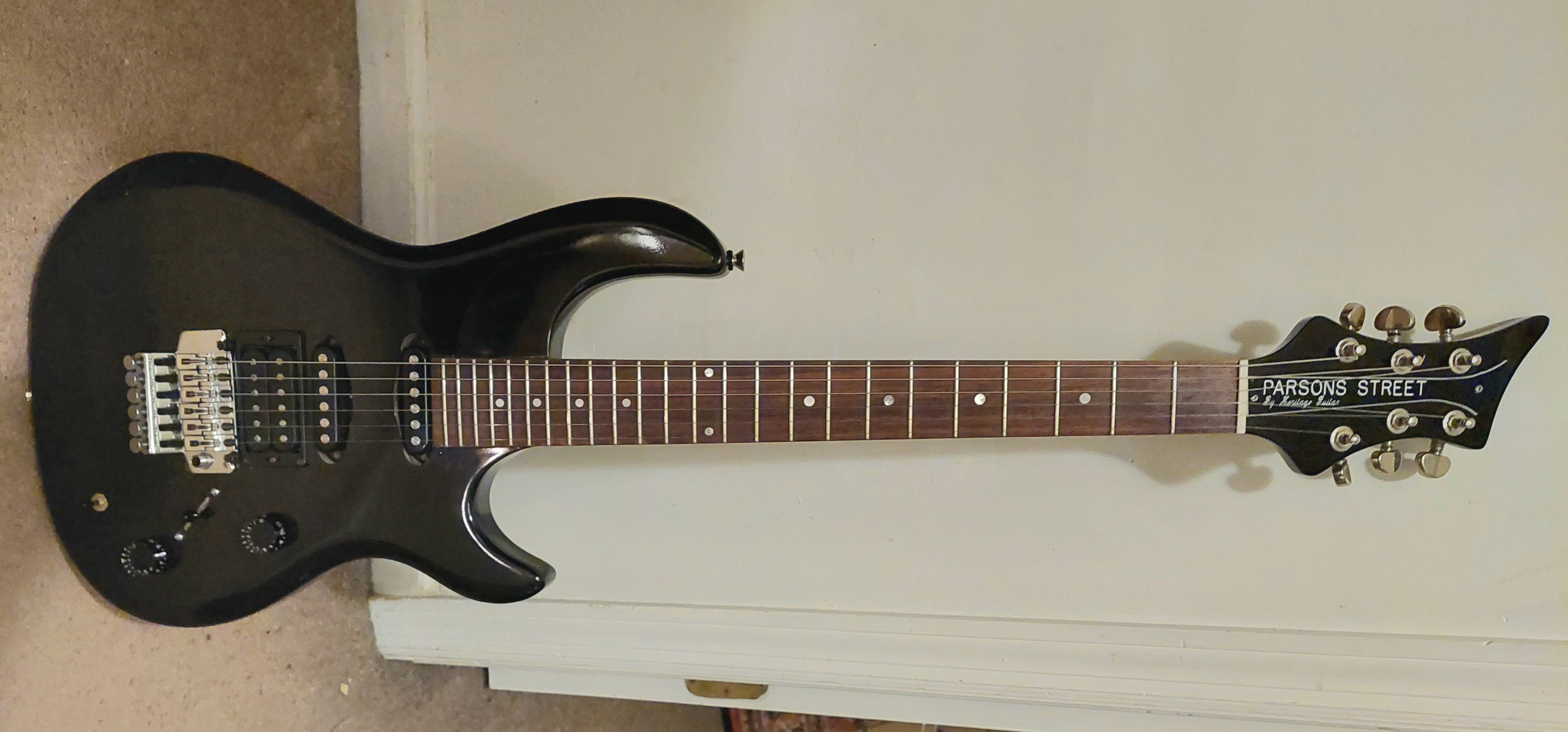
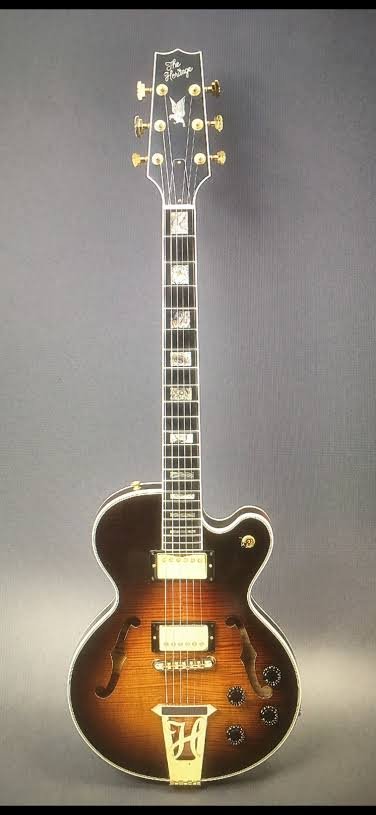
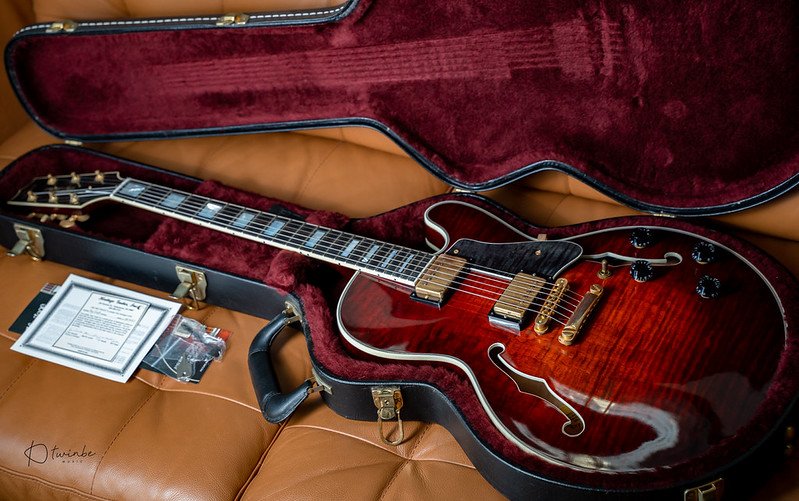
This Heritage Parsons Street is a great player, A different feel other Heritage. You're unlikely to see another one and may have different headstock ,tail piece, etc. It's the Darth Vader of Heritages . 6.36 LBS.
2 points
-
Welcome back JP!2 points
-
There were several Millies. The Millie Eagle 2000 had a carved back and top with a center block, as I recall. It was a single cutaway with abalone fretboard inlays. That was my favorite. There were several other Millie models.
2 points
-
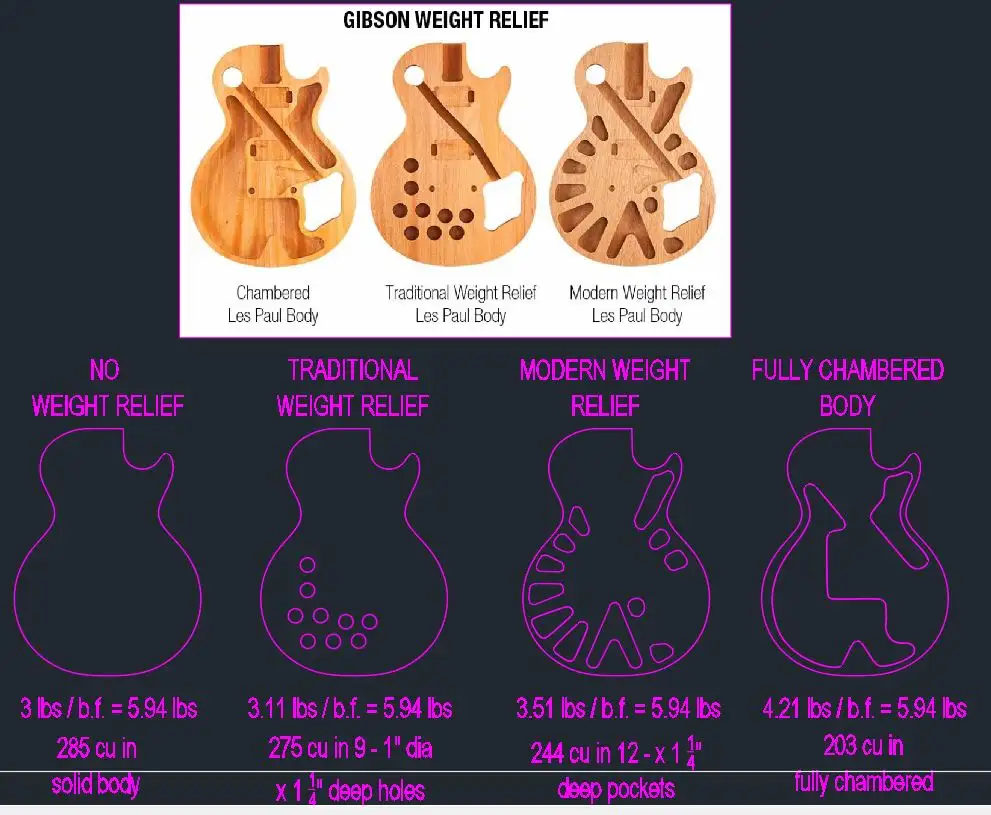
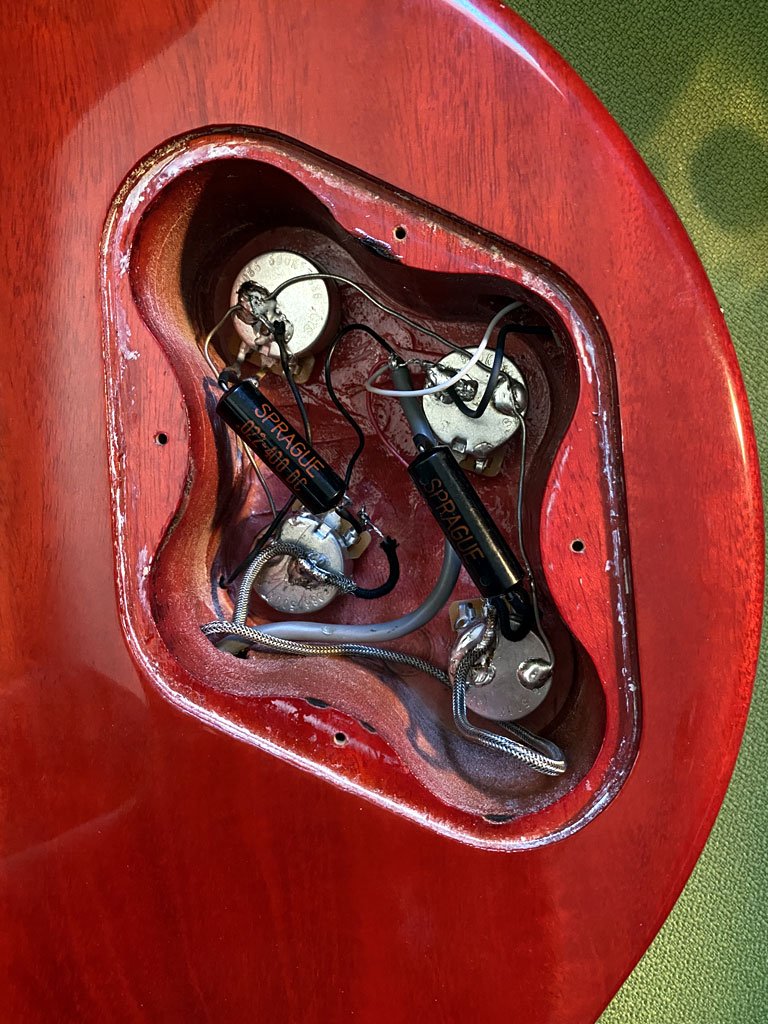
As I remember, there was a core of mahogany or maple which formed the chambered body, with carved maple top and back. It wasn't just a center block. It was wider and forms the rim but much thicker than you get with semi like the 535. It would be more like the chambered LP above. There was the 158, 155 and DC versions, plus the LE series. 155s have an access panel to the pots. The 158 doens't. The 155 is the most common.2 points
-
Look up some Joe Pass videos on YouTube. Listen to his chord voicings and watch his fingers. And be amazed. The man was a genius.2 points
-
that was great playing it reminded me of a steely dan song2 points
-
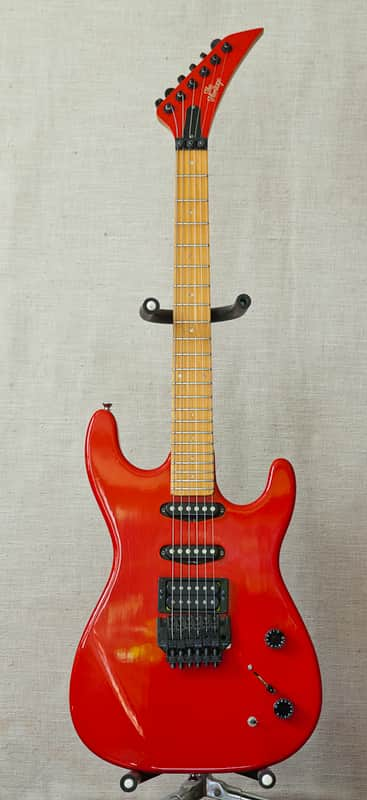
I have both the H-160 Stat and this one which is an H-162. I gigged with the 162 for about 8 years after I got it. Back when nobody knew what Heritage guitars were worth I could find them dirt cheap. I think I got the 162 for $400. The Stat was a bit more, like $700 and had been sitting in a music store for years. Both had Schallers and if you have read my posts, I have always found Schallers to be lifeless. I put some kind of Dimarzio's in each of them and they became great guitars. The Whammy bars on both stay in tune. THe 162 is really light and the Stat has a rather fat neck and is pretty heavy. The Stat has a weird kind of switching system that took a while to get used to it. The 162 has a coil tap. This post has inspired me to take them off the wall again..... I posted this video of me playing my stat a few years back. I got hired to do the guitars on this session and then he wanted me in the video. In looking at it I have no idea what that neck pick up was as I have a different one in there now. The solo starts at around 2:30..... https://www.youtube.com/watch?v=S3pvhTUgXEo&loop=0
2 points
-
Facebook shows a few Heritage Stat models with comments from owners and lookers... https://www.facebook.com/groups/56102934732/posts/10161563743204733/ https://www.facebook.com/groups/1512934312328828/posts/3759989507623286/2 points
-
My dad, a failed guitar player, had a cheap Kent acoustic guitar that I learned my first few chords on, eventually the neck popped off of it from me tuning higher than it should have been Well then for christmas that year, my mom told my dad to buy me a guitar and amp. I got a Teisco Checkmate guitar with a matching little amplifier (in a plastic case). That was equally as bad as the Kent acoustic. The action on that guitar was so high I risked damage to my fingers everytime I tried to play a chord on it. After that, I took matters into my own hands. I saved up all the money that I could from my caddy job at the local golf course, and bought my first real guitar, a 1959 Fender Musicmaster in Desert Sand, and a Danelectro Cadet amp. I was off and running from there. But even in the early 70's, that little guitar and amp cost me $400. For nostalgia's sake, a few years back, I bought a 1960 Musicmaster that is pretty much identical to my old '59, and the same DanElectro Cadet amp just to see if I could make music with it, and here's a song I recorded with it. The Danelectro amp is a toy, but the Musicmaster is really a great sounding guitar, here it is through a proper amp, my Victoria Regal II...2 points
-
What you’re describing is the difference between: interpretation — making the music yours imitation — recreating someone else’s choices Tribute bands live in the second category. They’re about fidelity to a recording, not fidelity to the musical idea. That’s why they obsess over note‑for‑note solos, exact tones, exact phrasing, exact stage moves. It’s a reenactment. But in classical music, nobody treats the first performance of a Mozart symphony or a Beethoven concerto as the “correct” version. They treat the score as the real object — the blueprint — and every orchestra and conductor is expected to bring their own interpretation to it.2 points
-
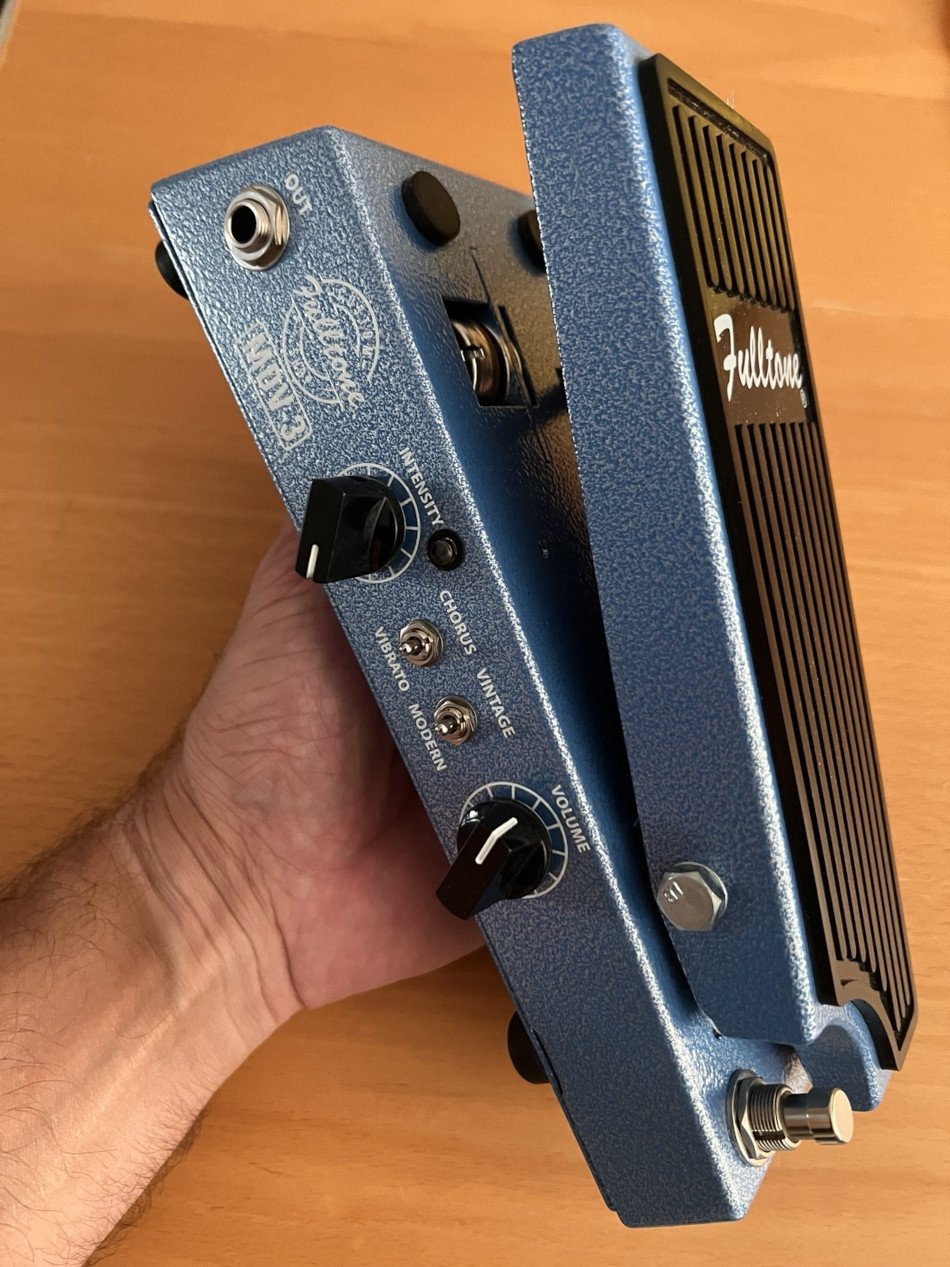
Hi All, when it's about Vibe(s) the choice of a real good one is a bit of a quest IMO. I always wanted one that I could really appreciate and honestly I didn't think a "modern" built one could be good as the MDV-3. I bought it new a while back and left it in another place for a while and it's now with me. It's the case I can say: good Vibe(s) 🙂 It can be deep or shallow but it's always adding something to the tone, Vibrato or Chorus in Modern or Vintage settings. It adds depth without taking anything off from the guitar voice. I use a Menatone Red Snapper Mojo (hand built) as input. More joy using single coils though.
2 points
-
I must say, that's one fine looking Millennium and a fine looking amp as well in that discussion..... Fine! 😁2 points
-
Thank you. Amp wise live I use either a 40W Marshall DSL or a 50W Fender Champion II. I've always been a "purist" hence for me it was "tube amps or die", however(!) few months ago I went into a shop with a couple of friends that needed to buy some gear, we went with our ladies so we would all go for a drink or snack afterwards, and while a was there my lady pointed to a Fender amp that she thought looked practical, kinda small and portable....? I have to admit that I've never been partial to Fender amps, Marshall being my lifelong #1 favourite, plus this thing was a modelling amp (yuk!!!!) but as I had time to kiil while my friends were trying stuff out I gave it a try and I was really surprised! In the past I tried many modelling amps/units and always found them lacking a bit in sound and response to your playing; the audience won't be able to tell of course but it's how it feels to the player that matter as that's what we react to. Anyway, as I said I tried a lot of modelling gear, including some top of the line/very expensive stuff, but this humble, cheapo Fender (£220 only!) beat them all!!!! I set it on the "60s/70s Marshall" mode and let me tell you it sounds as good but it feels 100 times better than stuff costing 10 times more! I keep getting complimented on the sound and bear in mind that with this show we play specialised clubs and venues and their audiences are very discerning, but they only see that I'm plugged into a Fender amp and that's enough for them! It doesn't sound like a Marshall, it sounds different same as a Vox or an Orange would sound different, but it sounds & feels great! So yes, it's either the Fender or the Marshall, depending by my mood, while on the floor I have just an early 70s Cry Baby into an Overdrive pedal, either a Fulltone Fulldrive II Mosfet or an Ibanez TS808 DX. Then, let it rip, but not quite as Leslie Nielsen intended!2 points
-
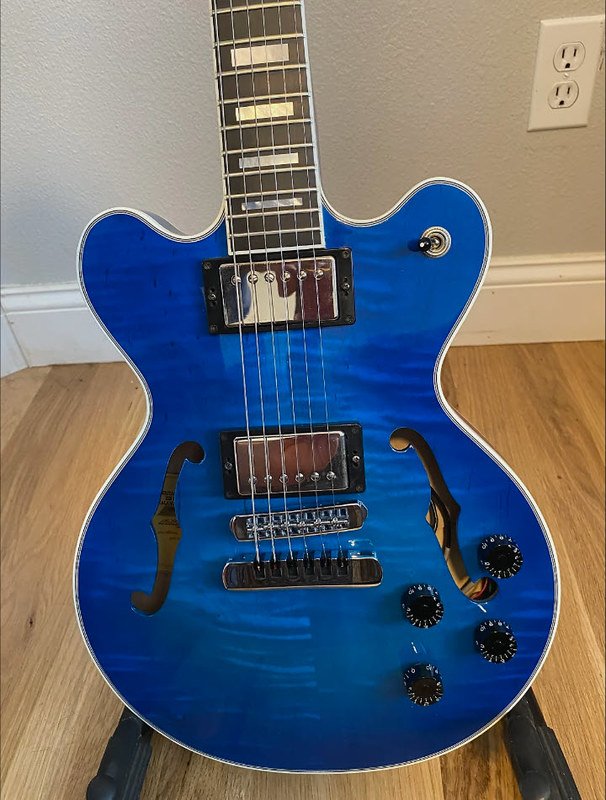
That blue one is identical to my DC from Wolfe, except mine is trans cherry1 point
-
Hey, look who popped on! Glad to see you're still around.1 point
-
I remember you! welcome back.1 point
-
I've had two Roy Clark models. The first one was fully hollow and a thinline. That was a one-off. I have a standard model now which is just fabulous. It's gorgeous and plays very, very nicely. It's basically a 555 single cutaway. The cutaway is deep.
1 point
-
There's nothing like 1/4"+ action to build the strength in those 12 yr old fingers! (hey what's that adjustment thing at the base of the neck???? Could it have been a truss rod But look at all them PICKUPS! And it was a better guitar than the first one, made from the finest pressed paper tonewood. (masonite) I think I would take an Ascent H137 instead!
1 point
-
I had a Kent when I was a kid. They sucked.1 point
-
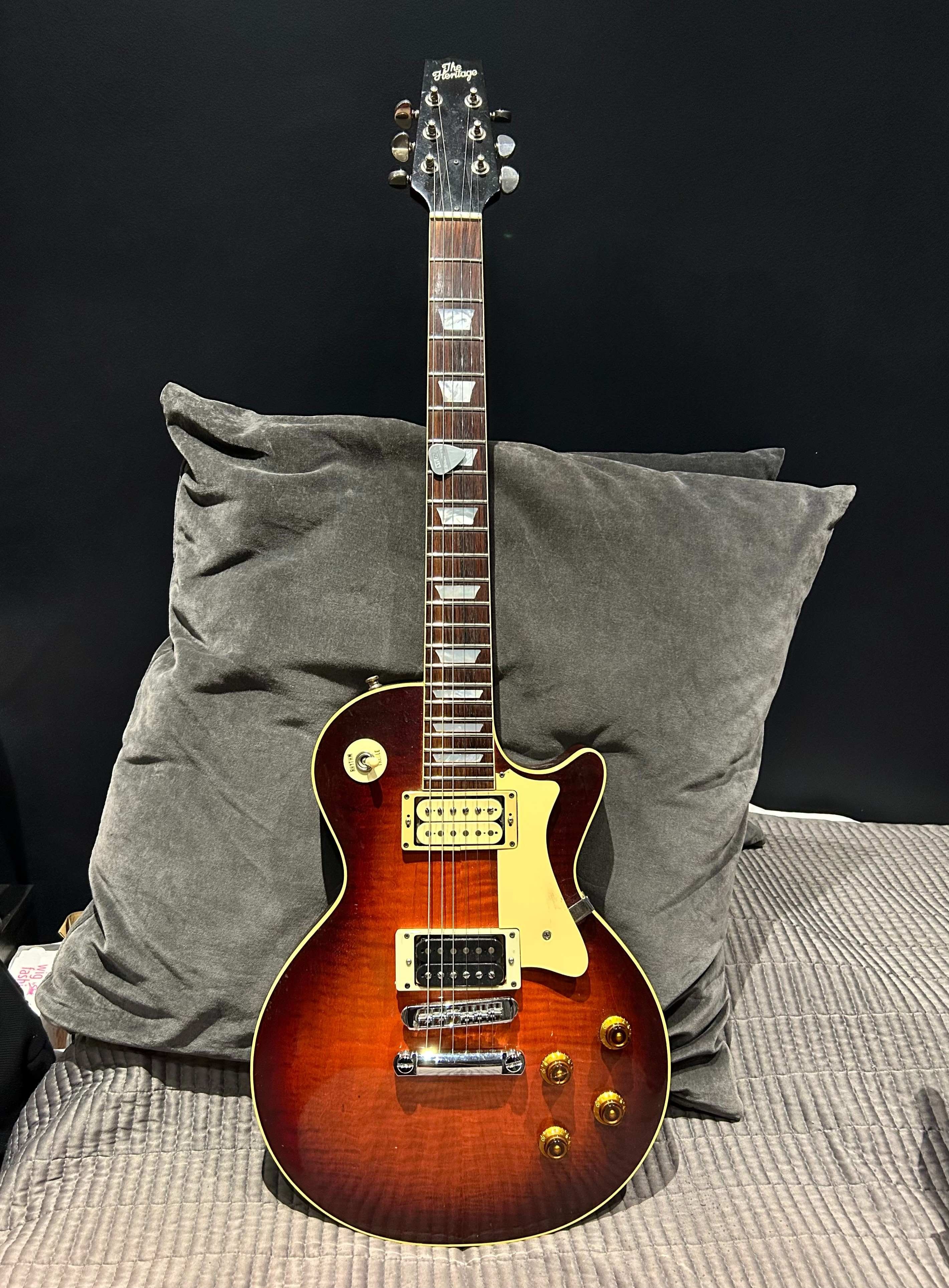
A while ago, I started a band devoted to paying homage to the British Blues phenomenon, a movement that, quite simply, gave the world Rock(!) as we know it. It started with Eric Clapton essentially inventing "the Rock" sound in APril 1966 by plugging a Les Paul into a cranked Marshall and proceeding to let loose playing long, articulate, screaming and and soulful lead guitar, something that had never been done before, not to that extent and which spawned a myriad of bands that we all know and love in the process. For the record, this band's not a "tribute" as it's generally intended, I have absolutely zero desire to mimic someone else and/or reproduce someone else's solos note-for-note, no matter how famous, great, cool and historically important the player is; in truth ("Truth", great album!!!) I have been offered the position in 3 or 4 of such outfit and even though the players in question were among my main influences, I love 'em dearly, I graciously declined, it just goes against what I believe, which is to pay respetful homage to such cats by capturing the spirit, not the notes. By doing that you take your chances, of course, but that's excatly what those guys did in the first place, right?. Anyway, the band has played a handful of gigs in the Lndon area and next month we'll have the official launch in a specialised, highly respected top London club and this, my Heritage H150 will be the guitar I'll be using. A wonderful Custom Shop Les Paul Custom, which I love, will be there too but only as a spare in case I break a string or something, which very rarely happens! Yesterday we had a reharsal, just to finalise the set while next week a dress rehearsal is in the cards, but let me tell you that this guitar plugged straight into a valve 1/2 stack with just a Tube Screamer in between (an Ibanez TS808 DX, to be precise) didn't even sound close to perfection...it was actually perfect!!! The sound, the feel, oh my God, I hadn't played this guitar for few months and I was actually contemplating getting a XXX McCarty 594, an amazing guitar for sure, but once you have an Heritage H150 set up to perfection, and on this one I also replaced the original pups with a set of OX4 "Beano" pups (yeah, Beano, I know....!) frankly if you want a righteous Les Paul tone you don't need anything else. And my wife agrees.... For the record, according to the serial number this guitar was made on Nov. 13th 2000. I was also born in November, good month indeed...
1 point
-
I lean both ways... there are times where it's "play what you feel" and there are times where it's "play what they played". Depends on the song, and rarely do I have the skill to match the original, it's going to be an approximation! I don't worry about getting the exact tone or effect, but I want the notes.. the "tune" to be pretty close. It's like when Carlos and Tomita started interpreting classics. Tomita's Snowflakes are Dancing sounds nothing like any other versions, but the tune is definitely recognizable. If you start changing the notes, playing something totally different, it's NOT Snowflakes! When the Vanilla Fudge revamped multiple songs, they kept the tune. Season of the Witch, Shotgun, You Keep Me Hangin' On. It was reinterpretation, and it works. But watching Jeff Beck do Les Paul licks on How High The Moon sounds so true to Les' vision that it's a joy to hear! There's room for both situations.1 point
-
1 point
-
How about some audio clips so we can hear the results?1 point
-
Thanks for posting this Chris. I hadn't seen this one. Whoever that Pete guy is, he seems to know a thing or two about guitars.1 point
-
Does a H155 count?1 point
-
Or could just learn all the licks Clapton stole from the masters, especially Albert King1 point
-
Nice H150, I'd like to hear some recordings of this guitar and your band.1 point
-
I use MIDI to switch preamps all of the time. However, the Egnater/Synergy stuff is already MIDI so it was not too tricky to set it up. In my acoustic rig I also use MIDI to switch IRs in my line 6 powercab. I use a really nice Martin D-28 IR and a Gibson Loar mando Ir.....I switch instruments hit a button and I get a different preset in the PC. I am an old guy and back in the 80s I stupidly thought MIDI was just for keyboards. I learned of quite a few applications for guitar and stubbornly learned how to set it up but in no way can I do all of the things I know it can do.1 point
-
Does Heritage make a semi-hollow with a solid top? PS - Nice snatch bolero.1 point
-
Yeah, whatever........I just couldn't pass up the pedal for the price. It's mostly in the fingers anyway......1 point
-
I thought this was funny, Phil X, who is normally not a Klon guy, picked the Behringer as his second favorite in this blind overdrive shootout!1 point
-
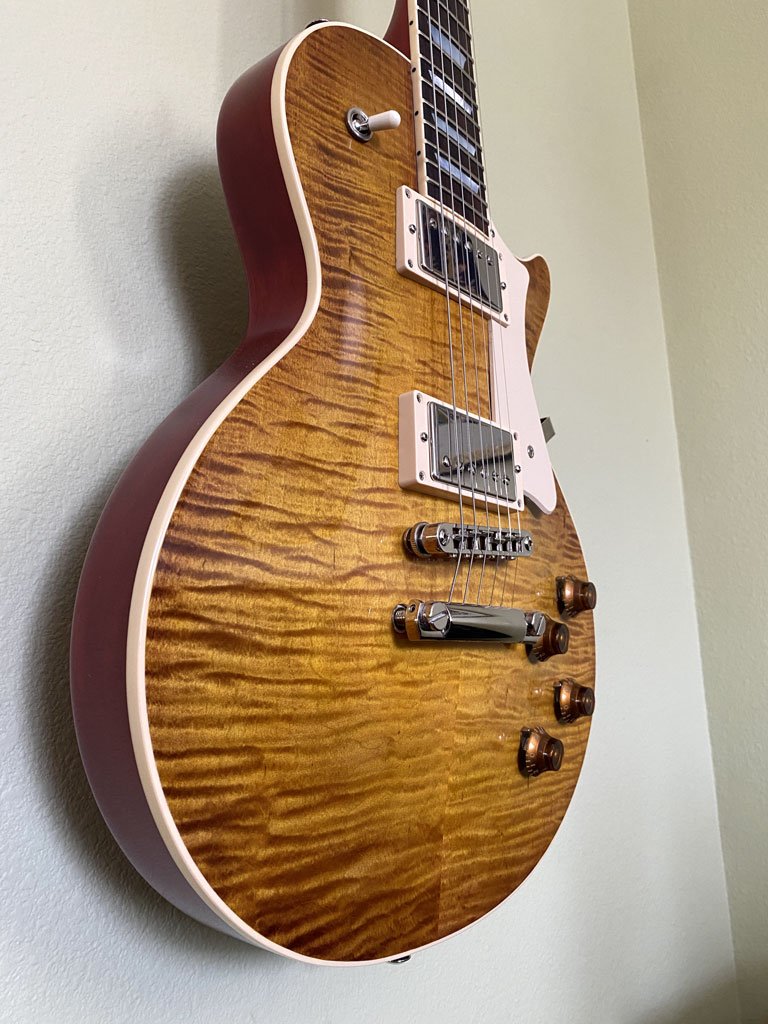
Dirty Lemon Burst looks great!1 point
-
A six pack of Molson is better1 point
-
Even without jumping the channels the 5E3 volumes interact.1 point
-
5E3 amps are great, one of my favorites, I've always liked the Fender tweed amps the best. When they grind they are glorious, But be aware for stage use they don't have a lot of clean headroom, and if your drummer is a hard hitter a 5E3 may not have enough clean tone on tap. Some samples of my Clark 5E3 from clean to dirty, the last sample I am using an Origin Effects Revival Drive...1 point
-
These are being discontinued so I grabbed one for $179 ($20 off).1 point



.jpg.7aa04244010591acb5be1080faa6b3c4.jpg)